

Are jobs really vulnerable in the era of automation?
To make the existing workforce thrive in the automated era, it's important to re-skill and up-skill them to adapt to the changing labor market.
 Renu Mehta
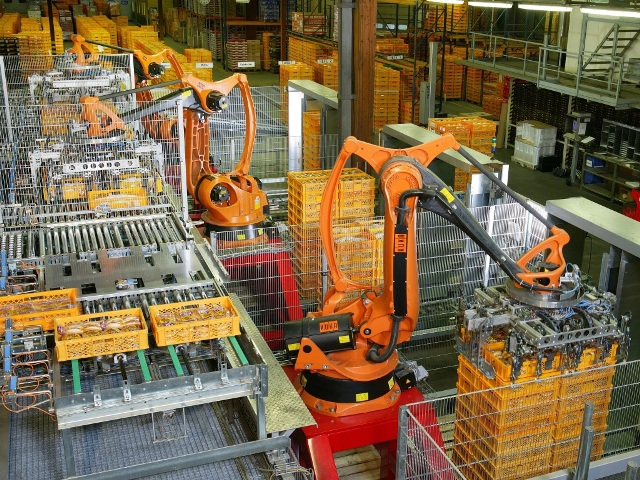
The fourth industrial revolution or Industry 4.0 has substantially reshaped the nature and future of work at an unprecedented pace, thus making things better and faster. In the coming decades, AI-fuelled automation technologies will completely transform the workplace, replacing aging and unskilled workforce. But with this shift towards automation, comes the great fear of job displacement.
Well, the fear may somehow be true but that's only half the story. According to the Organisation for Economic Co-operation and Development report titled 'OECD Employment Outlook 2019,' the risk of job automation is real but the trend varies greatly across countries. "Automation technologies do not just destroy jobs, they also create and transform them. Historically, the net effects of major technological revolutions on employment have been positive, and there are few signs of this trend changing radically in the years to come," the report says.
The OECD report sheds light on how the human workforce is likely to be affected by AI and automation. A quick look into the key points:
- Currently, 14 percent of jobs are at high risk of automation, while 32 percent of jobs could be radically transformed, owing to automation.
- With technological changes and globalization, job creation in most of the surveyed countries have been on an upward trend
- While the future may be uncertain, massive technological unemployment seems unlikely
- Even though the risk of automation is low in some sectors like healthcare, education, they will still experience significant changes
- While certain jobs are disappearing or are on the verge of destruction, new forms of jobs are still emerging
Automation will create more jobs than it destroys
Smart automation technologies will contribute up to USD 15 trillion to global GDP by 2030 (PwC analysis). On one hand, the increased deployment of artificial intelligence (AI), machine learning, robotics, drones and other forms of smart automation have significantly contributed to job destruction in certain sectors, in particular, the manufacturing sector. On the other hand, such technologies contribute to increased productivity and higher incomes, hence creating additional demand for goods and services that in turn creates even more employment opportunities. For example, this week, tech giant Amazon announced plans to open two new Robotics Fulfillment Centers in Ohio that will create more than 2,500 full-time jobs. Within the fulfillment centers, all Amazon associates will go through hours of safety training and ongoing coaching and will have access to continuing education opportunities via programs like Amazon Technical Academy, Associate2Tech, to name a few.
Not only this but also the e-commerce giant recently pledged USD 700 million investment to provide upskilling training programs to its 100,000 employees for in-demand jobs by 2025 across the United States. As tech-driven job roles are on-demand, Amazon is offering its employees the resources to gain critical new skills for in-demand job roles, including healthcare, machine learning, manufacturing, robotics, computer science, cloud computing, and more. According to the U.S. Bureau of Labor Statistics, there are more job openings in 2019 (7.4 million) than there are unemployed Americans (6 million), Amazon said. This example perfectly explains how automation will create new job opportunities in the upcoming years.

Image Credit: Pixabay
In the past 25 years, one-third of new jobs created in the United States, one of the most technologically advanced countries, were types that did not previously exist, or barely existed, in areas including IT development, hardware manufacturing, app creation, and IT systems management, says a McKinsey paper.
As of now, it won't be wrong to conclude that automation is playing a positive role in economic development, even as it is changing the future of work.
Automation won't replace humans anytime soon
For businesses to survive and thrive in an increasingly automated world, the human touch will still be needed. In the health sector, for instance, robots and AI may work alongside doctors for better services, but can't displace or overtake them. People-to-people communication plays an important role for businesses or organizations to thrive and survive. There are plenty of other sectors which rely on social skills and human touch.
Adaptation key to survival
To make the existing workforce thrive in the automated era, it's important to re-skill and up-skill them to adapt to the changing labor market. With the advent of AI and automation, the skills market is undergoing substantial change. Low skilled, workers in jobs at high risk of automation, older adults and displaced workers are likely to bear the brunt of these technological changes. Organizations investing heavily in automated technologies will face a great challenge to capture the market and enhance productivity. Businesses failing to upgrade workforce skills will have to face a potentially negative impact on their financial performances.
Making the workforce future-ready
Looking ahead, with the right policies and institutions in place one can conquer job displacement fears. To reap maximum benefits and minimize the risks of automation, governments, businesses and other stakeholders need to identify the ongoing and future trends. It's critical to analyze where the displacement risks are maximum and how will they impact the workforce. Further, based on the research findings, effective strategies will be needed to address future risks.
Also, policy interventions and higher public spending will be crucial to foster an equitable and more inclusive future of work. There is an urgent need to introduce demand-driven creative and interpersonal skills program, reform traditional education systems and strengthen training opportunities for the low-skilled and aging workers to help them align with the needs of changing labor market. Governments and organizations need to encourage investment in human capital.
Organizations and individuals can also turn to programs that will help them get job-ready creative skills, many such programs have already been introduced. A few among them are:
Digital Skills for Jobs Campaign
Led by the International Telecommunication Union (ITU) and the International Labor Organization (ILO), the campaign addresses the youth skills gap by increasing their employability, creating quality jobs, and sparking innovation across all sectors in the digital economy.
NASSCOM FutureSkills
Launched on 19th February 2018 in India, the initiative aims to re-skill 2 million professionals and potential employees and students in the industry over 5 years. The portal provides deep skilling in 10 emerging technologies including AI, Blockchain, Internet of Things, Virtual Reality. It provides the learners with information on the latest jobs, the skills needed for those jobs, learning content, assessments, and certifications.
Digital Skills program for the UK
The program supports those looking to re-skill and upskill with the digital knowledge and skills required to thrive in the automated era. Developed by Accenture, it provides seven courses that are easily accessible and optimized for mobile to enable learning anytime, anywhere.
Amazon Career Choice Program
Amazon launched the upskilling program with a vision to provide everyone the opportunity to learn new skills and build their career. Over 25,000 employees have pursued degrees in high-demand fields such as game design and visual communications, nursing, IT programming and radiology, to name a few, since the program's inception. According to Amazon, data mapping specialist, data scientist, solutions architect, and business analyst, logistics coordinator, process improvement manager and transportation specialist are the highly skilled job roles growing swiftly at its customer fulfillment network.
Though we cannot foresee the future of automation, we can definitely work together to ensure that it benefits everyone.
(Disclaimer: The opinions expressed are the personal views of the author. The facts and opinions appearing in the article do not reflect the views of Devdiscourse and Devdiscourse does not claim any responsibility for the same.)
- FIRST PUBLISHED IN:
- Devdiscourse


 Google News