



Long standing issue of child labour in Africa
Africa has the largest number of child labourers; 72.1 million African children are estimated to be in child labour and 31.5 million in hazardous work.
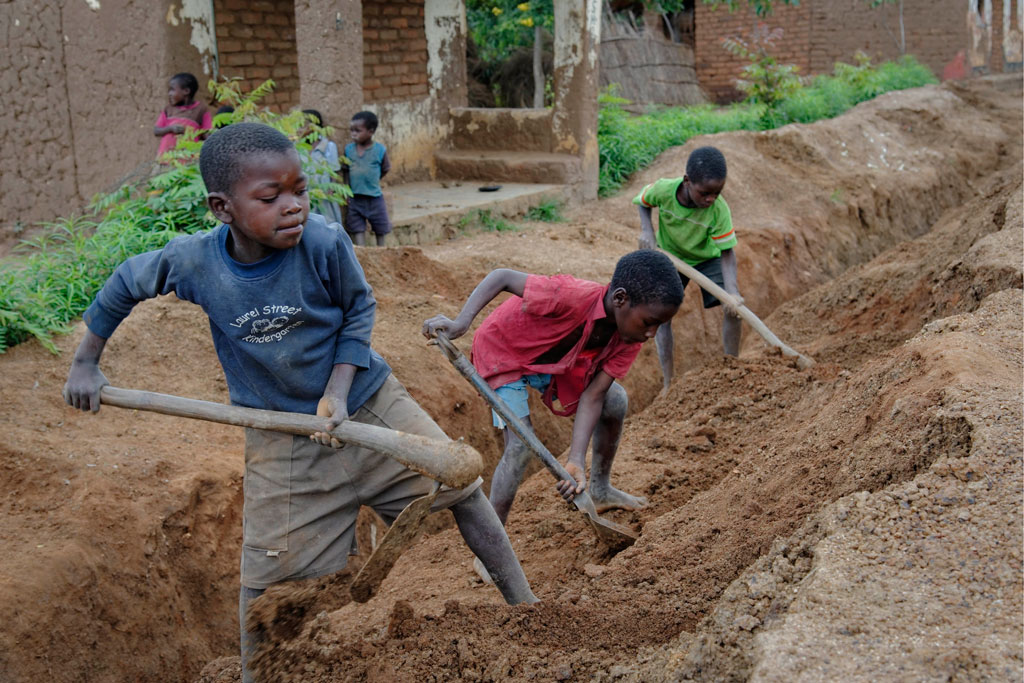
Africa has the world's highest incidence rates of child labour with severe rates in sub-Saharan Africa where more than 40 percent of all children aged 5–14 labour for survival, or about 48 million children.
As per the current status provided by the United Nations International Children's Emergency Fund (UNICEF), Sub-Saharan Africa has the largest proportion of child labourers (29 percent of children aged 5 to 17 years). In the Middle East and North Africa, fewer than 1 in 10 (7 percent) of children in this age group are performing potentially harmful work.
The 2016 Global Estimates of Child Labour indicate that one-fifth of all African children are involved in child labour, a proportion more than twice as high as in any other region. Nine percent of African children are in hazardous work, again highest of all the world's regions.
Africa has the largest number of child labourers. 72.1 million African children are estimated to be in child labour and 31.5 million in hazardous work.
An article published by the Washington State University tells "Ethiopia has nearly 60 percent of adolescents working in unsafe and illegal conditions. In some circumstances, there are children in the mining positions that "scavenge in garbage dumps and crawl in underground" looking for valuables, as well as domestic workers "suffer[ing] verbal and physical abuse."
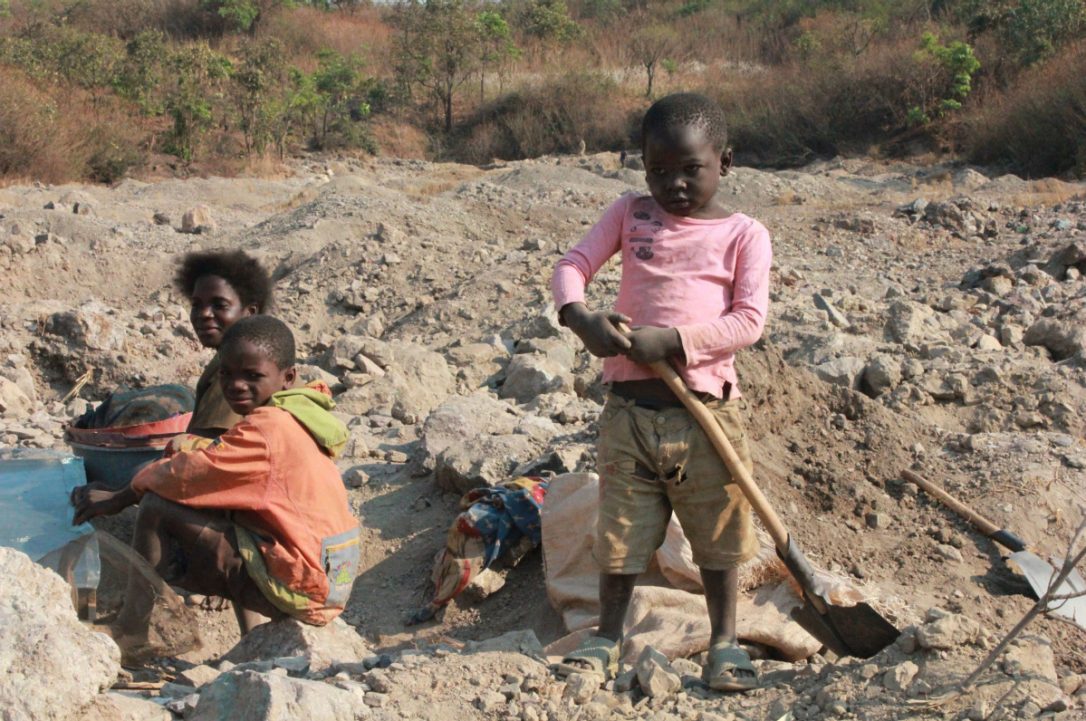
The article continues to state that children work horrendous positions as there are countless amounts of "victims of trafficking or commercial sexual exploitation" and some workers even have "munitions strapped to their bodies" in case of armed conflicts.
According to the International Labor Organization, Child labour went up in Sub-Saharan Africa over the 2012 to 2016 period, in contrast to continued progress elsewhere in the world, and despite the targeted policies implemented by African governments to combat child labour. The Africa region has also been among those most affected by situations of state fragility and crisis, which in turn heighten the risk of child labour.
Worldwide, the agriculture sector accounts for by far the largest share of child labour. In Africa, agriculture accounts for 85 percent of all child labour and for 61.4 million children in absolute terms. Child labour in agriculture relates primarily to subsistence and commercial farming and livestock herding, and it is often hazardous in its nature and in the circumstances it is carried out. Of the remaining children in child labour in Africa, 8.1 million (11 percent) are found in the services sector and 2.7 million (4 percent) are found in industry. Most child labour is unpaid, and most children in child labour are not in an employment relationship with a third party employer, but rather work on family farms and family enterprises.
Children's Statistics (Credit: SOS)
- 1 in 12 children in sub-Saharan Africa dies before his or her fifth birthday (United Nations).
- There are 17.6 million children in sub-Saharan Africa who suffer from acute malnutrition (World Bank).
- Between 1990 and 2014, the number of stunted children under 5 worldwide declined from 255 million to 159 million. At the same time, numbers have increased in West and Central Africa from 19.9 million to 28.0 million (UNICEF).
- In 2015, the risk of a child dying before reaching his or her 1st birthday was highest in Africa, 55 per 1,000 live births, which is more than five times higher than in Europe, which has a rate of 10 deaths per 1,000 live births (WHO).
- Children in sub-Saharan Africa are more than 14 times more likely to die before the age of 5 than children in developed regions (UNICEF).
- Pneumonia, diarrhoea and malaria accounted for about 1.3 million, or about 40 percent, of under-five deaths in Sub-Saharan Africa (UNICEF).
- In 2015, 95 percent of the estimated 306,000 deaths of children under 5 that were caused by malaria occurred in Africa (WHO).
- Sub-Saharan Africa continues to be the region with the highest incidence of child labour at 21 percent, or 59 million children (ILO).
- The Middle East and North Africa regions continue to show by far the highest youth unemployment rates, 28.2 and 30.5 percent, respectively, in 2014 (ILO).
The issue of child labour is guided by three main international conventions: the International Labour Organization (ILO) Convention No. 138 concerning minimum age for admission to employment and Recommendation No. 146 (1973); ILO Convention No. 182 concerning the prohibition and immediate action for the elimination of the worst forms of child labour and Recommendation No. 190 (1999); and the United Nations Convention on the Rights of the Child. These conventions frame the concept of child labour and form the basis for child labour legislation enacted by countries that are signatories.
In 2015, world leaders adopted the 2030 Sustainable Development Goals (SDGs): 17 interrelated goals and 169 associated targets to guide global development. SDG Target 8.7 calls on governments to:
"Take immediate and effective measures to eradicate forced labour, end modern slavery and human trafficking and secure the prohibition and elimination of the worst forms of child labour, including recruitment and use of child soldiers, and by 2025 end child labour in all its forms."
How is ILO Helping?
(Source: ILO)
ILO has a number of projects in Africa that seek to reduce, and ultimately eliminate child labour in Africa. The ILO aims to promote the progressive elimination of child labour, with priority given to the worst forms. The ILO supports African countries in the implementation of the ratified child labour Conventions through the provision of technical advisory services to ILO Constituents and the implementation of development cooperation projects.
In Africa, as elsewhere, FUNDAMENTALS/IPEC works closely with the ILO Regional and Country Offices to provide support for developing and strengthening public policies and legislation; policies and actions by governments, employers' and workers' organizations; knowledge development and sharing; direct actions at country and inter-country levels to develop intervention models to prevent, remove and protect children from the worst forms of child labour.
In spite of these important commitments and actions, the situation of child labour in Africa would require urgent attention in order to support governments and social partners to accelerate and scale-up interventions; with additional resources at the country, sub-regional and regional levels, so as to meet SDG 8.7 to end all forms of child labour by 2025 and forced labour, trafficking and modern slavery by 2030.
Child labour remains endemic and its elimination requires both economic and social reform as well as the active cooperation of all those active cooperation of governments, workers' and employers' organizations, enterprises, international organizations, and civil society at large.
(Disclaimer:- All the statistics in the article are in accordance with the International organizations ILO, UNICEF, World Bank, WHO etc. Devdiscourse bears no responsibility towards factual errors or statistics that may have been presented in the report.)
ALSO READ
-
South Africa Stumbles Against India's Fierce Bowling
-
India vs. South Africa: Thrilling Women's T20 Showdown
-
India's T20I Struggle: Batters Falter Against South Africa
-
South Africa Secures Series Lead: India Fights for Redemption in T20 Showdown
-
South Africa Vows Action Against Xenophobic Attacks on Migrants


 Google News