

IDB and ECLAC Launch First Regional Housing Data Hub to Tackle Urban Challenges
The platform is designed to support governments, architects, urban planners, financiers, construction firms, and researchers by providing reliable, comparable, and up-to-date information all in one place.
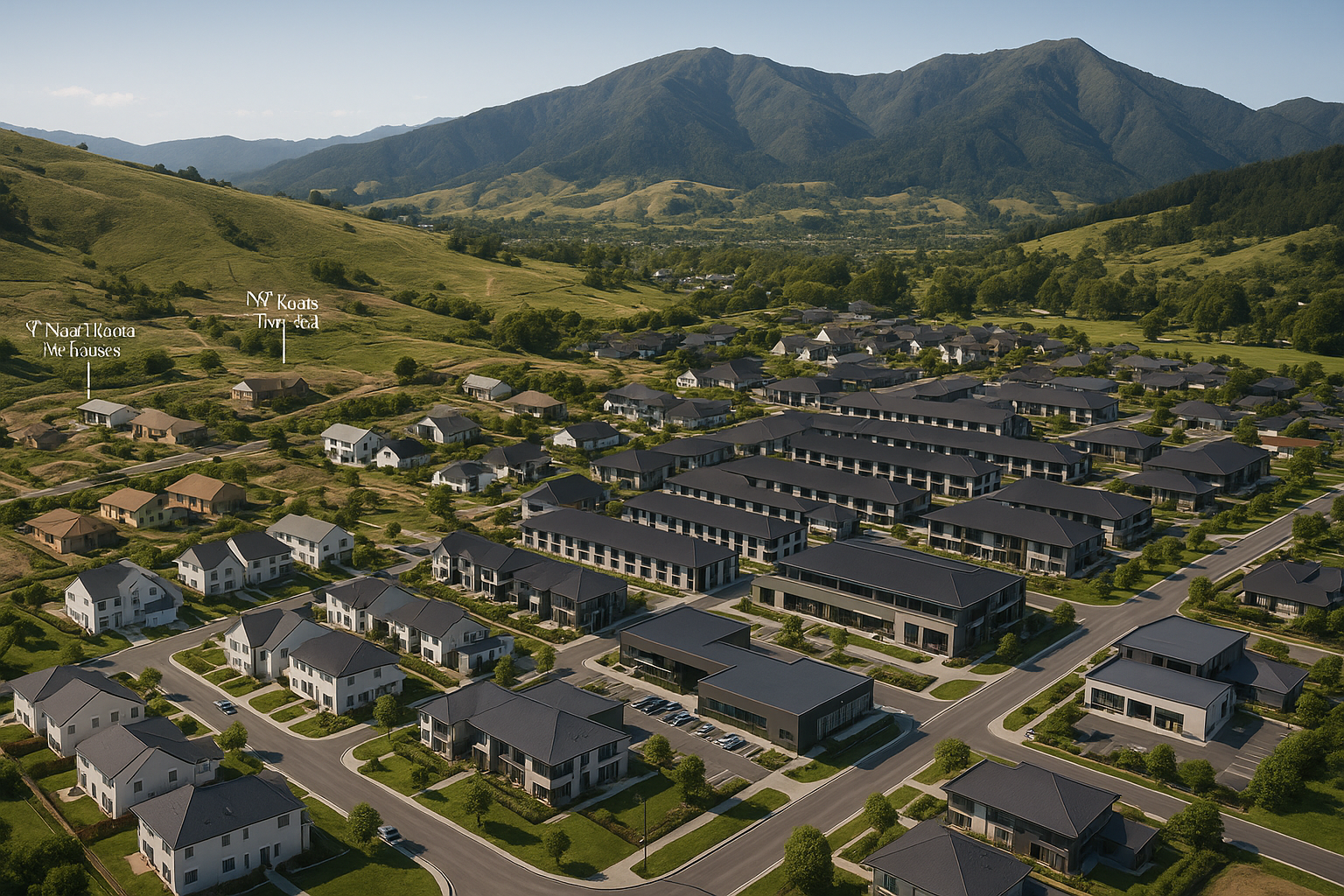
Housing shortages, rapid urbanization, and infrastructure gaps continue to pose some of the most urgent development challenges across Latin America and the Caribbean. Policymakers, planners, and housing authorities have long struggled with fragmented or outdated information, limiting their ability to design effective, evidence-based solutions. Recognizing this critical gap, the Inter-American Development Bank Group (IDB) and the Economic Commission for Latin America and the Caribbean (ECLAC), with support from the OECD, have unveiled a transformative new tool: Housing and Urban Intelligence, the region's first integrated data hub dedicated to housing and urban development.
This groundbreaking platform consolidates more than 3,000 indicators, 18 country profiles, and data from over 500 official sources, making it the most comprehensive and accessible repository of its kind in the region.
A One-Stop Hub for Housing and Urban Development Data
The platform is designed to support governments, architects, urban planners, financiers, construction firms, and researchers by providing reliable, comparable, and up-to-date information all in one place. By removing the need to navigate multiple data sources, Housing and Urban Intelligence dramatically simplifies analysis, enabling users to:
-
Identify policy gaps
-
Track progress over time
-
Monitor housing affordability trends
-
Measure urban growth and spatial dynamics
-
Evaluate infrastructure resilience
-
Develop targeted, evidence-based policies
The hub integrates demographic data, socio-economic indicators, housing market trends, environmental risk information, public investment records, and land-use data—offering a holistic view of urban systems.
A Collaborative Effort to Strengthen Regional Decision-Making
"For a year and a half, ECLAC and the IDB, with support from the OECD, have curated information from CEPALSTAT and other relevant sources to facilitate decision-making by key actors in the housing and urban development sector in the region," said Diego Aulestia, head of the Human Settlements Unit at ECLAC.
IDB housing specialist Paloma Silva emphasized the urgency of centralized, reliable data. "With this tool, which will continue to expand its content over time, we are responding to an urgent need in the region: a single information center that consolidates all the data necessary to understand and manage housing and urban development in Latin America and the Caribbean."
Official Launch at MINURVI 2025
The platform was formally launched during the XXXIV General Assembly of the Forum of Ministers and High-Level Authorities of Housing and Urban Development of Latin America and the Caribbean (MINURVI), held in Bridgetown, Barbados. The forum brings together regional housing ministers, senior authorities, and international partners committed to strengthening regional cooperation on urban development policies.
At the event, participants highlighted the critical role of accurate data in addressing issues such as:
-
Affordable housing shortages
-
Informal settlements and urban inequality
-
Climate vulnerability and disaster risk
-
Land-use inefficiencies
-
Infrastructure deficits
-
Sustainable city planning
Several ministers emphasized that data-driven decision-making is central to building inclusive, climate-resilient, and well-governed cities as the region continues to urbanize rapidly.
A Tool for the Future of Urban Development
Housing and Urban Intelligence is expected to evolve and grow, incorporating new datasets and analytical capabilities. Future expansions may include predictive modelling tools, interactive dashboards, subnational comparisons, and integration with climate adaptation and disaster risk platforms.
For a region facing mounting socio-economic pressures, this platform represents a major step toward strengthening public policy, improving investment planning, and designing more resilient, equitable, and sustainable urban environments.


 Google News