

China makes new push to take yuan global, vows vigilance against financial risks
China's central bank and top regulators unveiled measures to promote the yuan's global use, open up financial markets, and manage liquidity, amid the country's economic restructuring.
- Country:
- China
China announced fresh measures on Wednesday to promote the global use of the yuan and unveiled plans to better manage domestic money market liquidity as the world's second-biggest economy undergoes a painful restructuring.
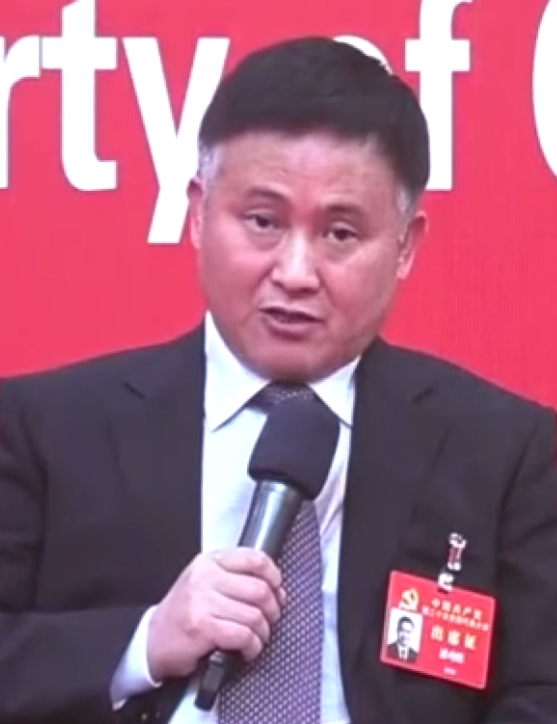
Top financial regulators also vowed at the annual Lujiazui Forum in Shanghai to further open up China's financial markets prudently, as the country shifts its growth engine to technology and innovation from property and investment. "As financial markets continue to deepen and develop ... cross-market risk contagion may become more frequent," said Pan Gongsheng, governor of the People's Bank of China (PBOC), pledging to prevent systemic risks as China "continues to integrate into the global financial system".
To promote the offshore yuan business in Shanghai, Pan said six top state banks, including Bank of China and China Construction Bank, have been authorised to conduct offshore yuan transactions in the city's free trade zone. The PBOC also created a tool, called the FIMA RMB Repo, that would enable overseas central banks and sovereign wealth funds to obtain yuan liquidity more easily by using top-rated Chinese bonds as collateral to borrow.
"Foreign investors including central banks are actively entering China's bond market, and their need to manage liquidity is also rising," Pan said. China is stepping up yuan internationalisation efforts, in a bid to reduce its dependence on a global payment system dominated by the U.S. dollar.
Pan's speech came a day after the PBOC's digital yuan operation centre signed direct participant agreements with 26 financial institutions in Shanghai to promote the global adoption of the digital currency, also known as e-CNY. LIQUIDITY MANAGEMENT
In the domestic money market, Pan said China will increase the variety of overnight reverse repo operations to better manage liquidity. The PBOC is also studying a liquidity tool to support non-banking financial institutions in a crisis, seeking to balance the need to maintain financial stability and prevent 'moral hazard'.
Pan said that loan growth in China has slowed in recent years while bond and equity financing have risen steadily. This structural change reflects the "profound economic restructuring and a shift in growth engines" underway, he said. "It's difficult and unnecessary for China's credit growth to maintain its previous pace," he said.
Marco Sun, chief financial market analyst at MUFG (China), said that the PBOC's role in the economy is evolving. "In the past, the PBOC functioned more as the 'central bank of the banking system,'" Sun said. "In the future, the central bank cannot limit itself to managing the banking system; it must also more directly manage market liquidity, the cost of capital, and financial market stability."
The comments from Pan and other regulators drew a muted market response. China stocks were little changed on Wednesday while the yuan was steady. PREVENTING SYSTEMIC RISKS
At the same event, China's top banking regulator vowed to prevent systemic financial risk and channel resources to emerging industries. Ding Xiangqun, newly appointed head of the National Financial Regulatory Administration, expressed confidence that regulators will prevent risk from small financial institutions and resolve risk from real estate and local government debt.
"In recent years, cross-border transmission and cross-market spread of financial risks have become increasingly pronounced," Ding told the annual Lujiazui Forum in Shanghai. Regulators will "encourage institutions to raise capital through multiple channels to enhance their risk resilience," Ding said.
China's economy is witnessing increasing imbalance, with consumption weak and the property sector struggling, but investment is hot in emerging sectors such as robotics and AI. Reflecting the two-speed economy, China's retail sales in May fell for the first time in over three years and investment slumped, while industrial output picked up pace.
Ding said regulators will guide financial resources to emerging and future industries, and step up regulatory cooperation in emerging areas. Authorities will also crack down on disorderly competition and prevent illegal financial activities, Ding said.
At the forum, Zhu Hexin, head of China's forex regulator, unveiled plans to issue fresh quotas under the outbound Qualified Domestic Institutional Investor (QDII) investment scheme. That underscored Beijing's efforts to route capital through regulated channels, following a crackdown on "illegal" cross-border investments in late May.
And top securities regulator Wu Qing told the same forum that China's stock market will "actively embrace" the technological revolution, but will crack down on speculation and manipulation.


 Google News