

RBI aims to strengthen growth impulses with second consecutive rate cut
- Country:
- India
The Reserve Bank for the second consecutive time on Thursday cut the benchmark lending rate by 25 basis points to 6 per cent, citing the weakening economic momentum with negative output gaps and missing private investments on one hand and the cooling inflation readings on the other.
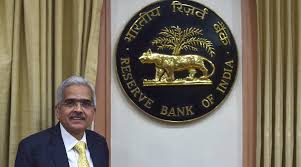
The central bank specifically mentioned the output gap which remains negative and sluggish private investments, coupled with other headwinds facing the economy from the global front as the reasons for its 4:2 majority vote to lower the rates to 6 from 6.25 per cent for the second time in as many months. "There also a need to strengthen the growth impulses by spurring private investments which have remained sluggish," governor Shaktikanta Das told reporters.
The widely expected rate cut was voted by Das, Pami Dua, Ravindra Dholakia and Michael Patra, while deputy governor Viral Acharya and Chetan Ghate voted for status quo. The rate-setting panel also maintained the neutral monetary policy stance with a 5:1 majority. "With the inflation outlook remaining benign, we will address the challenges to sustain growth (which is facing many a headwind), while ensuring price stability on an enduring basis in pursuance of its legal mandate," Das said.
Assessing the rising tides of global headwinds, the RBI lowered its GDP growth forecast for FY20 to 7.2 per cent from 7.4 per cent in the February policy. Its new forecast also matches the latest projection by the IMF, which also Wednesday also cited the increasing headwinds to the global economy for lowering its outlook on the domestic economy. The central bank expects growth to be in the range of 6.8-7.1 per cent in the first half and 7.3-7.4 per cent in the second half.
But it sees tailwinds to the inflation side, enabling it to revise downwards retail inflation projection to 2.4 per cent for the fourth quarter of FY19 from 2.8 per cent, while it sees CPI inflation to be in the range of 2.9-3 per cent in first half of FY20 and 3.5-3.8 per cent in the second half.
Das also cited the positive trends in the inflation front for lowering the rate, saying "with the inflation outlook remaining benign, we will address the challenges to sustain growth, while ensuring price stability on an enduring basis in pursuance of its legal mandate." He said the central bank will continue to watch the evolving macroeconomic situation and shall decisively act at the appropriate time.
Flagging concerns on the uneven and less broad-based credit flow, he said while the 14 per cent headline credit demand is not broad-based, the situation is much worse for the other sectors like the micro and small as well as medium industries have remained tepid, though they improved for large industries. "While bank credit is growing at 14.3 per cent, it is not a broad-based. Credit flows to micro and small industries, which are critical to employment and exports, was flat at 0.6 per cent and 0.7 per cent, respectively" he said.
Calling on the banks to help the central bank in realising its objective with easy money to prop the economy up, Das said despite two consecutive rate cuts, appropriate and effective transmission is still missing. "After the last meeting I had held with banks some of them have marginally (up to 5-10 bps) cut their MCLR, but they need to do more," he said.
He said RBI has taken a lot of action in infusing additional liquidity into the system by the way of OMOs and currency swaps. "It shall be our effort to ensure there is adequate liquidity in the system. We will use all available tools to infuse liquidity," the governor said.
On the Supreme Court quashing the stringent RBI circular on debt resolution, he said the apex bank has not taken away the powers of RBI, but only said those powers should not be used in a certain manner and that soon they will issue revised guidelines for NPA recognition and resolution. He said the central bank remains committed to not only maintain but also to speed up and to enhance the momentum of resolution of stressed assets.
"We are not only committed but it's our endeavour to ensure there is the faster resolution of stressed assets as it is very critical for the stability of the banking sector and has an impact on the overall financial condition," Das said.
When asked whether the rising instances of RBI being dragged to courts, including by an entity regulated by it (Kotak Mahindra Bank) and power companies, is a matter of concern, Das said it is the democratic right of any entity to challenge the decision of any authority in a court of law and the RBI is an exception.
He said the RBI is undertaking wider stakeholders consultations and based on that the decisions are being taken. "But it has to be appreciated that there are certain regulatory aspects where due to the criticality it is not possible for the central bank to place it in the public domain and get comments. These are cases where RBI has to act on its own wisdom and based on internal consultations with stakeholders and experts," he said.
On NCLAT asking banks not to classify IL&FS loans as NPAs, he said RBI has already filed a petition at the NCLAT seeking a modification of its order.


 Google News