

China confronts BRI 'debt trap' concerns highlighting benefits to other countries
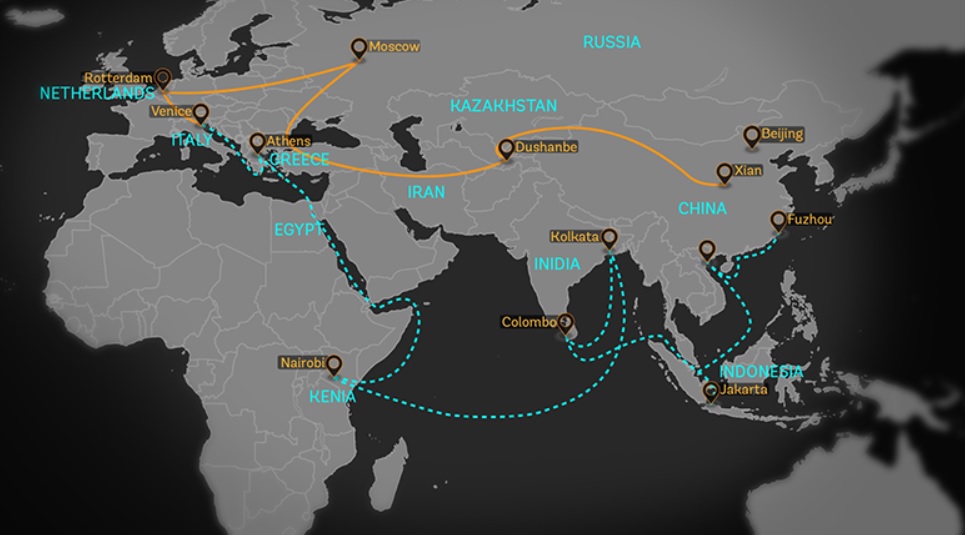
The Belt and Road Initiative (BRI) envisages massive investments in maritime, road and rail projects across 65 countries from Asia to Europe and Africa that collectively account for 30 per cent of global GDP.
- Country:
- China
Chinese President Xi Jinping said that the Belt and Road Initiative would not solely serve the Chinese interest, but will benefit "all of its participants." Jinping also said that the BRI is not an exclusive club. China is hosting Second Belt and Road Forum for International Cooperation (BRFIC) in Beijing as it seeks to allay debt concerns in participant countries.
Jinping's statement comes just a day after Chinese Finance Minister, Liu Kun, said that China will establish an analysis framework on debt sustainability for Belt and Road projects to "prevent and resolve debt risks".
China will follow market principles and rely on commercial funds for Belt and Road financing, Yi said, adding that China will improve transparency for those projects. "We should strengthen debt and risk management. We should objectively and fully understand the debt problems of developing countries," he added.
Debt trap concerns
The Belt and Road Initiative (BRI) envisages massive investments in maritime, road and rail projects across 65 countries from Asia to Europe and Africa that collectively account for 30 per cent of global GDP. Western governments have tended to view it as a means to spread Chinese influence abroad, saddling poor countries with unsustainable debt.
While most of the Belt and Road projects are continuing as planned, some have been caught up by changes in government in countries such as Malaysia and the Maldives.
Those that have been shelved for financial reasons include a power plant in Pakistan and an airport in Sierra Leone and Beijing has in recent months had to rebuff critics by saying that not one country has been burdened with so-called "debt traps".
Sri Lanka turned over a deep-sea port to China for 99-years after it was unable to repay loans. Pakistan needs an international bailout. And Montenegro has had to make difficult choices after taking on crushing Chinese debt to pay a Chinese company to build a new highway. It has also become an election issue in some countries.
Momentum appears to be with China
Despite the criticism, momentum appears to be on Xi's side, with leaders from 37 countries flocking to Beijing for the three-day summit beginning Thursday. It's the second such event, with an inaugural 2017 summit bringing 29 leaders together.
China added a key nation to its Belt and Road roster when Italy became the first G7 member to sign on to the project last month. Prime Minister Giuseppe Conte participated in the summit and Switzerland appears set to sign on with President Ueli Maurer flying to Beijing.
Russian President Vladimir Putin and other leaders from Europe, Asia and Africa are also attending the BRFIC, but major EU nations are sending ministers and the United States said it would not have a high-level delegation.


 Google News