

Gulabo Sitabo review: Story of an old Mahal but with young satire

- Country:
- India
Set in Lucknow, the opening scene of 'Gulabo Sitabo' brings up a cheerful chorus performed by a traditional puppet show. "Gulabo khub lad Sitabo khub lad", the lines chanted by clever and cunning puppets called Gulabo and Sitabo, tied to a thread, and commanded by a puppeteer depicts the movie in a nutshell. The puppets depict life Mirza and Bankey, who are fighting throughout for something selfishly dear to them. They are the Gulabo and Sitabo of this movie.
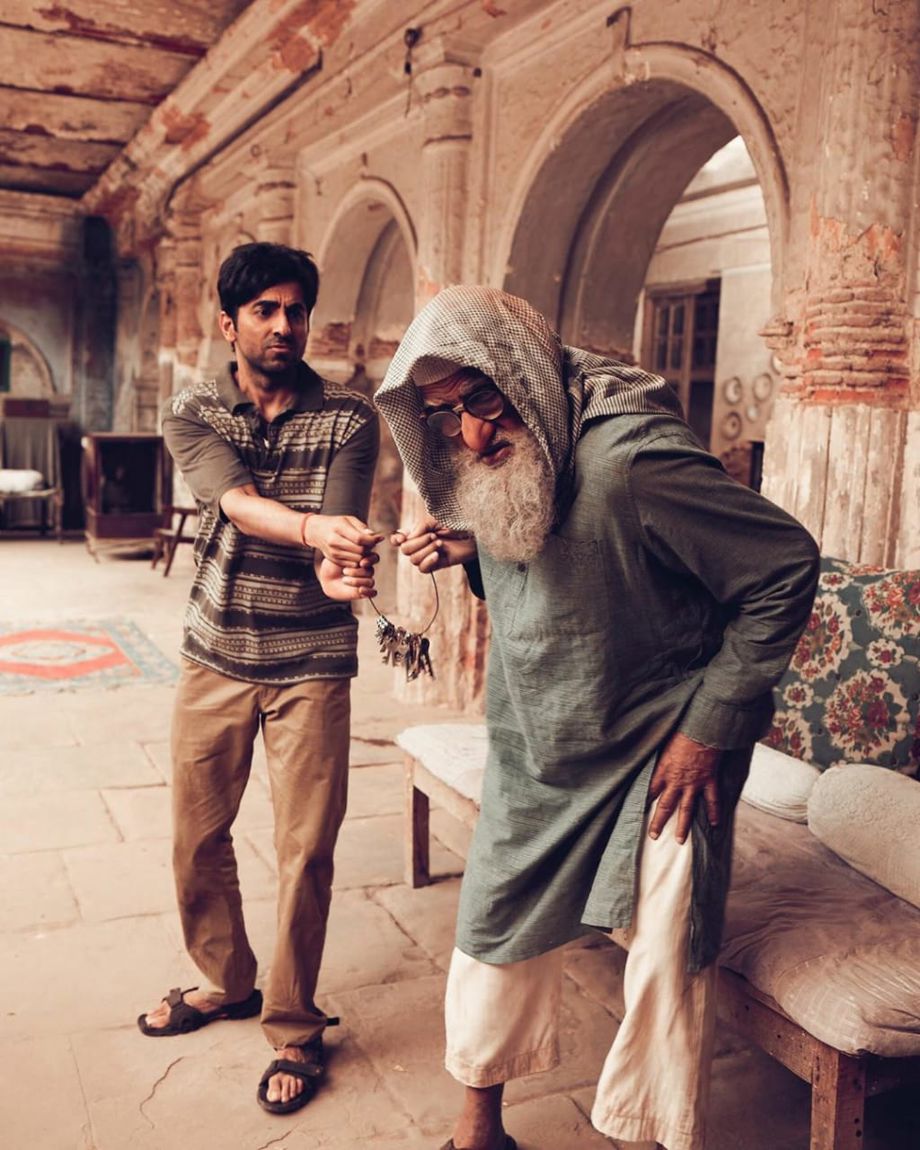
Written by Juhi Chaturvedi and directed by Soojit Sircar, the movie is a drive of Indianess at its most with its screenplay. The 'elegantly poor' Mirza Chunnan Nawab (played by Amitabh Bachchan) and a 'meticulously illiterate' tenant Bankey (played by Ayushman Khurana) emerge as the puppet of greed and haplessness. Mirza, who is married to Fatima Begum wants her to die since she is the legitimate owner of a century-old haveli called Fatima Mahal. This old scrooge-like man, Mirza, is essentially the 'better half' of Bankey. In their love for a home to be called and felt their own, they quarrel no less than a couple. Whereas, Bankey's family has usurped a place in this haveli with a petty amount of thirty rupees as rent for more than seventy years now. The only claim Mirza has in the haveli is of a caretaker.
Mirza is a miser who is a kleptomaniac by choice, sometimes steal bulbs, pickle, and even floor form Bankey's place. As the movie gears up in an action-reaction theory between Bankey and Mirza, they both fail to stipulate emotional sympathy from its audience for a while. Caught in the race of upmanship, they emerge cold at times. They meander in their individual characters without bringing an energetic move. But in rescue, a beautiful supporting cast helped the story reach the denouement. When Mirza and Bankey couldn't make it through, the movie drifts with a slow rhythm. Only until the supporting cast helps to move it towards the end. The lost energy is revived with two counters Gyanesh Shukla (played by Vijay Raaz), an officer of Archaeological Survey Of India, and Christopher (played by Brijendra Kala), a local lawyer who spice up the drama together. Further adding vigor to the slow ballad is Bakney's sister Guddu (played by Srishti Shrivastava), who appears as a lady with wits, driven by her ambitions. And one of the prominent characters, Fatima Begum (played by Zafar), makes the audience laugh with her boss-lady attitude.
Fatima Mahal
Even though the mahal is love to Mirza as he says, "mohabbat karte hai hum apni haweli se, beimtehan", the outmost love of authority is what he has desired all his life. And Bankey, who claims this haveli as his house agrees to its restoration and makes a deal with Gyanesh Shukla.
Not only an archaic building but Fatima Mahal is also a symbol of sacrifice, as begum Fatima says, "humne apse nikah isliye kiya kiuki apko haweli se mohabbat thi". The old frivoled heritage which is ill-maintained yet desired by all is an example of ignorance in reality and lust of upmanship.
Socio-political satire
"Hum sarkar hain, humein sab pata hai", the line delivered by Gyanesh Shukla remarks a prominent tone of political satire. The beauty of this satire dwells deeply in the 'nawabi' language of the show. A mixture of Hindi-Urdu-Awadhi is linguistic of its characters, swelled with pride yet nuisance in a grave show of reality.
Juhi has candidly tried to knit the culture of her hometown, with a sharp variation of 'nawabo ka sheher', to a world inside the mahal and its people. The description of lives is tuned with an apt song, "banke madari ka bandar, dug duggi pe nache sikandar".
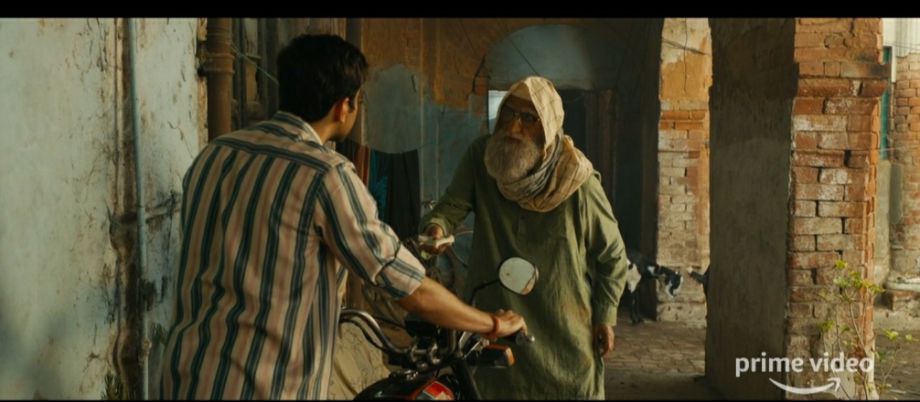
With a great dedication to each scene and an eye of detailing to all characters, the movie is a rustic-urban narration of Bollywood. Released in the times of lockdown the movie was premiered on June 12 on Amazon Prime.


 Google News