

Ex-members of religious group mixed on Barrett nomination
“I think that she needs to be open about it and transparent about it.” The AP has documented extensive ties Barrett and her family have to the community, including that an old directory listed her as being one of the organization's “handmaids,” now called a “woman leader.” She was a trustee of the group's Trinity Schools, and as a young law student, lived in a house owned by one of its co-founders. People of Praise is not a church, but a faith community.
- Country:
- United States
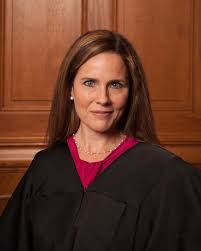
Supreme Court nominee Amy Coney Barrett's affiliation with the Christian community People of Praise is drawing scrutiny because of what former members and observers describe as its ultraconservative views on women. Her defenders say scrutinizing her beliefs and relationship to the mostly Catholic organization is akin to anti-religious bigotry. But in interviews with a dozen former members of the organization and graduates of the schools it runs, most told The Associated Press that Barrett's association with the group should be examined when the Senate takes up her nomination beginning Monday.
Some were proud and excited that one of their own could soon be on the high court, in a position to roll back abortion rights. Others were deeply concerned about that threat, and also about the community's teachings on gender, gay rights, and other social issues. They also raised flags about what they describe as the organization's authoritarian structure.
Some wondered why Barrett has not disclosed or even acknowledged her connection to People of Praise and why the group appeared to try to hide her affiliation by deleting documents from its website. "I don't think membership in the group is disqualifying," said Rachel Coleman, who left the community in 2010. "I think that she needs to be open about it and transparent about it." The AP has documented extensive ties Barrett and her family have to the community, including that an old directory listed her as being one of the organization's "handmaids," now called a "woman leader." She was a trustee of the group's Trinity Schools, and as a young law student, lived in a house owned by one of its co-founders.
People of Praise is not a church, but a faith community. It grew out of the Catholic charismatic movement rooted in Pentecostalism that began in the late 1960s. The movement emphasizes a personal relationship with Jesus and can include baptism in the Holy Spirit, speaking in tongues and prophecy, according to former members and experts who have studied the movement. People of Praise was founded in 1971 in South Bend, Indiana, and now has 22 branches and around 1,700 members across North America, according to its website. While it includes people from several Christian denominations, most of its members are Roman Catholic.
Among its teachings are that men are divinely ordained as the "head" of both the family and faith, and it is the duty of wives to submit to them, according to current and former members. People who have been involved in and studied the organization say it is authoritarian and hierarchical, and some former members told AP of practices such as leaders deciding who can date who. The group has a strong communitarian bent. It encourages members to live in the same neighborhoods. Single people often live with families in the community or together in same-gender communal households, where they pool resources or even turn their paychecks over to be shared, according to articles previously published on the organization's website, as well as former members. People who join the community must sign a "covenant," in which they pledge love and service to fellow community members and to God. Members agree to give at least 5 per cent of their income to the community, according to their website.
The AP left messages with more than a dozen current members of the organization and scores of former members. Several declined to comment, and about a dozen agreed to interviews. Several spoke to AP on condition of anonymity because they have family involved in the community. A People of Praise spokesman declined to comment on the current and former members' views. "The People of Praise does not take positions on partisan political matters, legislation, or constitutional interpretation. Similarly, we take no position on who should or should not sit on the U.S. Supreme Court," spokesman Sean Connolly wrote.
Coleman's husband grew up in the Muncie, Indiana, branch and when they were dating, she agreed to go "underway," a multiyear process that members undertake before signing the covenant. Coleman said People of Praise offers a strong sense of community that is often missing in modern secular life, and that can be a powerful draw. "They really are about living in the community and serving and giving back and helping and building God's kingdom on earth in a way that's easy to feel really, really passionate about," Coleman said.


 Google News