

Farm laws reflect our demands, will try to improve them: Shetkari Sanghatana head
Shetkari Sanghatana chief Anil Ghanwat, a member of the committee appointed by the Supreme Court to hold talks with agitating farmers, said on Tuesday that the new farm laws partially implement what his outfit has been demanding for decades. His attempt will be to improve them, he said, while coming out in support of reforms including permission for contract farming. We are not lauding the Centres three acts that are described as giving freedom to farmers.
- Country:
- India
Shetkari Sanghatana chief Anil Ghanwat, a member of the committee appointed by the Supreme Court to hold talks with agitating farmers, said on Tuesday that the new farm laws partially implement what his outfit has been demanding for decades.
His attempt will be to improve them, he said, while coming out in support of reforms including permission for contract farming.
''We are not lauding the Centre's three acts that are described as giving freedom to farmers. It was the ShetkariSanghatana headed by late Sharad Joshi which had pressed for these changes first,'' Ghanwat, whose organization has been accused of backing the Centre on the issue despite representing farmers, said.
''Now the current government has tried to implement them to some extent. My role in the committee will be to protect the interest of farmers and improve these laws,'' he said.
Sharad Joshi, an economist who had worked with theWorld Bank, founded the Shetkari Sanghatna in the late 1970s.
Among other things, he wanted freedom for farmers from restrictions on sale and export of produce.
''The demands have been met to some extent after 40years of our relentless struggle. We have been and still are of the opinion that farmers should get the freedom to choose cropping patterns and get access to technology,'' Ghanwat said.
''We are completely against the cess charged by the government (at Agriculture Produce Marketing Committees). TheCentre had done away with the cess but due to some external pressure, it was later included in the laws,'' he said.
The committee will note the objection to the cess as it is always charged to farmers though traders are supposed to pay it, he said.
''The Supreme Court has given us a framework and we will hold talks with farmers' leaders who are opposing the current acts. We will try to find a solution by hearing their side,'' Ghanwat said.
Asked about the apprehension that farmers will lose their land in contract farming, he said, ''Contract farming is already going on at the local level. Besides, a buyer company is interested in produce and not in farming. I am not aware of any case of land grabbing by a corporate house.'' The Supreme Court has time and again rapped Centre over farmer suicides, and to end them reforms are necessary, Ghanwat added.
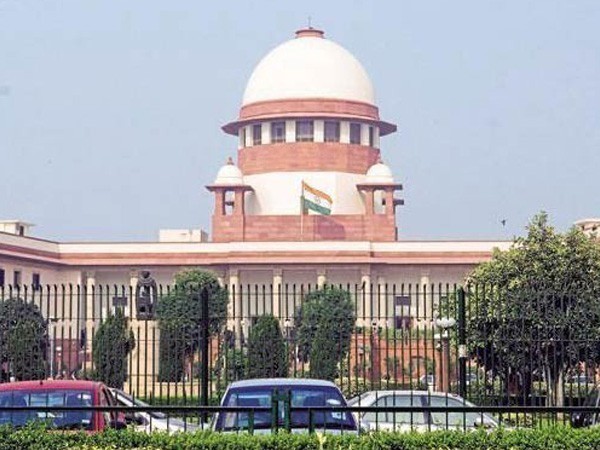
The Supreme Court on Tuesday stayed the implementation of controversial new farm laws and decided to set up a four-member committee to resolve the impasse between the Centre and the farmers' unions protesting against the laws at Delhiborders.
The top court stayed the implementation of the farmers' (Empowerment and Protection) Agreement on PriceAssurance and Farm Services Act, Farmers' Produce Trade and commerce (Promotion and Facilitation) Act, and the EssentialCommodities (Amendment) Act.
The panel will comprise Bhupinder Singh Mann, President of Bhartiya Kisan Union; Anil Ghanwat of ShetkeriSanghatana; Pramod Kumar Joshi, director for South Asia, International Food Policy Research Institute, and agriculture economist Ashok Gulati.


 Google News