

FM Sitharaman says Centre, States need to work together to lower fuel prices
- Country:
- India
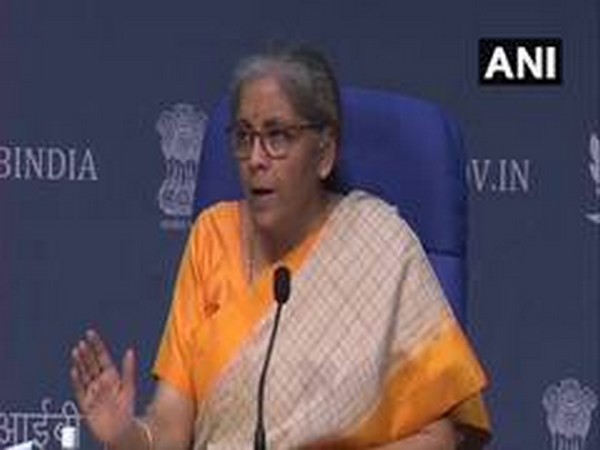
Amid an outcry over record highpetrol and diesel prices, Union Finance Minister NirmalaSitharaman on Saturday said the Centre and state governmentswill have to together work out a mechanism to bring retailrates to reasonable levels.
As much as 60 per cent of the retail price of petrol,which shot above Rs 100-mark in some places in Rajasthan andMadhya Pradesh and is at an all-time high elsewhere in thecountry, is made up of central and state taxes.
Taxes make up for about 56 per cent of the record highdiesel rates.
Sitharaman, who had increased central excise duty onpetrol and diesel by a record margin last year to mop upgains arising from international oil prices plunging to two-decade low, remained non-committal on cutting taxes to giverelief to consumers.
''This is a very vexatious issue. An issue in which noanswer except reducing the price (of fuel) will convinceanyone. I know I am treading on an area and whatever I maysay, to bring in the reality into picture, will only soundlike I am obfuscating.'' ''I am avoiding my answer. I am shifting the blame,'' shesaid addressing a gathering at an event organised by theChennai Citizens' Forum here.
She went on to explain the tax structure and howproduction cuts by oil cartel OPEC and its allies had led to arally in the international oil prices, leading to a hike inretail rates in India.
She, however, said the answer may lie in bringingpetrol and diesel under the Goods and Services Tax (GST)regime, which will end the cascading impact of taxes and bringuniformity.
Currently, the central government levies a fixed rateof excise duty while states levy different rates of VAT. UnderGST, the two would merge and bring uniformity, solving theproblem of fuel rates being higher in states with higher VAT.
''What I am saying is that this is a vexatious issueand no Minister can ever convince anybody because Indiansbeing Indians and I am one of them, (will not be convinced),''she said.
''It is a matter of fact that both Centre and Stateswill have to talk.'' Stating that the states levy ad valorem rates ofsales tax or VAT which help them get more revenue wheneverprices go up, she said it won't serve any purpose if theCentre were to take the moral high ground and bring downexcise duty to zero.
''I can do that (cut taxes) if I have a certainguarantee that my revenue foregone will not be an opportunityfor somebody else to get into this space and gain that,'' shesaid.
''If all of us are talking about consumer prices (onfuel to) come down (and the) tax raised by the Centre, taxraised by the states are not holier than one another.''The taxes by centre and states equal, she said.
Fuel retailers, who were given pricing freedom over theyears, daily decide on retail rates depending on benchmarkinternational prices and foreign exchange rates.
''Technically, the oil prices have been freed and thegovernment has no control over it,'' she said hopinginternational oil prices will come down.
India is 85 per cent dependent on imports to meet itsoil needs and so retail rates are linked to internationalprices.
''So long and short of it is (that) the states and theCentre have to sit together and see whether there is a way inwhich the retail price of fuel is at a reasonable level,'' shesaid.
Sitharaman said as a finance minister she cannot beone minister in the Union government to say how much the pricecan be decreased and whether that would not guarantee theStates to earn more money.
''Because every government needs more money, needsrevenue and at the same time I can see a relief that not oneadditional paisa is being demanded from the taxpayers (fromthe budget),'' she said.
Asked whether bringing the fuel prices under Goodsand Service Tax would lead to an answer, she said, ''it canbe.'' ''But to get it (fuel prices) under GST needs to be athorough discussion in the GST Council (comprising Centreand the states),'' she said.
The finance minister said if the GST Council agrees onone rate then all over the country there can be one fuel pricerather than Chennai being more expensive than New Delhi or NewDelhi more expensive than Mumbai.
''That anomaly can be addressed if it is under GST. Andthat can be just one tax which can be shared by both Centreand State,'' she said.
Petrol and diesel prices have been increased for 12straight days, taking them to an all time high of Rs 97 perlitre for petrol in Mumbai and over Rs 88 mark for diesel.
Retail pump prices differ from state-to-state dependingon the local taxes (VAT) and freight.


 Google News