

State farming project on land cleared of `squatter' farmers starts in Darrang
The Assam Governments ambitious project to bring in modern farming techniques in Darrang after ironically turfing out a more than 7,000-strong farming community, has begun in earnest.Some 500 indigenous youth have been hired to farm the Gorukhuti Agriculture Project set up on lands from where farmers from the minority community who the Assam government claims were illegal squatters were driven out earlier this month in an eviction marred by clashes, police firing and death of two people, including a 12-year-old boy.
- Country:
- India
The Assam Government’s ambitious project to bring in “modern farming techniques” in Darrang after ironically turfing out a more than 7,000-strong farming community, has begun in earnest.
Some 500 “indigenous” youth have been hired to farm the Gorukhuti Agriculture Project set up on lands from where farmers from the minority community who the Assam government claims were “illegal squatters” were driven out earlier this month in an eviction marred by clashes, police firing and death of two people, including a 12-year-old boy. Lok Sabha MP and BJP’s National General Secretary Dilip Saikia said ''some people'' are trying to ''politicise and communalise'' the entire project, but the government is determined to move ahead “for the development of the state”.
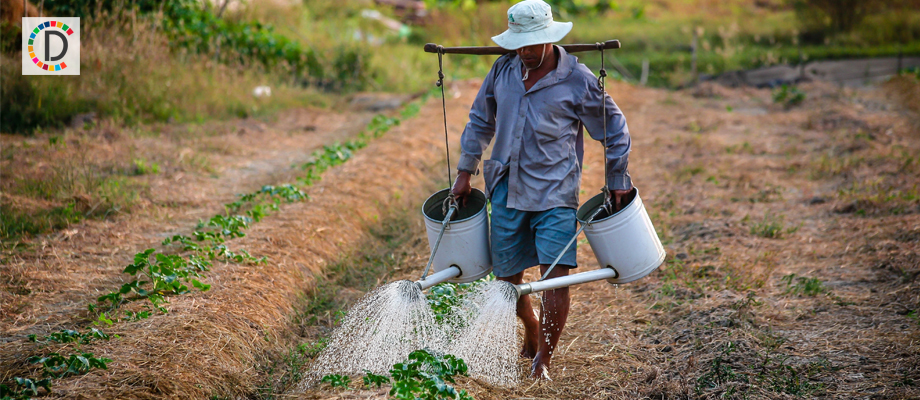
''We have started farming in around 40-50 bighas (roughly 15 acre) of land. We have begun with cultivation of spinach, bottle gourd and pumpkin. The work got delayed a little due to the eviction issues,'' he told PTI in an interview here.
The eviction has been protested by most opposition parties and local peasants who claim they have been farming on the land for decades with the knowledge of successive governments including the BJP’s. The state government however contends the farmlands on `char’ land (sand bars created by the shifting course of the river) always belonged to the state and was illegally occupied. ''We have hired 500 youths, including girls, for the project. We are thinking of giving Rs 6,000 per month as remuneration to them besides other facilities. We will now construct camps for them (the new workers) on the project site,'' Saikia said.
Paradoxically, the camps will be built at the same location where the razed houses of those evicted stood in the three villages of Dhalpur, on the 'char' which emerged out of the Brahmaputra some decades back.
Saikia is a member of the Gorukhuti Agriculture Project Committee, headed by BJP MLA Padma Hazarika which also has legislators Mrinal Saikia and Paramananda Rajbongshi as members.
The Assam government has allocated Rs 9.60 crore in the current fiscal to the project to bring in “modern farming techniques and scientific animal rearing practices” across 77,420 bighas of land in the area, also known as Sipajhar.
The BJP Parliamentarian from Mangaldoi said a temporary road is being constructed now to cross the Nanoi, a channel of the Brahmaputra, as water levels are receding post monsoon.
''We are thinking of requesting the Chief Minister to sanction a Bailey bridge. He may urge the Army to construct one so that we can transport vehicles and other equipments,'' he said.
The evicted farming families whose houses, mosques and schools were razed for the Gorukhuti project, now live across the Nanoi in a shanty-town in unhygienic conditions.
Saikia however claimed that after the eviction the state government provided those evicted with relief materials and “showed them new lands to build their homes.” “The Chief Minister has already said six bighas (roughly 2 acre) of agricultural land will be given to them (each family) so that they can continue farming,” he added.
However, he alleged that “some people are trying to politicise and communalise” the eviction drive and the project. “They just don't want to leave their land and don't want the project to succeed,'' he said. Saikia said the committee is determined to implement the project regardless of ''obstacles'' which crop up and described it as a ''do or die situation for the development of indigenous people'', without clarifying who he considered ''indigenous'' and who he considered as outsiders.


 Google News