

DSR method for paddy sowing gets low response in Punjab
- Country:
- India
The direct seeding of rice (DSR) method for paddy sowing has received a low response in the state, as the target for this less water-consuming technique in Punjab has fallen way short of the 12 lakh hectares target for the current season.
Punjab could bring only 82,000 hectares of area under the DSR method for paddy sowing, as against the target of 12 lakh hectares in the current Kharif season, despite the push from the Bhagwant Mann-led government for the adoption of the DSR method for paddy sowing.
Under the DSR technique, paddy seeds are drilled into the field with the help of a machine that does the seeding of rice and spray of herbicide simultaneously.
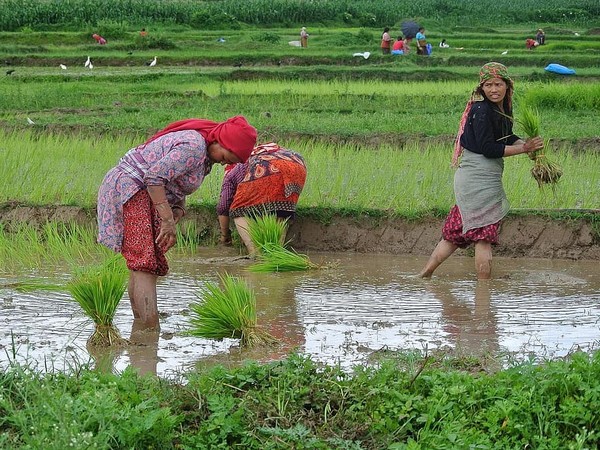
In the traditional method, first young paddy plants are raised by farmers in nurseries and then these plants are uprooted and transplanted in a puddled field.
The DSR method needs far less water for irrigation, improves percolation, reduces dependence on farm labor, and improves soil health, thus enhancing the yield of both paddy and wheat by 5-10 percent.
It also helps in saving nearly about 15-20 percent of water as compared to the conventional puddling method.
According to an official of the state agricultural department, an area of 82,000 hectares has been sown under the DSR method. Last year, the state brought six lakh hectares of area under the DSR technique.
Punjab grows paddy over an area of about 30 lakh hectares every year.
The farmers blamed insufficient electricity for irrigating fields in May for sowing paddy with the DSR method.
They also reasoned the problem of weed infestation and dubbed the state government's incentive amount of Rs 1,500 per acre as ''inadequate'' for those who opt for the DSR method.
Chief Minister Bhagwant Mann had announced Rs 1,500 per acre for farmers who opt for the DSR technique. A sum of Rs 450 crore was earmarked to provide incentives to the farmers for the promotion of less water-consuming and cost-effective DSR technology.
To encourage growers to go for the DSR technique and save water, the drive for sowing paddy through this method was started in CM Mann's native village Satoj in the Sangrur district.
"The incentive of Rs 1,500 per acre was inadequate. We had demanded Rs 5,000 per acre for our growers," Bharti Kisan Union (Lakhowal) general secretary Harinder Singh Lakhowal told PTI.
He pointed out that farmers faced an excessive problem of weeds through the DSR method last year which was also one of the reasons for the low response.
"We had told the state government that weeds were a big problem for farmers and the state government should have announced a higher amount of incentive for growers," said Lakhowal.
He said the government could have at least matched the incentive amount of Rs 4,000 per acre as announced by the Haryana government for its state farmers who go for the DSR technique.
Pointing towards another reason for low response to the DSR technique, farmers said that they did not get a sufficient supply of electricity in May.
"Farmers failed to get adequate electricity for irrigation," said a paddy grower.
A senior official of the state agriculture department also acknowledged that farmers did not get an adequate supply of electricity for irrigation in May.


 Google News