

Oil spill barriers put on Oder River to tame huge fish kill
- Country:
- Germany
German officials expressed mounting anger on Monday at the slow flow of information from Poland as experts raced to discover what killed tens of thousands of fish in a shared border river.
German Environment Minister Steffi Lemke demanded a transparent and full investigation into the cause for the massive fish die-off in the Oder River after having met her Polish counterpart in the Polish border city of Szczecin on Sunday evening.
"There would be a massive loss of confidence, especially among the Polish population, but probably also among us, if this (investigation) did not succeed," Lemke said Monday on ARD television.
The Oder runs from Czechia to the border between Poland and Germany before flowing into the Baltic Sea.
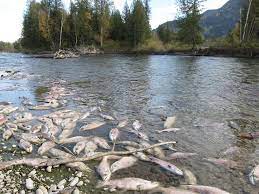
Ten tons of dead fish were removed from it last week and people have been asked not to swim in it or even touch its waters. Authorities have not yet found the reason for the massive fish die-off.
Authorities on Monday were putting up sea barriers usually used during oil spills on the Szczecin Lagoon, where the river runs into the Baltic Sea, to prevent a possible spread of fish carcasses there, the German news agency dpa reported.
Lemke also announced the two European Union countries have created a task force with experts to exchange updates on the investigation into the ecological disaster.
The state governor of Brandenburg, which borders Poland along the Oder River, criticised Polish authorities for their lack of information on the fish die-off.
The information about the environmental disaster has come only "in dribs and drabs" or "not at all", Dietmar Woidke said, adding that "this must be dealt with urgently in the coming months", dpa reported.
The German environment ministry said they were expecting results on possible toxins in the river water later this week.
Brandenburg state Environment Minister Axel Vogel said "it may take several more days until we have checked through all the substances that we consider possible".
There is probably more than one cause for the fish die-off, Vogel said, adding that the current drought and low water levels almost certainly shared part of the blame.
The entire ecosystem of the Oder River has been damaged, he said.
"That's why we don't think we have a disaster that can be solved within half a year by repopulating with fish,'' Vogel said.


 Google News