

Rains fills up dams in Rajasthan, water crisis unlikely next summer
At the same time, sowing targets of Kharif crops have been nearly completed and the production is expected to be more than previous year, officials said.The state has so far recorded 27 per cent more than the normal rainfall and no district is under the category of deficit or scanty rains, they said.
- Country:
- India
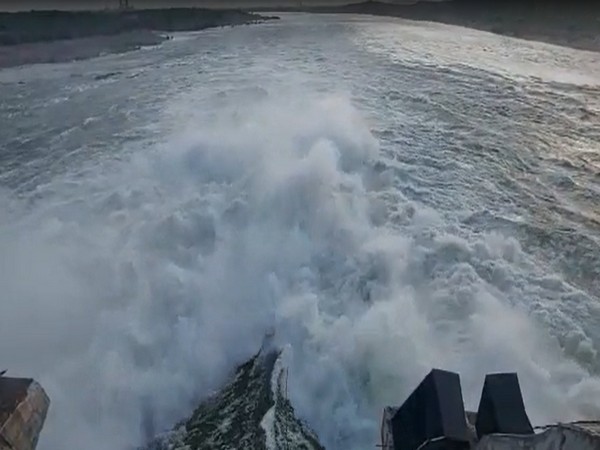
Widespread rainfall this season has brought cheer to Rajasthan, filling up its dams and ensuring that the next summer will not see a water crisis of the kind that hit the desert state this year. Already 73 percent of the total capacity in 716 dams has been filled as of August 20, officials said, adding that this was 57 percent during the same period last year. At the same time, sowing targets of Kharif crops have been nearly completed and the production is expected to be more than the previous year, officials said.
The state has so far recorded 27 percent more than the normal rainfall and no district is under the category of ''deficit or scanty'' rains, they said. The water crisis had deepened in the Pali district during the summer season this year as the Jawai dam dried up. Drinking water had to be ferried to Pali via trains from Jodhpur, where water is supplied through the Rajiv Gandhi lift canal.
Drinking water is supplied from the Jawai dam to the entire Pali district and Siwana tehsil in the nearby Sirohi district.
''It is a matter of relief that sufficient water has already come into the Jawai dam. We faced severe water scarcity in the summer season this year because there was no water in the dam,'' Tosh Chandra Chauhan, a bank officer based in Pali, said.
''Temperature started increasing unusually in the mound by April, the water crisis was at its peak. Though the water was transported from Jodhpur and supplied here, we had to manage many things keeping the shortage of water in mind,'' he said.
Madan Singh Jaitawat, Executive Engineer (Jawai) of the Water Resources Department said the current water level in the dam was 45.65 feet whereas it was merely 20 feet last year during this time.
Similarly, Public Health Engineering Department's Chief Engineer (Urban) Manish Beniwal said transportation of water from Jodhpur to Pali will not be required this year because sufficient water has already come into the reservoir.
''Be it Jawai Dam or Bisalpur in Tonkthe, the water level is enough to supply drinking water for one year. The water crisis will not be there in the next summer season and this is a very good thing for the state,'' Beniwal said.
Bisalpur dam fulfills the drinking water requirements of Jaipur, Ajmer, and Tonk. According to the water resources department, 716 dams in the state currently have 9177.14 million cubic meters of water against a total capacity of 12608.29 million cubic meters, which is 72.79 percent.
Last year, it was 56.97 percent during the same period.
At present, 198 dams are filled and 299 are partially filled. On the other hand, sowing for Kharif crops has been almost completed. ''Against the target of 164.17 lakh hectares, sowing in 162.26 lakh hectares has been done so far. The target is near completion,'' PK Gupta, joint director (statistics), department of agriculture said.
Last year, the target was 163.62 lakh hectares and sowing was done in 141.35 lakh hectares during that time. The total sowing last year was 161 lakh hectares.
''Looking at the sowing, we expect good production,'' he said.
Another official said a record production of moong, moth, millet, and sesame is expected. Agricultural experts said this rainfall will also have its benefits during the Rabi season. ''Monsoon has a direct impact on inflation. If crop production increases, supply will also increase,'' he said. According to the water resources department, Rajasthan normally receives 404.02 mm from June 1 to 20 August. Against this, the state has received 515.25 mm of rainfall, which is 27.5 percent higher. This year, ten districts are under the normal rainfall category, 17, including the state capital Jaipur, are under the excessive rainfall category, and six are under the abnormal rainfall category.
Ajmer, Banswara, Bundi, Dungarpur, Hanumangarh, Jaipur, Jalore, Jhalawar, Jhunjunu, Kota, Nagaur, Paratapgarh, Rajsamand, Sikar, Sirohi, Tonk, and Udaipur received excess rainfall (20 to 59 percent). Six districts -- Barmer, Baran, Churu, Ganganagar, Jaisalmer, and Jodhpur -- are under the ''abnormal'' rainfall category (60 percent or more) whereas the normal rainfall took place in Alwar, Baran, Bharatpur, Bhilwara, Chittorgarh, Dausa, Dholpur, Karauli, Pali and Sawai Madhopur.


 Google News