

Agricultural experts chart pathways to make crop production in Eritrea and Ethiopia
Having evaluated the outcomes of the studies, the agricultural experts recommended interventions that can increase crop production and productivity in the two nations.
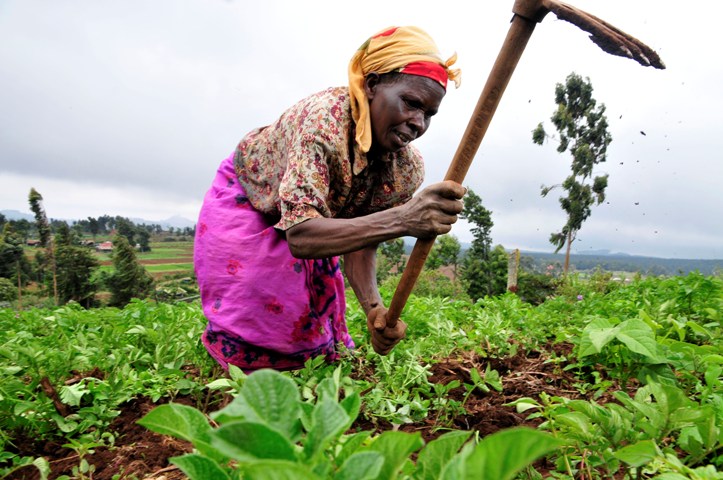
Agricultural experts drawn from the ministries of agriculture of Eritrea and Ethiopia, and the Food and Agriculture Organization of the United Nations (FAO) charted the pathways to make crop production and productivity in the two nations transformational.
In a 4-day validation workshop held in Bishoftu, Ethiopia, the experts critically analysed the findings of the studies, which were spearheaded by FAO, with the support of the ministries of agriculture of Eritrea and Ethiopia. While the first study assessed wheat, sorghum, and sesame in Eritrea, the second study considered maize, wheat, and teff in Ethiopia.
Both studies unearthed several key challenges, including gaps in policies and institutions, limited research and extension services, moisture stresses as a result of erratic rainfall, pests and disease, dearth of mechanization, poor pre and post-harvest management, and inadequate access to finance and markets. Moreover, they highlighted the critical challenges that farmers have confronted in accessing improved seeds, fertilizers, and pesticides.
Having evaluated the outcomes of the studies, the agricultural experts recommended interventions that can increase crop production and productivity in the two nations. In this regard, efficient seed systems, sustainable soil fertility and water management, and robust pre- and post-harvest loss control were highlighted as prime areas of intervention. Included in this category were activities related to the delivery of agricultural extension services to farmers using Farmer's Field School (FFS), creating an enabling policy environment, and establishing efficient input and output marketing systems.
During the workshop, Solomon Gelelcha, Crop Production Specialist at FAO Subregional Office for Eastern Africa, remarked that crop production needs to adopt new approaches for it to address the challenge of technical and environmental obstacles to ease the plight of smallholder farmers while meeting the global commitment to end hunger and malnutrition. The current regime of resource-intensive agriculture can be transformed into knowledge-intensive agriculture.
"Scientific and technological advancements have made it possible to increase food production notwithstanding its shrinking resource base. However, several factors may deter the realisation of such opportunities. Farmers' lack of knowledge and their access to technology, inputs and mechanization are some of the roadblocks. The appropriate mechanisms and institutions to deliver the knowledge and technology, policy instruments, and inputs to farmers need to be further developed," he noted.
(With Inputs from APO)


 Google News