

EU-Funded Initiative Launched to Protect Greater Horn of Africa from Climate and Conflict Crises
The project represents a unified effort to address the compounded crises affecting the IGAD (Intergovernmental Authority on Development) region, which faces escalating risks from climate events and conflicts.
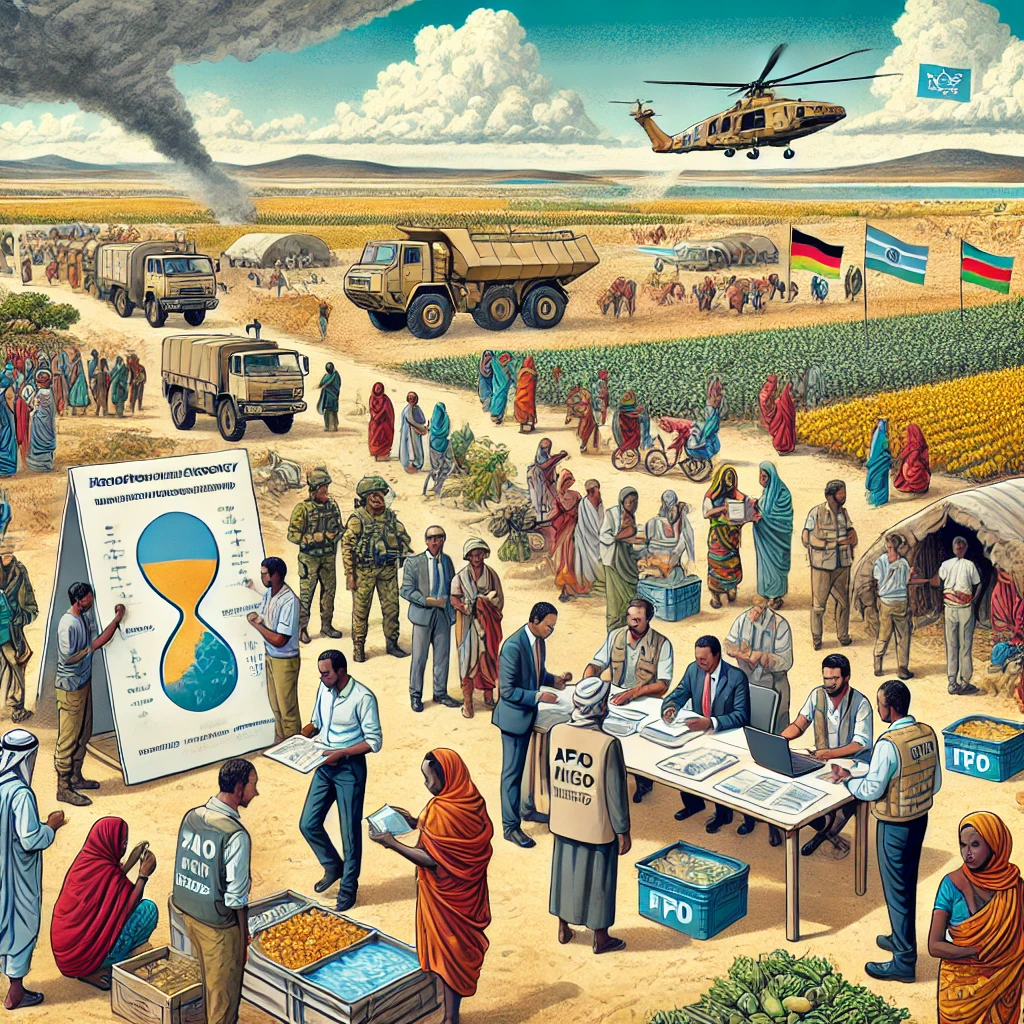
The Danish Refugee Council (DRC), United Nations Food and Agriculture Organisation (FAO), International Federation of the Red Cross and Red Crescent Societies (IFRC), IGAD Climate Prediction and Applications Centre (ICPAC), and the World Food Programme (WFP) have announced the launch of a joint project aimed at safeguarding vulnerable communities in the Greater Horn of Africa from the escalating impacts of climate extremes, conflict, and displacement. This initiative is made possible through a generous contribution of EUR 4 million from the Directorate-General for European Civil Protection and Humanitarian Aid Operations (DG ECHO).
Tackling Climate Extremes and Conflict in Ethiopia and Somalia
The project, titled Scaling Coordinated Multi-Hazard and Conflict-Sensitive Anticipatory Action in the Greater Horn of Africa, will directly support 450,000 vulnerable individuals in Ethiopia and Somalia over the next two years. The initiative seeks to mitigate the effects of forecasted climate shocks—such as droughts and floods—before they escalate into full-blown crises. It will achieve this through strengthening the capacity of national weather agencies to deliver timely and accurate forecasts, enabling communities and governments to respond proactively.
"Increasingly frequent and intense climate extremes such as droughts and floods are compounding existing drivers of hunger such as conflict, displacement, and economic instability. As livestock and crops perish, livelihoods are lost, and hunger deepens. Early action saves lives, builds people's resilience to face future crises, and eases the strain on limited humanitarian resources," said Rukia Yacoub, WFP's Deputy Regional Director for Eastern Africa.
A Regional, Holistic Approach to Crisis Mitigation
The project represents a unified effort to address the compounded crises affecting the IGAD (Intergovernmental Authority on Development) region, which faces escalating risks from climate events and conflicts.
"The IGAD region faces escalating risks from droughts, floods, cyclones, and conflicts, worsening humanitarian crises that threaten lives and livelihoods. This project proposes a holistic, regional, and harmonized approach to strengthen early warning systems for anticipatory action, enhance cross-border coordination, and facilitate risk-informed decision-making to ensure timely, life-saving early actions," stated Dr. Workneh Gebeyehu, IGAD's Executive Secretary. "With the March-May forecast indicating below-normal rainfall for the upcoming season, urgent preparedness is essential. Furthermore, this funding will directly support the implementation of the IGAD Regional Roadmap for Anticipatory Action, aiding member states in anticipating and undertaking early actions, improving coordination, and building resilience against climate shocks."
Additional Funding and Strategic Goals
In addition to the EUR 4 million from DG ECHO, the project will receive a supplementary EUR 2.7 million contribution from the five implementing partners (DRC, FAO, IFRC, IGAD, and WFP). These combined resources will enhance the region's ability to anticipate and respond to disasters, promoting long-term resilience and reducing the need for emergency humanitarian interventions.
"By supporting this new programme, the European Union intends to enhance our delivery of anticipatory action ahead of disasters which are predictable in the region and promote the resilience of communities across the region," said Ségolène de Beco, the head of the European Union's regional humanitarian aid office in Nairobi.
Looking Ahead
The Scaling Coordinated Multi-Hazard and Conflict-Sensitive Anticipatory Action in the Greater Horn of Africa project aims to become a cornerstone for proactive humanitarian response, focusing on preparedness rather than reaction. Through improved early warning systems, cross-border collaboration, and community capacity-building, this initiative will protect livelihoods, reduce hunger, and build resilience against future climate shocks and conflicts in the region.


 Google News