

India's farm output hits record 357 million tonnes in 2024-25: J&K Lieutenant Governor
Sinha called upon scientists and innovators to commit to seven priorities for climate-resilient agriculture, including farmer-led research partnerships, expansion of climate-responsive insurance, green credit, localised climate advisories, safeguarding traditional seeds, policy integration and transparent evaluation.
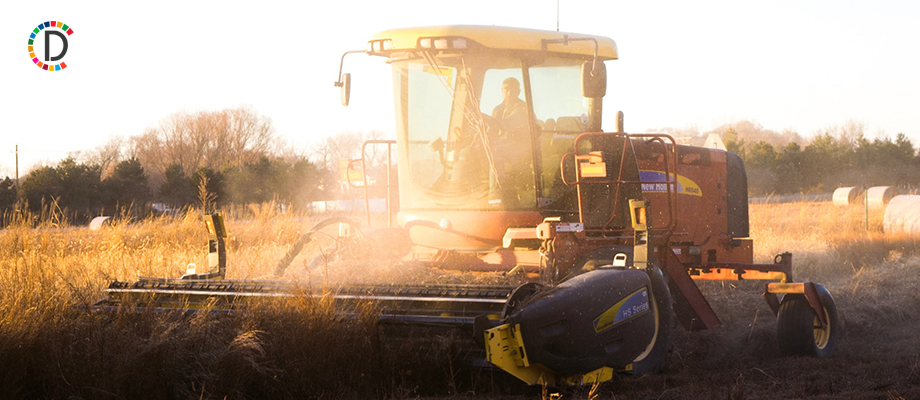
India is leading the fight against climate challenges, with the country's agriculture production touching 357 million tonnes in 2024-25, up 25 million tonnes from 2023-24, Jammu and Kashmir Lieutenant Governor Manoj Sinha said on Tuesday. Sinha inaugurated the national summit on 'Sustainable & Climate Resilient Agroecosystems: Innovations and Policy Framework' at Sher-e-Kashmir University of Agricultural Sciences and Technology in Jammu, and urged scientists, innovators and other stakeholders to work on building climate resilience and transform sustainable agro-ecosystems. ''The scientists, innovators and other stakeholders should come together to build climate resilience and transform sustainable agro-ecosystems,'' he said. Sinha said the time has come to move beyond minor adjustments and embrace bold, science-led, farmer-focused transformation. ''Policies must champion climate-resilient crops. We must close the divide between laboratory and farmland, and researchers should make the creation of climate-adapted varieties their highest priority,'' the lieutenant governor said. He said farms are the bedrock of civilisation, the backbone of economies and the promise of tomorrow. ''Every policy, every intervention must respect that our fields and farmers have carried humanity through centuries of turmoil. Now the threat of climate change reaches far beyond the farmer's field and imperils every life sustained by the agriculture and allied sectors. The urgency of this crisis leaves no room for delay,'' he said. The lieutenant governor said that under the leadership of Prime Minister Narendra Modi, India's agriculture production hit 357 million tonnes in 2024-25, while horticulture output reached 362 million tonnes, including high-value crop diversification. ''Ahead of others, India launched nationwide soil testing, distributing 25 crore soil health cards. Farmer credit limits rose from Rs 3 lakh to Rs 5 lakh. Rs 100 crore has been earmarked for high-productivity seeds under a national mission. ''Pulses procurement at MSP jumped 7,350 per cent and oilseeds 1,500 per cent since 2013-14. However, climate impacts are intensifying, and last year witnessed extreme weather across states,'' he said. Sinha called upon scientists and innovators to commit to seven priorities for climate-resilient agriculture, including farmer-led research partnerships, expansion of climate-responsive insurance, green credit, localised climate advisories, safeguarding traditional seeds, policy integration and transparent evaluation. He also emphasised precision and regenerative farming, water management, diversification and technology integration. ''Innovations must reflect real-world needs, not remain trapped in seminar rhetoric, and governments must scale protection to shield livelihoods from escalating risks,'' he said. He also asked banks to prioritise sustainable agricultural financing, conserve heritage varieties as anchors of resilience, align every initiative for seamless execution and assess each programme openly for continuous improvement. The lieutenant governor said scientists and policymakers must recognise that small and marginal farmers contribute least to climate change yet endure its harshest blows. Calling for protection of farmers, he said they are not merely producers of grain but custodians of tradition, culture, food security and the promise of a sustainable future. ''Every farmer deserves real-time climate guidance. Every field must be treated as a national asset, safeguarded with care. Our responsibility in agriculture is clear - we need to preserve it for generations. This is our solemn resolve,'' he said.


 Google News