

Eastern Europe’s growing illicit tobacco trade wreaking global havoc
 Danila Simona
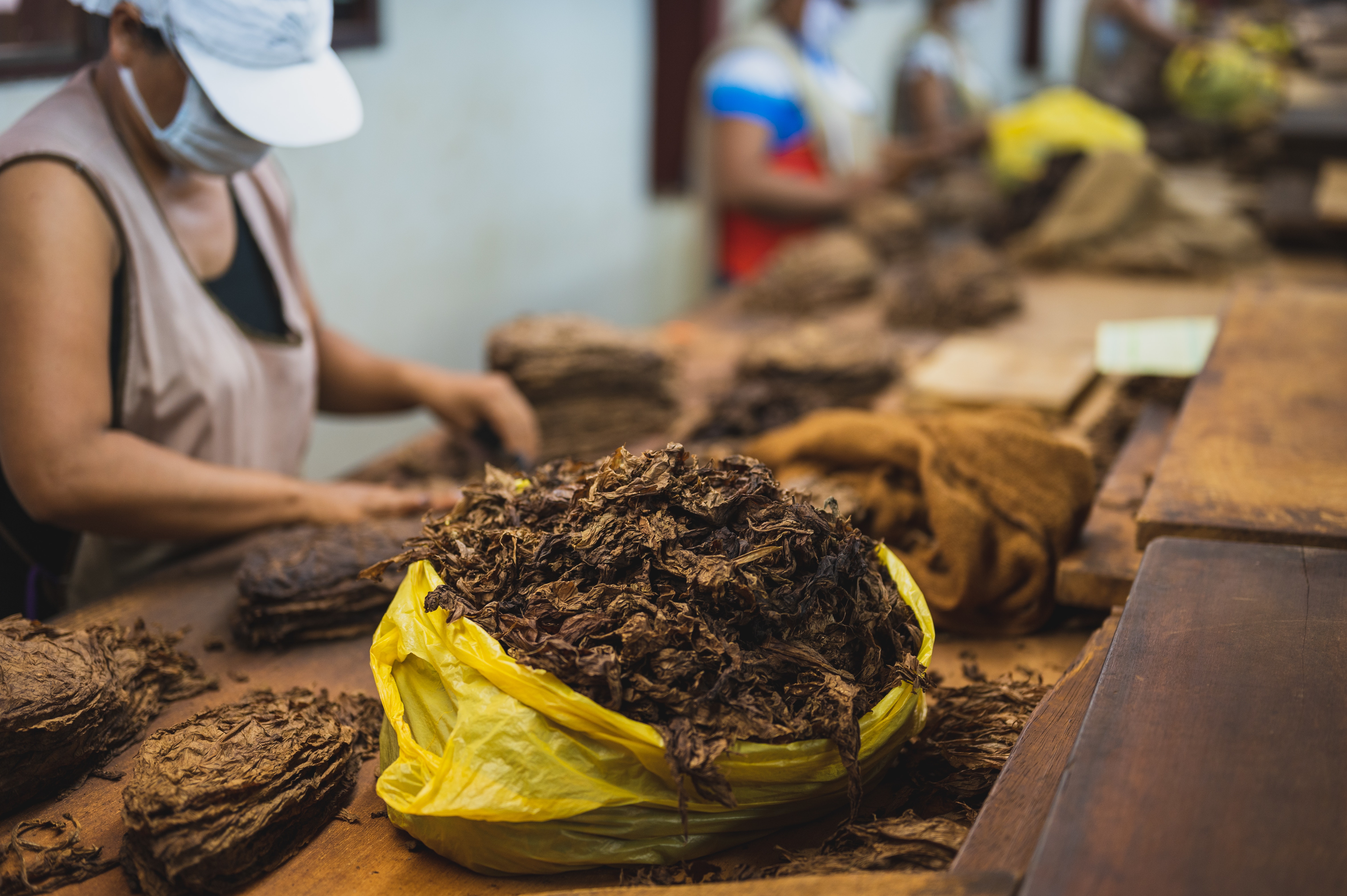
While persistently-high inflation has perhaps been Europe's most visible plague fuelled by Russian aggression in Ukraine, criminal groups have cynically exploited the fog of war to ramp up another: the illicit tobacco trade.
At a recent EURACTIV-hosted event on the issue, Growford Institute tax expert Tetiana Koshchuk highlighted that "during the last two years, we have observed the greatest growth of the illegal cigarette trade," in Ukraine, citing disrupted supply chains and cost-of-living pressures pushing consumers to the cheaper illicit market. According to GLOBSEC, Ukraine has become one of the EU's largest sources of illicit tobacco, with the war triggering a smuggling spike along its border with Romania that has spread into the wider region.
Beyond the direct health consequences, this flourishing illicit tobacco trade is burning an enormous hole in public coffers, with Ukraine and the EU losing roughly €500 million and €18 billion in excise taxes last year, respectively. Yet Eastern Europe's smuggling scourge has a much broader reach, with North Africa increasingly a destination for tobacco smuggling in the absence of effective solutions.
Old, but expanding plague in Europe
Although exacerbated by Russia's war in Ukraine, the illicit tobacco trade in Europe is hardly new. The Balkan region, where many of the tobacco giants have factories, has long been a particular hub, with cigarette smuggling in the former Yugoslavia soaring in the 1990s to fund militaries during the Balkan Wars. During this period, Montenegro emerged as Europe's illicit tobacco kingpin, with the port of Bar serving as the heart of the region's smuggling trade.
According to a 2022 report from the Geneva-based NGO, the Global Initiative Against Transnational Organized Crime (GIATC), Balkan ports provide "ideal conditions" for tobacco smugglers, citing "the region's proximity to lucrative markets in Western Europe" as well as "its links to North Africa…combined with vulnerabilities linked to corruption" and insufficient "port oriented security responses."
The GIATC's assessment that "the problem seems to be growing" is reflected in KPMG's newly-published annual report on illicit tobacco in Europe, which reveals that consumption of illicit cigarettes increased by 0.3 billion last year. The lion's share of this growth has been driven by France – which now accounts for nearly half of the entire bloc's illicit consumption – and Ukraine, which hit a record-high of 20% in 2022, representing nearly 7.4 billion cigarettes.
Romania has become a major point of entry on the bloc's eastern front, with smuggling soaring by 19% last year as traffickers opened new routes along its south-eastern border. The Stop Contrabands monitoring website reported the seizure of 110 million illicit cigarettes by Romanian authorities last year, while the EU's anti-fraud office, OLAF, contributed to the seizure of over half a billion illicit cigarettes.
Balkan-North African connection thriving in vacuum
Beyond Europe, as Abdelkader Abderrahmane of the Atlantic Council has highlighted, "one of the major global smuggling routes flows through the Balkans in Eastern Europe to North Africa." In 2017 alone, over 10 billion illicit cigarettes were smuggled from the Balkans and Greece to North Africa, with Libya and Tunisia the top targets.
The region's political instability, rampant corruption, and weak rule of law have laid the foundation for this thriving trade, while porous borders and insufficient cross-border cooperation have exacerbated the problem in Algeria, for example – where al-Qaeda in the Islamic Maghreb funds terrorism via tobacco smuggling.
Last year, Switzerland-based company Dentsu Tracking expressed its aim to expand into the African market to quell the illicit tobacco trade. Dentsu has claimed that its track and trace systems implemented in the EU and UK can "be considered important references for African leaders" in meeting their obligations under the World Health Organisation's ITP Protocol to implement comprehensive tobacco track-and-trace programmes, in addition to "empowering countries to address key policy concerns," according to Dentsu Tracking Managing Director, Philippe Castella.
Yet independent experts, including the Global Alliance for Tobacco Control, do not share this opinion, concluding that the EU track and trace system breaches ITP requirements on tobacco industry independence. From its inception, even before four years of implementation showed a lack of results, experts have cautioned that the system should not be implemented in countries outside the bloc. MEPs' questions, recently reported in Politico's Influence newsletter, about the issues surrounding a Dentsu manager formerly in charge of traceability issues at the Commission only raise further questions about the system.
Furthermore, Castella's recent ban from entering and conducting business in Morocco for failing to comply with Rabat's adoption laws would severely hinder Dentsu's future operations in what would likely be a priority country, as well as in the wider region.
Tech-driven international cooperation offers a path forward
Given the significant health and socioeconomic implications of the illicit tobacco trade, which is not only robbing governments of billions in vital tax revenue every year to advance sustainable development goals but also exposing a growing number of smokers to unregulated products with toxic ingredients, governments must ramp up anti-smuggling efforts.
In Europe, GLOBSEC has rightly called for enhanced cross-border collaboration between Ukraine and the EU, including a joint system for monitoring and data collection, analysis, and sharing. With current issues particularly concentrated in Romania and Moldova since the start of the war, a strong regionalised approach will be essential. As such, Romanian policy analyst Cristian Gherasim has recommended that national authorities in the region "engage "the EU's External Action Service to secure borders and trade," in addition to "international bodies like the WHO."
International collaboration will be equally key on the other side of the Mediterranean, where the Balkan-North African smuggling routes are thriving amid woefully inadequate information exchange between authorities. ENACT Observer's policy recommendations for enhanced joint naval patrols between southern European and Maghreb countries, as well as the provision of advanced track and trace technologies in African countries, would likely improve the situation, although underlying political instability – particularly in Libya – will remain a major hindrance.
This is equally the case in Ukraine, where the war continues to provide cover for cigarette smugglers cashing in on weakened borders and inflation, and where tobacco companies are returning. With massive funding needed to continue military, humanitarian, and recovery support for Ukraine while addressing ongoing inflation-linked domestic pressures, EU countries cannot afford to overlook the silently growing impact of illicit tobacco.
(Disclaimer: The opinions expressed are the personal views of the author. The facts and opinions appearing in the article do not reflect the views of Devdiscourse and Devdiscourse does not claim any responsibility for the same.)


 Google News