

Groundbreaking Malaria Vaccine Study Shows Major Drop in Child Deaths in Africa
Lancet evaluation confirms RTS,S vaccine prevented thousands of deaths in Ghana, Kenya and Malawi as WHO urges urgent funding to expand rollout.
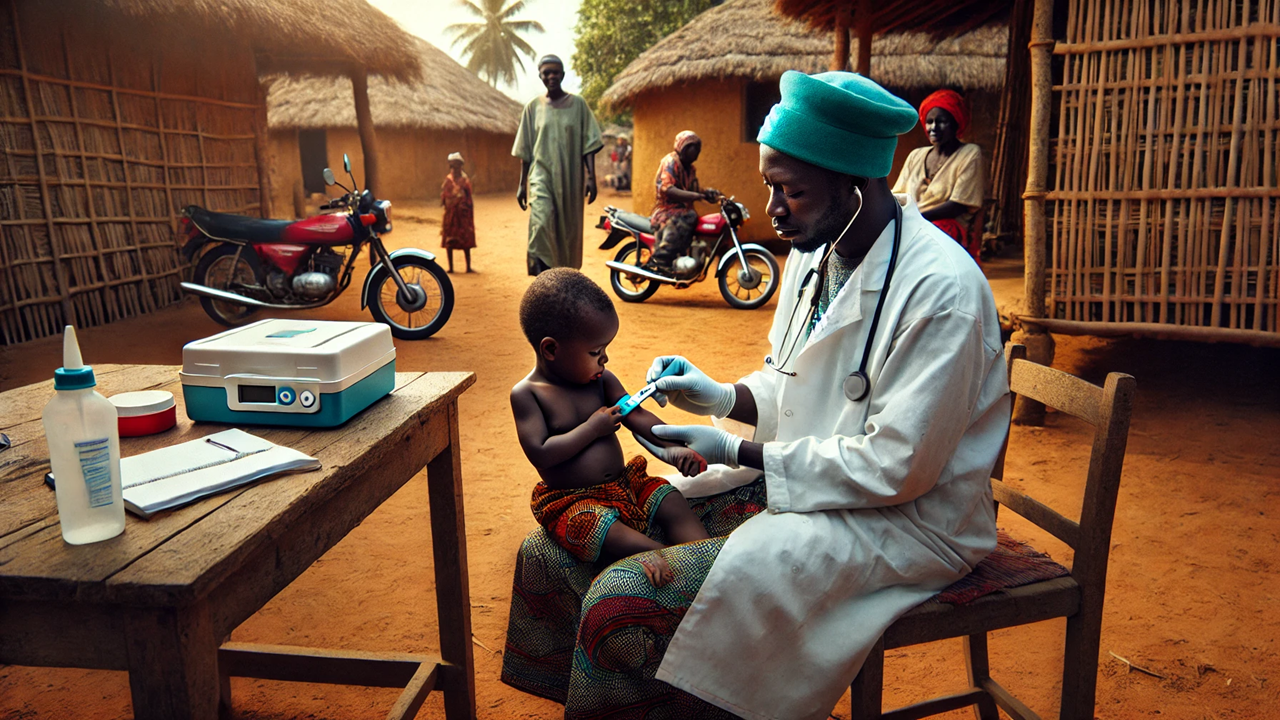
A landmark scientific evaluation published in The Lancet has confirmed that the RTS,S malaria vaccine is dramatically reducing child deaths in Africa, providing some of the strongest evidence yet that malaria vaccination could transform child survival rates across regions hardest hit by the disease.
The large-scale study found that over a four-year period, approximately one in eight child deaths was prevented among children eligible to receive the vaccine in Ghana, Kenya, and Malawi — the first countries in the world to introduce the malaria vaccine through routine childhood immunization programmes.
Public health experts say the findings mark a historic milestone in the global fight against malaria, one of the deadliest infectious diseases affecting children in sub-Saharan Africa.
The evaluation examined outcomes from the Malaria Vaccine Implementation Programme (MVIP), a pioneering initiative launched between 2019 and 2023 to assess the real-world impact, safety, and feasibility of introducing the RTS,S vaccine into national health systems.
Researchers and WHO officials say the results provide compelling evidence that malaria vaccines can significantly reduce mortality when integrated into broader malaria prevention and treatment strategies.
"This is very solid evidence of the potential for malaria vaccines to change the trajectory of child mortality in Africa," said Dr Kate O'Brien, Director of the WHO Department of Immunization, Vaccines and Biologicals and co-author of the evaluation.
She warned, however, that financial constraints now pose one of the biggest threats to expanding access.
"Demand is high and supply is sufficient, but more financing is needed so that countries can purchase enough vaccine, along with other malaria prevention tools, to reach all the kids most at risk of serious disease or death," Dr O'Brien said.
Despite decades of global malaria control efforts, the disease continues to devastate communities across Africa.
According to WHO estimates, approximately 438,000 African children died from malaria in 2024 alone, making the disease one of the leading causes of child mortality on the continent.
Health experts believe widespread deployment of WHO-recommended malaria vaccines — including RTS,S and the newer R21 vaccine — could save tens of thousands of young lives every year.
The RTS,S vaccine is the first malaria vaccine ever recommended by WHO for widespread use, following decades of scientific research and development.
WHO officials stress that vaccination is most effective when combined with existing malaria control tools such as insecticide-treated mosquito nets (ITNs), indoor residual spraying, rapid diagnostic testing, and access to effective antimalarial treatment.
"Malaria vaccination strengthens the response and increases access to malaria prevention in countries that use a mix of proven interventions to optimize impact substantially in moderate and high transmission areas," said Dr Daniel Ngamije Madandi, WHO Director of the Department of Malaria and Neglected Tropical Diseases.
One of the study's most important findings was that the malaria vaccine rollout did not negatively affect uptake of other childhood vaccines or reduce use of other malaria prevention measures.
Instead, researchers found the four-dose vaccine schedule created additional opportunities for children to receive other critical health interventions during clinic visits.
According to the authors, the extra healthcare contacts required for malaria vaccination allowed health systems to simultaneously deliver services such as measles vaccines, meningitis vaccines, vitamin A supplementation, and insecticide-treated bed nets.
The study also found that many children who were previously not protected by mosquito nets still received malaria vaccination, effectively increasing overall protection coverage among vulnerable populations.
Public health specialists say this integrated approach could strengthen routine immunization systems while expanding healthcare access for underserved communities.
Today, 25 malaria-endemic African countries have introduced malaria vaccines into their childhood immunization programmes and national malaria control plans.
More than 10 million children annually are currently targeted for vaccination across these countries.
Researchers believe the impact observed in Ghana, Kenya, and Malawi could be replicated — or even surpassed — in many of the newly participating countries, particularly in areas with similarly high or higher malaria transmission rates.
However, despite sufficient global vaccine supply, WHO officials warn that many countries remain unable to scale up vaccination coverage because of limited financing.
Funding shortages are now threatening the ability of countries to sustain current vaccination programmes and expand access to all eligible children.
The authors of the evaluation say the study underscores the urgent need for increased international investment in malaria prevention if the full life-saving potential of the vaccines is to be realized.
"The results of the evaluation highlight the urgency to accelerate the deployment of malaria vaccines in areas where malaria continues to be a leading cause of child mortality," the researchers concluded.
The evaluation involved collaboration between WHO scientists, African research institutions, and major international health organizations.
Key participating institutions included the Kintampo Health Research Centre in Ghana, Kenya Medical Research Institute-Wellcome Trust, Kamuzu University of Health Sciences in Malawi, the London School of Hygiene and Tropical Medicine, and the United States Centers for Disease Control and Prevention (CDC), among others.
Global health experts say the success of malaria vaccines could represent one of the most significant public health breakthroughs in Africa in recent decades, particularly if countries can overcome financing barriers and achieve widespread immunization coverage.


 Google News