

Australia seeks more control over deals with foreign states
The Australian government has drafted new laws that would cancel international deals struck by lower tiers of governments with foreign states that are not in Australia's interests, officials said on Thursday in a move likely to increase tensions with China.
- Country:
- Australia
The Australian government has drafted new laws that would cancel international deals struck by lower tiers of governments with foreign states that are not in Australia's interests, officials said on Thursday in a move likely to increase tensions with China. Victoria state's memorandum of understanding with Beijing under China's belt and road initiative, signed two years ago to attract more Chinese infrastructure investment, is among the deals to be reviewed, Foreign Minister Marise Payne said.
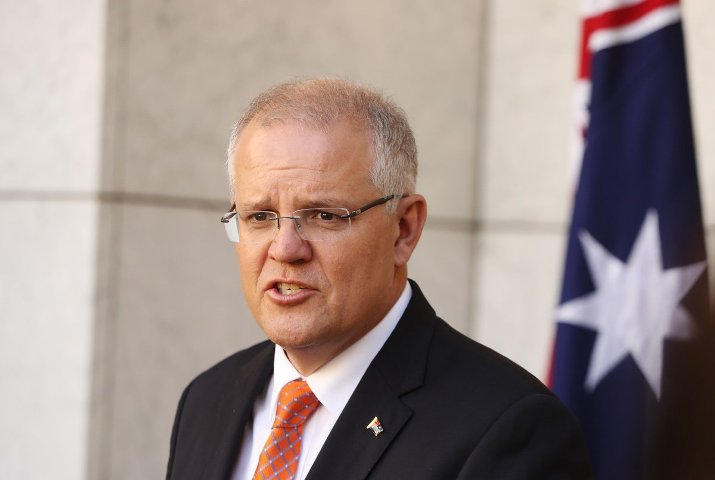
Prime Minister Scott Morrison would not comment on the likelihood of the Victorian deal with China being scrapped, saying he did not want to "prejudice the outcome" of a review. The legislation to be introduced to Parliament next week did not target China, he said.
"My biggest concern is Australia's national sovereign interest," Morrison told reporters. "Protecting and promoting Australia's national interest is the primary job of the federal government," he added.
Australia in 2018 bypassed sweeping national security laws that ban covert foreign interference in domestic politics. China protested the laws, arguing their intention was prejudiced against China and had poisoned the atmosphere of China-Australia relations. Attorney-General Christian Porter told Parliament on Thursday that the first investigations were being conducted in New South Wales state under the foreign interference laws, which carry penalties including up to 20 years in prison.
Two entities have been formally asked why they had not applied for registration as agents of influence working for a foreign principal, Porter said. Porter did not identify the entities receiving the notices or the countries they are suspected of acting for. The proposed legislation would give Payne power to scrap international deals struck by state governments, public institutions such as universities, and at local government level, sister-city partnerships.
It would also create a national register of such deals. Future deals would need federal government approval and could be revoked later.
The Australian government had already identified 135 agreements with more than 30 countries that needed to be reviewed, the foreign minister said. The Foreign Relations Bill was announced days after the government revealed it had blocked the $430 million sales of a major dairy business, Lion Dairy and Drinks, to China Mengniu Dairy Co. on the grounds that it would be "contrary to the national interest." The government intervention was unusual in that it did not prevent an Australia-owned company from being taken over by a foreign company. Australia had instead blocked the transfer of ownership of an Australia-based asset from one foreign company, Japan's Kirin Holdings Co., to a Chinese company.
The Victoria government agreement with Beijing has raised concerns among federal government lawmakers that it could increase Chinese interference in Australia's second-most populous state. Peter Jennings, executive director of the Australian Strategic Policy Institute think tank, said the Victorian deal with Beijing should be overturned.
"That was something that the Victorian government pursued quite openly against the stated interests of the federal government and the opposition ... that Australia was not going to commit itself to those types of arrangements," Jennings said. "I just don't see that that is something that should be sustainable," Jennings added.
James Laurenceson, director of the University of Technology Sydney's Australia-China Relations Institute, questioned whether the proposed legislation was "an overreaction." "We know the Australian government has been running a very tough line on China, that's been consistent and it hasn't been affected by the belt and road memorandum of understanding at all," Laurenceson said.


 Google News