

All you need to know about the turn of events in Renault-Nissan Ghosn controversy
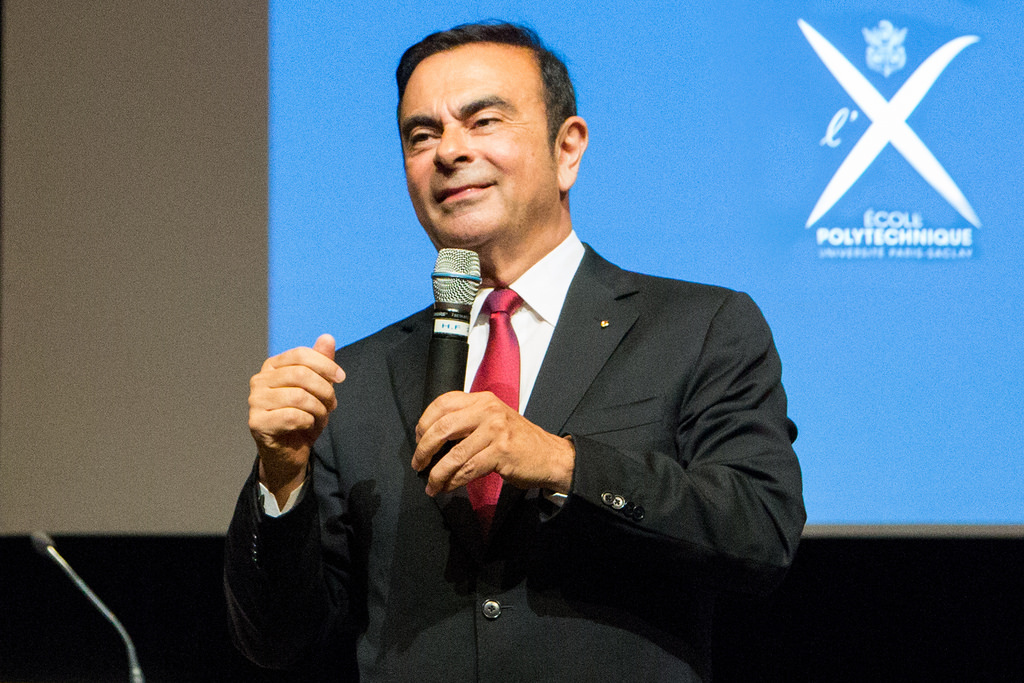
Carlos Ghosn's two decades at the helm of Franco-Japanese carmaking alliance Renault-Nissan has formally come to an end with his departure as chairman and chief executive of Renault. The resignation, two months after Ghosn's arrest in Tokyo for alleged financial misconduct, raises questions about the future make-up of the alliance that he built into a global carmaking giant, and also includes Japan's Mitsubishi.
The once-feted executive, credited for turning around both Renault and Nissan, remains in detention as he awaits a trial that could be several months away. He denies any wrongdoing. The following is a timeline of key events during Ghosn's tenure at the automakers.
1996
Ghosn joins Renault as executive vice president at the firm struggles with falling profitability. The following year, he unveils his "20 billion franc cost reduction plan", reviving his reputation as "Le cost killer", earned during his prior job at tyre maker Michelin.
Renault's profitability jumps three-fold by the end of 1998.
1999
In March, Renault comes to the rescue of debt-laden Nissan which had seen three straight years of losses. Later, Ghosn reveals his "Nissan Revival Plan", targeting a return to profitability in the 2000 financial year, a profit margin of at least 4.5 per cent and a halving of debt by 2002.
Ghosn and his executive committee promise to resign if the targets are not met. After cutting 21,000 jobs, or 14 per cent of the workforce, shutting some local plants and dismantling Nissan's "keiretsu" group companies, Nissan meets its goals a year ahead of schedule.
Ghosn is feted as a business celebrity in Japan, inspiring a manga comic based on his life.
2000
Ghosn becomes CEO of Nissan. By the end of 2000, Nissan is contributing roughly half of Renault's annual net profit, a situation that largely continues to this day.
2002
Nissan announces its "Nissan 180" three-year growth plan, targeting an increase of 1 million units in global sales by September 2005, an operating margin of 8 per cent by spring 2005, and a reduction in net automotive debt to zero.
2005
Nissan misses its global sales growth target. It announces a three-year "Value Up" plan to maintain a top-level operating margin in the industry, achieve global sales of 4.2 million units by March 2009 and a 20 per cent return on capital on investments.
Ghosn becomes president and CEO of Renault.
2006
Ghosn announces "Renault Commitment 2009" to position the automaker as Europe's most profitable by volume, cut purchasing costs by 14 per cent in three years and manufacturing costs by 12 per cent in four years.
2008 March:
Nissan fails to meet its main "Value Up" targets. The automaker announces its five-year "GT 2012" plan to focus on investment but scraps it due to the global financial crisis. Renault and Nissan turn their focus to weathering the crisis.
2011 June:
"Power 88" mid-term plan announced, with targets for Nissan to achieve an 8 per cent global operating profit margin and an 8 per cent global market share by 2017.
2012
Nissan focuses on growing its U.S. market share to 10 per cent. Renault's operating profit falls for the second straight year, due to slowing sales in Europe.
2013
Renault and Nissan announce their "Common Module Family" plan for low-cost development and manufacturing of vehicles.
The new system is aimed at reducing component costs by 20-30 per cent across the alliance. The next year they converge more functions, targeting 10 billion euros ($11 billion) in annual savings by around 2022.
2016
Nissan announces it will take a controlling stake in Mitsubishi Motors, which is struggling with a mileage-cheating scandal. Ghosn becomes chairman of the automaker, making him chairman of all three partners.
2017
Ghosn says he will step down as CEO of Nissan in April to focus on improving profitability at Renault and ensuring the alliance is "irreversible" after he retires. Nissan posts a record operating profit of 742.2 billion yen ($6.8 billion) but falls short of "Power 88" targets. U.S. profit margins tumble as heavy discounting to boost sales leads to a fall in North American profit.
Hiroto Saikawa takes over as CEO, saying he aims to increase the quality of Nissan sales after years of focusing on volumes. Later, Ghosn announces the "Alliance M.O.V.E. 2022", setting combined targets for Renault, Nissan and Mitsubishi to achieve the ongoing target of annual synergies of 10 billion euros.
Nissan's U.S. market share comes in around 9.2 per cent, short of its 10 per cent target. Renault posts record operating profit and global sales of 3.76 million units. Operating margins come in around 6.5 per cent, little improved from the previous year.


 Google News