

UPDATE 3-In racial case, U.S. Supreme Court tosses black Mississippi man's murder conviction
- Country:
- United States
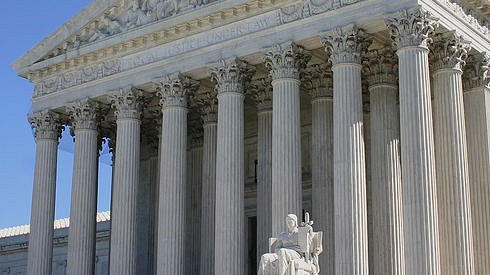
The U.S. Supreme Court, confronting racial bias in the American criminal justice system, on Friday threw out a black Mississippi death row inmate's conviction in his sixth trial for a 1996 quadruple murder conviction, finding that a prosecutor unlawfully blocked black potential jurors.
The court, in a 7-2 ruling written by conservative Justice Brett Kavanaugh, found that the actions of the prosecutor violated the right of Curtis Flowers, 49, to receive a fair trial as required by the U.S. Constitution. While the court sided with Flowers, its ruling does not preclude Mississippi from putting him on trial for the seventh time. Kavanaugh, who joined the court in October after being appointed by President Donald Trump, wrote that the prosecutors sought to strike black jurors through all of Flowers' six trials. Prosecutors "engaged in dramatically disparate questioning of black and white prospective jurors" at his sixth trial, Kavanaugh added.
The prosecution's decision in the most recent trial to strike one black juror in particular "was motivated in substantial part by discriminatory intent," Kavanaugh wrote. The ruling was the latest of several in recent years in which the Supreme Court has ruled in favour of individual criminal defendants on race-related issues.
Justice Neil Gorsuch, named by Trump to the court in 2017, and fellow conservative Justice Clarence Thomas dissented in the case. In his dissenting opinion, Thomas described the court's ruling as "manifestly incorrect." Thomas noted that Flowers can still be convicted again and that the court's majority "does not dispute that the evidence was sufficient to convict Flowers or that he was tried by an impartial jury."
Thomas, the only black member of the Supreme Court and one of its most conservative justices, asked his first questions during an oral argument in three years when the case came before the justices in March. His questions centred on whether defence lawyers for Flowers during his trials had excluded white potential jurors. In U.S. trials, prosecutors and defence lawyers can dismiss - or "strike" - a certain number of prospective jurors during the jury selection process without stating a reason. Some prosecutors, including in Southern states like Mississippi, have been accused over the decades of trying to ensure predominately white juries for trials of black defendants to help win convictions.
The Supreme Court ruled in 1986 that people cannot be excluded from a jury because of their race, based on the right to a fair trial under the Constitution's Sixth Amendment and the 14th Amendment promise of equal protection under the law. Friday's ruling applied that precedent and, as Kavanaugh wrote, "we break no new legal ground." Flowers was appealing his 2010 conviction - in his sixth trial - on charges of murdering four people at the Tardy Furniture store where he previously worked in the small central Mississippi city of Winona. In that trial, there were 11 white jurors and one black juror.
His lawyers accused long-serving Montgomery County District Attorney Doug Evans, who is white, of engaging in a pattern of removing black jurors that indicated an unlawful discriminatory motive. Evans has given non-racial reasons for striking black potential jurors.
'SOUND AN ALARM'
Kristen Clarke, president of the Lawyers' Committee for Civil Rights Under Law civil rights group, said the ruling should "sound an alarm" for prosecutors around the country who engage in racial discrimination during jury selection. "Racial bias continues to infect virtually every stage of our criminal justice system, including the jury selection process," Clarke added.
Evans and Flowers' lawyer could not immediately be reached for comment. In 2016, the Supreme Court ruled in favour of a black Georgia death row inmate who also said black potential jurors were excluded by the prosecution in his case. In 2017, the court ruled in separate cases that a Hispanic man could challenge his conviction based on a juror's racist comments and that a black Texas death row inmate could seek to avoid execution due to testimony from an expert witness at trial who said the man was more likely to commit future crimes because of his race.
The court's conservative majority has shown less sympathy toward efforts to address historical racism outside of the context of criminal trials. Flowers was found guilty in his first three trials - the first one with an all-white jury and the next two with just one black juror - but those convictions were thrown out by Mississippi's top court. Several black jurors participated in the fourth and fifth trials, which ended without a verdict because the jury both times failed to produce a unanimous decision.
Prosecutors have said Flowers was upset with the store owner for firing him and withholding his paycheck to cover the cost of batteries he previously had damaged. He was convicted of killing store owner Bertha Tardy, 59; bookkeeper Carmen Rigby, 45; delivery worker Robert Golden, 42; and part-time employee Derrick Stewart, 16. All except Golden were white.


 Google News