

Ghosts return on Social Media to haunt US Presidential Election 2020
Although, social media platforms - Twitter, Facebook and Instagram – are showing much alertness this time by deleting thousands of fake accounts but there is no clarity on exact number of fake accounts created to influence the elections.
 Siddheshwar Shukla
- Country:
- United States
HIGHLIGHT
- Twitter on December 21 blocked 88,000 fake accounts mostly from Saudi Arabia.
- Facebook blocked networks in Vietnam, United States and Georgia.
- In 2018, UK's 'Cambridge Analytica' was accused of stealing Facebook data to influence Indian General Elections 2019.
- Campaigns were allegedly ran from Russia between 2013-16 to influence the US Presidential elections 2016.
- In September, 2019, Twitter removed thousands of fake accounts.
The ghosts seem to back on social media to haunt the upcoming presidential elections in the US scheduled on November 3, 2020. Though the fake accounts on social media are being deleted as they are identified, the huge number of such ghost accounts is a major concern for the US agencies which could not do much to prevent such a social media campaign in the previous presidential election 2016.
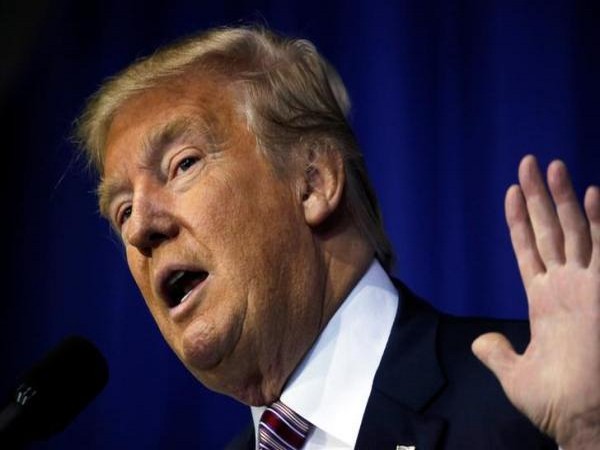
In a major action against ghost users, Twitter on December 21, announced to have deleted 88, 000 fake accounts which were allegedly trying to influence the ensuing US presidential elections. According to Twitter, the maximum number of the blocked Twitter users were supporting the incumbent US President (POTUS) Donald Trump who is seeking a second term. These accounts were primarily used to propagate the messages and posts of various departments and authorities in Saudi Arabia but were also posting, retweeting and liking contents related to the POTUS Donald Trump. Out of these 88,000 blocked accounts, Twitter released information of 5,929 ghost accounts as a sample.
The fake accounts recently blocked by Facebook, were also supporting pro-Trump messages. They were traced to Vietnam, United States and Georgia. Coincidentally, the alleged social media campaign 2016 which had its origin in Russia was also in support of Donald Trump and against his rival Hillary Clinton. Facebook said the fake accounts in Vietnam were traced to a multi-language media group Epoch Times, which is linked to the Falun Gong spiritual movement, and a US media outlet called BL, which has been posting pro-Trump messages. The California-based company added that it removed more than 600 accounts on Facebook and Instagram. Although, these social media platforms - Twitter, Facebook and Instagram – are showing much alertness this time but there is no clarity on exact number of fake accounts created to influence the elections.
A recent report by the Oxford Internet Institute found manipulation efforts have doubled over the past two years and are being used in 56 countries. The researchers said 'sophisticated state actors' from at least seven countries are working outside their borders on global foreign influence operations, using Facebook and Twitter. The report identified countries as China, India, Iran, Pakistan, Russia, Saudi Arabia and Venezuela. Although the alleged interference of Russia in the 2016 elections in support of Trump were a matter of high pitched debates between Democrats and Republicans, the allegations could not be proved on legal framework. The matter came to an end as the Special Counsel in his report on April 18, 2018 concluded that the evidence were insignificant to bring any conspiracy or coordination charge against Trump.
Ghost Accounts: A new normal on Social Media
It's not just the US elections, fake accounts on social media have become a problem in almost every country. They are also prominently used in promotional activities of products and services. Besides, these fake accounts have become the norm for PR companies throughout the word for their business interests.
A large number of fake accounts were allegedly used by all the political parties in the recently concluded Indian General Elections 2019. Before the elections, British Analytica was accused of accessing and misusing huge amount of data from Facebook accounts of Indian voters with a motive to influence them. The Facebook and Twitter had deleted some accounts before and during the elections. Furthermore, Twitter removed thousands of ghost accounts in September, 2019. These accounts were from different countries such as UAE, India, Saudi Arabia and China etc.
Deleting not enough, more action is required
As deleting the fake account is the only action against such users, the fake accounts have become a new normal on social media. However, providing false information or concealing relevant information is a punishable offence in most countries but this is not applied for social media platforms. Furthermore, social media platforms have a few gatekeeping mechanisms to verify the accounts. They are very liberal at the time of launch and also in initial years to attract maximum possible users but start actions when the incidents are reported and pressure is mounted.
The information, misinformation or propaganda at the national level should not be compromised because they decide the future of the country and also the fate of people and their generations. There is a need to introduce more mechanisms to verify the accounts at the time of registration and additional decentralized mechanisms to take action against the fake account holders. The option of legal action against the fake account users may also be explored to contain the menace.
(Disclaimer: The opinions expressed are the personal views of the author. The facts and opinions appearing in the article do not reflect the views of Devdiscourse and Devdiscourse does not claim any responsibility for the same.)
- FIRST PUBLISHED IN:
- Devdiscourse


 Google News