

COLUMN-From chips to commodities, Ukraine war challenges globalization: Peter Apps
Now more than 100 days, Russia’s invasion of Ukraine both highlights and threatens what for the first part of the century was a largely unquestioned path towards industrial, economic, and supply chain globalization – but which now faces stark and savage headwinds. Already, the conflict has upended worldwide food and fuel supplies, see the world’s most established firms quit Russia following Western sanctions, and Moscow and NATO states blame each other for a looming global food crisis.
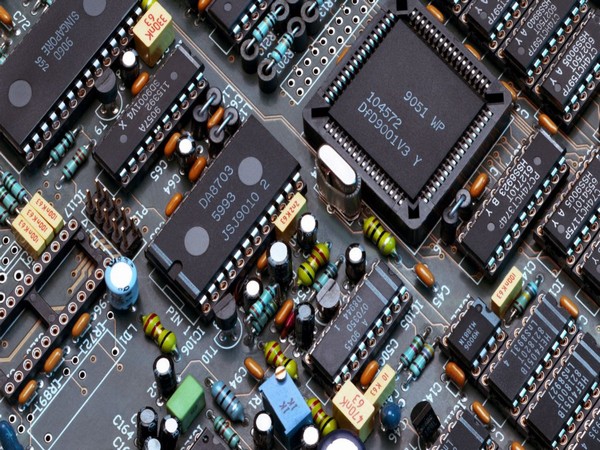
As experts examine the charred remains of Russian missiles that have slammed into Ukrainian apartment blocks and strategic sites, they report one frequent common detail: the carefully scored out manufacturer names and codes on microchips, deliberately leaving their origin at least initially concealed. Now more than 100 days, Russia's invasion of Ukraine both highlights and threatens what for the first part of the century was a largely unquestioned path towards industrial, economic, and supply chain globalization – but which now faces stark and savage headwinds.
Already, the conflict has upended worldwide food and fuel supplies, see the world's most established firms quit Russia following Western sanctions, and Moscow and NATO states blame each other for a looming global food crisis. But it has also supercharged a growing global contest over the manufacture of the chips at the heart of modern technology. It is part of a trend seen during the COVID-19 pandemic vaccine race and has since intensified. Major nations and blocs look to swap decades of dependence on global supply networks beyond their control for tighter sources that they trust, a process that brings its intrinsic challenges and new problems.
At the United Nations Security Council last month, Ghanaian Foreign Minister Shirley Ayorkor Botchwey warned the war was impacting lives around the world on a scale not seen since World War Two when a sudden realigning of global supply routes triggered shortages that killed between 2 and 4 million people in the Indian state of Bengal alone. In the short term, the centrality of both Russia and Ukraine to global and regional food and energy supplies has emerged as the primary challenge to Western efforts to freeze Russia from the global economy, with Russian oil, gas, and grain continuing to reach international markets, albeit at a discount.
That offers something of a lifeline to the Kremlin. On Friday, Senegalese President and African Union chair Macky Sall met with Russian counterpart Vladimir Putin, calling for an end to Western sanctions even as the United States and the European Union blamed Russia's invasion and de facto blockade of Ukraine's Odesa port for slashing its exports and "weaponizing" food. COMPLEX NETWORKS
The importance of access to globalized networks, however, cuts both ways – and nowhere is this more true than technology. In the years that followed the fall of the Berlin Wall and the Soviet Union collapsed, it was frequently predicted that the growth of a globalized capitalist economy should make the war harder, potentially bringing with it a global trend toward free-market democracy. At the very least, the position of Western states, particularly the United States, at its heart was seen as giving them an edge in inflicting sanctions and hardship on those perceived to break the rules.
The Ukraine war – as well as Western efforts to pressure China over human rights and Iran over its atomic program – have shown remaining truth in that. Russia finds itself cut from huge swathes of the global economy, with the threat of savage U.S. penalties deterring even many Chinese firms from closer involvement – particularly when it comes to rearming the Kremlin. Russia is believed to have used up a significant quantity of chips needed for its precision long-range munitions – with Taiwan amongst those imposing an embargo as soon as the invasion launched.
The Kremlin, it is now increasingly clear, has been heavily reliant on Western and Western-allied manufacturers for chips for its precision weapons and major industries, including in the oil and gas sector. China has similar worries, and like Russia finds itself increasingly fenced off from chips from Taiwan, the world's largest provider of semiconductors. SHADOW MARKETS
Inevitably, Russia's invasion of Ukraine – and fears China might do the same to Taiwan – have further intensified nerves over the effect war there might have on the wider world, both through its immediate effect and the broader consequences of potential Russia-level sanctions on China, the world's largest exporter, and its second-largest economy and importer. Taiwan's position at the center of the global semiconductor industry – largely through Taiwan Semiconductor Manufacturing Co, the world's largest microchip foundry – has received mounting attention since a global chip shortage began in 2019 with the United States, the European Union, Japan, and China all stepping up efforts to boost their own domestic production.
In 2020, prompted jointly by the chip shortage, concerns over Chinese state surveillance through telecom firm Huawei and deteriorating mid-pandemic geopolitical relations, the United States restricted the U.S. and other chip sales to dozens of Chinese firms, particularly those associated with the military. Russia has also faced similar and now even more draconian curbs, imposing risk for any major manufacturer found to be continuing direct sales. Inevitably, however, that has also led to a growing black market. Many of Russia's weapons guidance chips are believed to have been acquired through front organizations, while U.S. restrictions on purchases by named Chinese firms in 2020 were followed by a dramatic increase in imports of foreign-manufactured chips by other Chinese companies in 2021.
It's a similar picture when it comes to Russian food and fuel exports. The last three months have seen the emergence of a global "shadow market" in both, with Russian oil cargoes sometimes transferred from one vessel to another offshore in risky transfers or sold on legitimately after refining, particularly by India. But while commerce will find a way, legally or otherwise, most of the time, that is not always possible. If Ukraine cannot take in, ship or store its harvest and clear some 20 million tonnes already stored to freeze granaries for the current crop, it will simply rot – with all the global hardship that might bring.
Russia may also need to source new chips to guide its rockets in a tighter post-invasion market. The now devastated Azovstal steelworks in Mariupol were amongst the largest producers of gases such as neon and argon central to microchip manufacturing, and it is unclear that other producers mainly in China can make up the shortfall. Wars might spur some to innovation and opportunity, but first, they just destroy and hurt everyone involved, as well as others. This one is proving no exception.
*** Peter Apps is a writer on international affairs, globalization, conflict, and other issues. He is the founder and executive director of the Project for Study of the 21st Century; PS21, a non-national, non-partisan, non-ideological think tank. Paralyzed by a war-zone car crash in 2006, he also blogs about his disability and other topics. He was previously a reporter for Reuters and continues to be paid by Thomson Reuters. Since 2016, he has been a member of the British Army Reserve and the UK Labour Party.


 Google News