

Bombay HC dismisses petition challenging ban on PoP Ganpati idols
The Bombay High Court on Monday dismissed a petition challenging the ban on use of plaster of paris PoP for making Ganpati idols.A division bench of Chief Justice Dipankar Datta and Justice M S Karnik noted that the Supreme Court has already upheld the ban and, hence, this court cannot reopen the matter.PIL petitioner Ajay Vaishampayan, an activist, had claimed PoP was banned without any scientific tests on its effect on water.
- Country:
- India
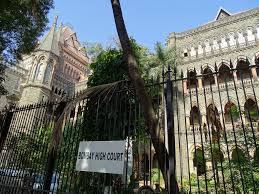
The Bombay High Court on Monday dismissed a petition challenging the ban on the use of plaster of Paris (PoP) for making Ganpati idols.
A division bench of Chief Justice Dipankar Datta and Justice M S Karnik noted that the Supreme Court has already upheld the ban and, hence, this court cannot reopen the matter.
PIL petitioner Ajay Vaishampayan, an activist, had claimed PoP was banned without any scientific tests on its effect on water. He further claimed Shadu clay idols, used as an alternative, were more harmful to the environment. In January 2021, the petitioner along with a sculptors' organization approached the High Court challenging the revised guidelines for idol immersion issued by the Central Pollution Control Board in 2020, which included the ban on PoP.
The HC had then directed them to approach the National Green Tribunal, which dismissed the plea.
The NGT order was challenged in the SC by another person but the apex court, in November 2021, refused to hear the plea and upheld the NGT order.
In a fresh round of litigation, petitioner Ajay Vaishampayan challenged the guidelines and ban on PoP again in Bombay HC.
He claimed the pH level of PoP is similar to that of drinking water based on a lab test.
He further claimed mass production of idols made of Shadu clay was not possible due to the non-availability of the material.


 Google News