

US Supreme Court wrestles with bid to challenge debit card 'swipe fee' rule
Arguments in the case focused on whether the store was too late in bringing its 2021 lawsuit challenging a 2011 Federal Reserve regulation governing how much businesses pay to banks when customers use debit cards to make purchases. The store, called Corner Post and located in Watford City, appealed after lower courts threw out the lawsuit on the basis of missing the six-year statue of limitations that generally applies to such litigation.
- Country:
- United States
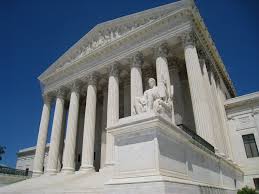
The U.S. Supreme Court on Tuesday grappled with a North Dakota convenience store's challenge to a contentious debit card "swipe fee" rule set by the U.S. Federal Reserve, with some of the justices appearing split over the case's possible implications. Arguments in the case focused on whether the store was too late in bringing its 2021 lawsuit challenging a 2011 Federal Reserve regulation governing how much businesses pay to banks when customers use debit cards to make purchases.
The store, called Corner Post and located in Watford City, appealed after lower courts threw out the lawsuit on the basis of missing the six-year statue of limitations that generally applies to such litigation. The Supreme Court has a 6-3 conservative majority. Its three liberal justices and some of its conservatives seemed to differ on the implications of allowing such lawsuits after the six-year deadline. The store argued it should not be bound by that statute of limitations because it opened for business in 2018, meaning its legal injury arose only after the deadline passed.
Swipe fees, also called interchange fees, reimburse banks for costs involved in offering debit cards. The fees are determined by Visa, MasterCard and other card networks, with a cap of 21 cents per transaction set under the Fed's 2011 rule. Liberal Justice Elena Kagan worried about the potential for disruption if the court were to permit lawsuits like Corner Post's to be brought a decade or more after a regulation was finalized.
"I mean, this is kind of a revolutionary ask," Kagan told Corner Post's lawyer Bryan Weir. Corner Post's argument - that the clock should begin running only after a legal injury materializes, or "accrues" - appeared to resonate with conservative Justice Neil Gorsuch, who posed sharp questions to a government lawyer opposing this approach.
"I think you'd have to concede it is that the plaintiff's injury is the moment of accrual that that's the normal rule," Gorsuch told Benjamin Snyder, who represented the Federal Reserve Board of Governors which regulates swipe fees. Corner Post, backed by various conservative and corporate interest groups including billionaire Charles Koch's network and the U.S. Chamber of Commerce, contends that businesses should have wide latitude to challenge regulations they consider unlawful and burdensome.
The company argues that the six-year time limit should not start running until a business is adversely affected - which for Corner Post would be March 2018 when it accepted its first debit-card payment. President Joe Biden's administration, representing the Federal Reserve Board of Governors, has argued that adopting Corner Post's legal position "would substantially expand the class of potential challengers" to government regulations and threatens to "increase the burdens on agencies and courts."
A decision in the case is expected by the end of June. Banks and merchants had long wrestled over the swipe fees. Before Congress intervened, retailers paid as much as 44 cents per transaction, which they said made it hard for small businesses to accept debit cards.
In 2010, the U.S. Congress directed the Fed to cap the fees as part of the Dodd-Frank Wall Street reform law. The Fed then capped fees at 21 cents per transaction - a move that prompted litigation by retailers who expected a much lower cap. The Supreme Court in 2015 declined to hear that challenge, leaving intact a lower court's ruling backing the regulation. Corner Post's suit argued that the rule defied congressional intent and was "arbitrary and capricious" under a federal law called the Administrative Procedure Act.
U.S. District Judge Daniel Traynor in 2022 dismissed the suit, citing the statute of limitations. The St. Louis-based 8th U.S. Circuit Court of Appeals then affirmed Traynor's decision. The Fed last year proposed cutting the current cap to 14.4 cents per transaction, with the change now in the midst of a public comment period.


 Google News