

PM Modi Inaugurates India Energy Week 2025, Emphasizes India's Role in Shaping Global Energy Future
Prime Minister Modi noted that India Energy Week was conceived as more than just an industry conference—it was designed to redefine global energy dialogues.
- Country:
- India
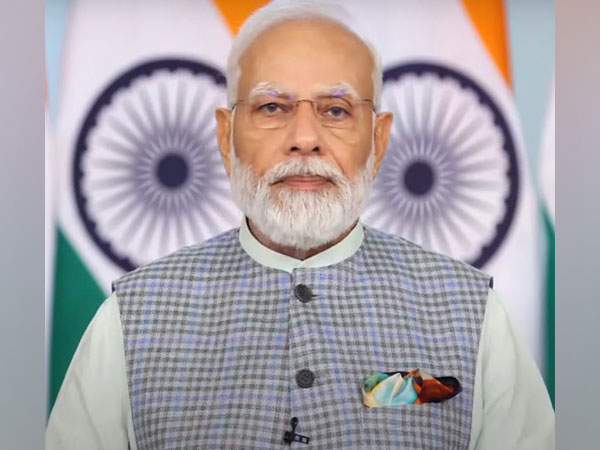
Prime Minister Shri Narendra Modi inaugurated the third edition of India Energy Week (IEW) 2025 via video message today, addressing a distinguished gathering at Yashobhoomi, New Delhi. Highlighting India's growing influence in the global energy sector, he emphasized that the attendees are not just participants in an event, but integral contributors to India's ambitious energy journey.
Prime Minister Modi noted that India Energy Week was conceived as more than just an industry conference—it was designed to redefine global energy dialogues. In just two years, this self-funded initiative has achieved remarkable success, becoming the world's second-largest energy event. Scheduled from February 11-14, 2025, IEW 2025 marks a significant milestone in shaping the global energy narrative and India's leadership within it.
India's Five-Pillar Energy Strategy
Shri Modi highlighted that global experts are recognizing the 21st century as India's century, with the energy sector playing a pivotal role in the nation's and the world's growth. He outlined India's energy ambitions, anchored on five strategic pillars:
- Harnessing Resources: Maximizing the potential of India's abundant natural resources.
- Encouraging Innovation: Fostering innovation among India's brightest minds.
- Economic Strength and Political Stability: Leveraging India's robust economy and stable governance.
- Strategic Geography: Utilizing India's advantageous location to simplify and attract energy trade.
- Commitment to Global Sustainability: Aligning energy growth with global sustainability goals.
These pillars are unlocking new opportunities across India's energy landscape, making the country a magnet for global investment and innovation.
Key Achievements and Future Goals
Highlighting India's economic rise, Prime Minister Modi noted that the country has surged from the tenth to the fifth largest economy in the past decade. In the renewable energy space, India's solar capacity has increased thirty-two times over the last ten years, positioning the country as the third-largest solar power generator globally. Additionally, India's non-fossil fuel energy capacity has tripled, and it is the first G20 country to achieve the goals of the Paris Agreement.
Shri Modi also emphasized India's achievements in ethanol blending, reaching a 19% blend rate, with a target of 20% by October 2025. This progress has resulted in significant foreign exchange savings, increased farmer incomes, and reduced CO2 emissions. The biofuels sector is poised for rapid growth, supported by 500 million metric tonnes of sustainable feedstock. Furthermore, the Global Biofuels Alliance, established during India's G20 presidency, now includes 28 nations and 12 international organizations, fostering international cooperation in sustainable fuel development.
Reforming the Hydrocarbon Sector and Expanding Gas Infrastructure
Prime Minister Modi underscored ongoing reforms to fully explore India's hydrocarbon potential. Major discoveries and extensive gas infrastructure expansion are boosting the gas sector, with India now the fourth-largest refining hub globally. The country aims to increase refining capacity by 20% and enhance the share of natural gas in its energy mix.
To attract investment in upstream exploration, the Government has introduced the Open Acreage Licensing Policy (OALP), streamlined regulatory processes with a single-window clearance system, and amended the Oilfields Regulation & Development Act to ensure policy stability and improved financial terms. These reforms are expected to boost exploration and production, particularly in India's sedimentary basins and maritime sectors.
Expanding Investment Opportunities and Strategic Reserves
The Prime Minister highlighted the expanding opportunities for investment across India's energy sectors, from natural gas to renewable resources. The Government's support includes expanding strategic petroleum reserves and building resilient supply chains to secure the nation's energy future.
Minister Hardeep Singh Puri Highlights Geopolitical Shifts and India's Strategic Role
Shri Hardeep Singh Puri, Minister of Petroleum & Natural Gas, in his address, emphasized the rapid growth of India Energy Week, which has become the second-largest energy conference in the world in just three years. This year's edition has attracted over 70,000 energy professionals from more than 50 countries, including over 20 Ministers and 100 CEOs from Fortune 500 energy companies.
Minister Puri highlighted that IEW 2025 comes at a pivotal time amid major geopolitical shifts that are reshaping the global energy order. He stressed that the conference provides a unique platform for policymakers, industry leaders, and stakeholders to engage in meaningful dialogue, exchange ideas, and chart a course for a balanced and inclusive energy transition.
Driving Innovation and Energy Justice
The Minister emphasized India's leadership in energy innovation, citing the establishment of Global Capability Centres by major firms like BP, Shell, ExxonMobil, and Chevron. These centers employ thousands of Indian engineers developing cutting-edge solutions in energy efficiency, data analytics, and sustainability.
Shri Puri also highlighted the role of over 500 entrepreneurs participating in start-up challenges such as Avinya and Vasudha, and the 700 exhibiting companies, including 100+ start-ups, showcasing innovations in AI-driven energy solutions, quantum computing, biofuels, and battery technologies.
A key theme of his address was energy justice, warning against fragmented energy policies that risk deepening inequality by leaving developing economies behind in the transition. He called for resilient supply chains in critical minerals, semiconductors, and emerging energy technologies, urging global collaboration to prevent disruptions that could hinder progress.
Strategic Investments and Energy Transition Goals
India is strategically investing in diverse energy sources, including scaling up biofuel production, increasing its gas share from 6% to 15%, and targeting 5 million metric tonnes of hydrogen production by 2030. These initiatives aim to ensure a smooth energy transition without compromising energy security.
Conclusion: Forging Partnerships and Shaping the Global Energy Agenda
Concluding his remarks, Minister Puri urged stakeholders to leverage India Energy Week as a platform for transformative partnerships and shaping the global energy agenda. He invited the 6,000+ delegates to engage in discussions over the next four days, focusing on strategies to stabilize energy markets, drive technological advancements, and enhance international cooperation.
With India playing an increasingly central role in the global energy ecosystem, IEW 2025 is poised to be a landmark event, setting the course for the future of energy on the global stage.


 Google News