

Congo Commended for Efforts in Combatting Violence Against Women While Facing Scrutiny on Justice Access and Abortion Laws
Esther Eghobamien, Committee Expert and Country Rapporteur for the Republic of the Congo, praised the country’s extensive constitutional, legal, and public policy reforms.
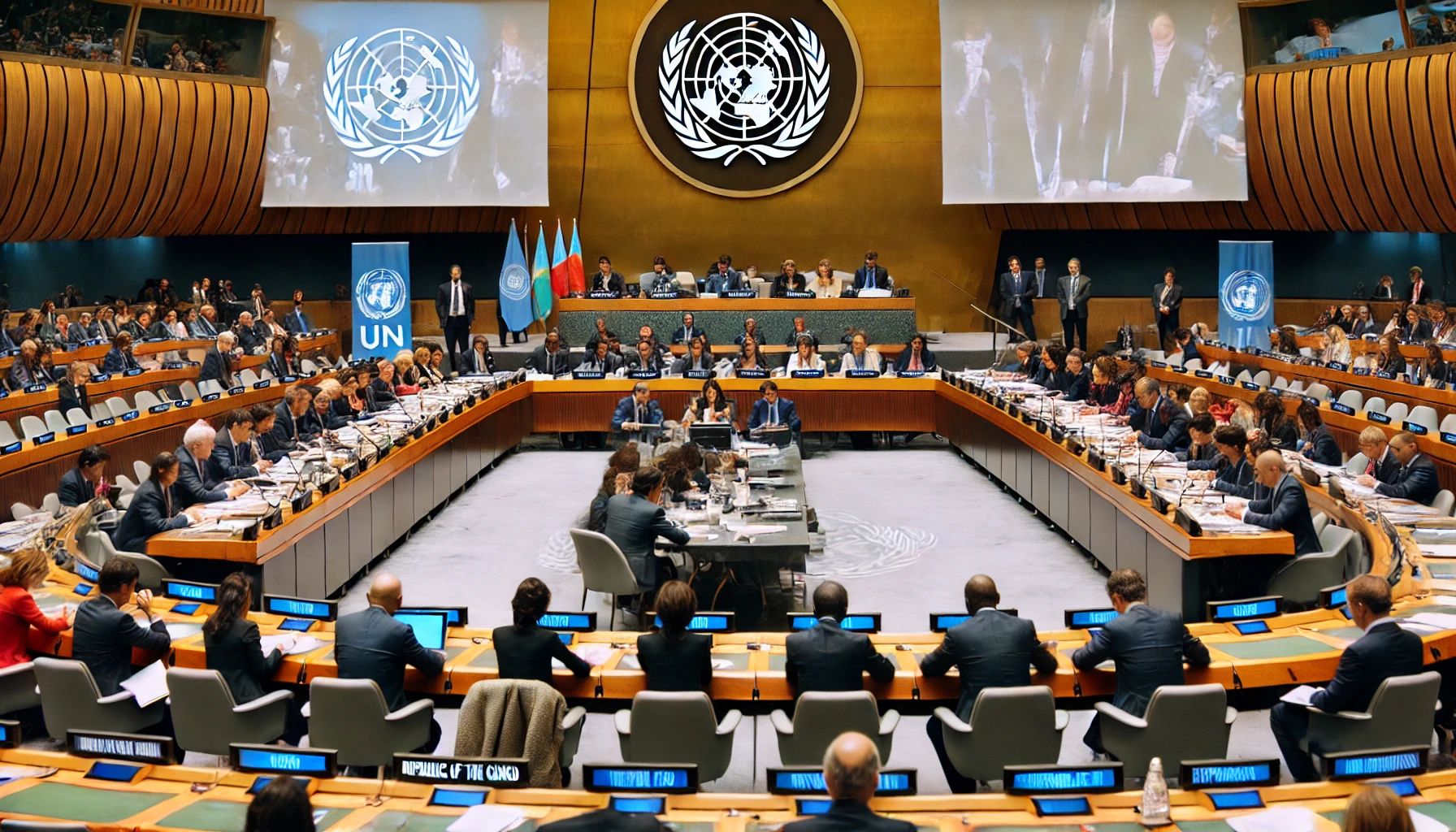
The Committee on the Elimination of Discrimination against Women recently examined the Republic of the Congo's eighth periodic report, acknowledging the country's legal advancements while raising concerns regarding women's access to justice and the prevalence of clandestine abortions.
Esther Eghobamien, Committee Expert and Country Rapporteur for the Republic of the Congo, praised the country's extensive constitutional, legal, and public policy reforms. Notably, the Mouébara Act No. 19 of 2022 was celebrated for its alignment with international human rights standards, explicitly defining discrimination against women in Article 11. If effectively implemented, this law could provide substantial protection for women, particularly against sexual harassment.
Enhancing Women's Access to Justice
A Committee Expert inquired about the Republic of the Congo's efforts to integrate customary courts and informal justice actors into the legal framework to ensure the protection of women and girls under customary law. The Committee sought clarification on concrete steps taken to improve justice accessibility, including legal aid provisions and awareness campaigns within the justice sector. Questions were raised regarding the enforcement of the Mouébara Act and measures to bridge existing gaps in its implementation.
The Congolese delegation assured the Committee that work was being conducted at the grassroots level with community leaders to advocate for women's rights. The national action plan against gender-based violence included a dedicated team focused on ensuring access to justice for women. Over 1,000 judicial staff had received training on the application of the new legal provisions.
Addressing Clandestine Abortions and Reproductive Health
Concerns were raised regarding the high rate of maternal deaths due to unsafe abortions, which reportedly account for up to 30 percent of such fatalities in the Republic of the Congo. The low use of contraceptives was also highlighted. The Committee pressed the State on measures taken to educate the public about the risks of early pregnancies and ensure that women experiencing complications from unsafe abortions received full medical support. Additionally, the Committee questioned the country's stance on criminalization and the potential for legalizing abortion.
In response, the delegation emphasized that voluntary termination of pregnancy remains illegal due to historical cases of unsafe abortion practices. However, in exceptional cases, such as incest, judicial authorization could be sought for abortion procedures to protect the mother's health. The government closely monitors such cases to mitigate potential health risks.
Women's Political Participation and Leadership
Introducing the report, Inès Bertille Nefer Ingani Voumbo Yalo, Minister for the Promotion of Women, Integration of Women in Development, and Informal Economy, highlighted initiatives to promote women's participation in political and public life. Over 3,000 women had received training in political leadership, communication, and governance through the national programme for women's leadership. The representation of women in key institutions and decision-making bodies in the Republic of the Congo was steadily improving.
Closing Remarks and Future Commitments
Nahla Haidar, Chair of the Committee, commended the Republic of the Congo for its numerous legal initiatives and efforts to implement gender-equality policies at the grassroots level. In her closing statement, Minister Ingani Voumbo Yalo reaffirmed the State's commitment to advancing women's rights and wellbeing.
The Congolese delegation included representatives from multiple governmental and legal bodies, such as the Ministry for the Promotion of Women, the Ministry of Social Affairs, the Ministry of Justice, and the National Human Rights Commission, among others.
The Committee's ninetieth session is scheduled from 3 to 21 February. Documentation and reports from States parties can be accessed on the session's webpage. Public meetings of the Committee can be viewed via the UN Web TV platform.
The Committee will reconvene on Thursday, 13 February, to review Sri Lanka's ninth periodic report (CEDAW/C/LKA/9).


 Google News