

Ramaphosa Calls for Urgent Reforms in Early Education and Embracing AI for Future Jobs
President Highlights Critical Need for Strengthening Foundational Skills and Adapting to Technological Change.
- Country:
- South Africa
President Cyril Ramaphosa has urged educators to intensify their focus on early childhood learning, stressing that improving foundational skills in reading and mathematics is crucial for the long-term success of South African students.
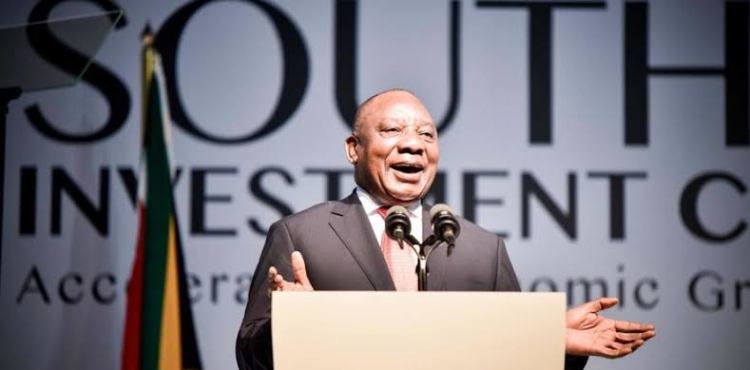
Speaking at the 2025 Basic Education Sector Lekgotla at the OR Tambo Conference Centre in Ekurhuleni on Thursday, the President addressed South Africa's concerning literacy and numeracy statistics, warning of dire consequences if these gaps remain unaddressed.
Literacy and Numeracy Crisis
Ramaphosa cited findings from the 2021 Progress in International Reading Literacy Study (PIRLS), which revealed that more than 80% of Grade 4 learners in South Africa struggle to read for meaning in any language, including their home language. Additionally, South Africa ranked poorly in the Trends in International Mathematics and Science Study (TIMSS), which assesses the capabilities of students in Grades 4 and 8.
"Failing to build a strong foundation in reading and mathematics early on determines how a learner will perform in high school and beyond. That is why Early Childhood Development (ECD) must be at the heart of our education reforms," the President explained.
He commended the Class of 2024 for their achievements, saying it demonstrated the government's progress in undoing the legacy of apartheid-era inequalities. However, he pointed out the stark contrast between matric results and the struggles faced in early education.
To address these challenges, he welcomed the Department of Basic Education's curriculum review and teacher development initiatives, emphasizing the importance of the Mother-Tongue Based Bilingual Education approach and expanding access to inclusive education for children with disabilities.
Embracing AI and Technology in Education
President Ramaphosa underscored the need for South Africa's education system to adapt to rapid technological advancements, particularly automation and artificial intelligence (AI).
"The world is changing, and our education system must evolve with it. The theme of this year's Lekgotla – 'Strengthening Foundations for a Resilient, Future-Fit Education System' – is both relevant and timely," he said.
Citing the World Economic Forum's 2025 Future of Jobs Report, he highlighted that the fastest-growing jobs include big data specialists, UI/UX engineers, data warehousing experts, and renewable energy engineers. In contrast, roles such as bank tellers, data entry clerks, cashiers, and administrative assistants are rapidly declining.
He warned that many of the jobs disappearing are entry-level positions traditionally occupied by young people and urged the education sector to integrate technology-driven learning into the curriculum.
The President specifically mentioned ChatGPT, which now has approximately 300 million weekly active users, and noted that the number of students using AI for schoolwork has doubled between 2023 and 2024.
"We must embrace AI and new technology while ensuring that education remains rooted in human-led learning. There is no substitute for a strong foundational education delivered by committed and capable teachers," he stated.
Preparing for the Next Digital Generation
Ramaphosa highlighted the generational shifts in technology use, pointing out that:
- Generation Z (the first generation to grow up with the internet) is now in their 30s.
- Generation Alpha (the first fully digital generation) is currently in high school.
- Generation Beta (babies born in 2025) will enter school in 2030, already familiar with AI-powered tools.
"These children will master AI-driven learning before reaching high school. They will use AI tools for problem-solving and research in ways we have never seen before. We must prepare them for a world where AI can build a website in 10 seconds or compile a referenced research paper in a minute," he said.
Vocational Training and Entrepreneurship
The President also called for a greater focus on vocational education, emphasizing that technical and trade skills should be viewed as valuable alternatives to traditional academic pathways.
Pointing to Germany's model, where 47% of the workforce holds vocational qualifications compared to only 17% with university degrees, he urged South Africa to change its perspective on vocational training.
"Vocational education should not be seen as a fallback for struggling students but as an equally attractive and viable career path," Ramaphosa said.
He also stressed the importance of entrepreneurship, encouraging young people to develop skills that will allow them to create jobs in an economy with limited employment opportunities.
Shaping a Progressive Global Education Agenda
With South Africa chairing the G20 in 2025, President Ramaphosa highlighted the country's opportunity to drive a global education agenda under the theme of "solidarity, equality, and sustainability."
"As hosts of the G20 Education Working Group, we must champion inclusive and equitable education to prepare future generations for a rapidly changing world," he concluded.


 Google News