

LCA Tejas Mk1A Gets Flight Clearance from HAL Nashik, Boosting Indigenous Aerospace
The successful flight clearance at HAL Nashik signals more than just an operational achievement—it demonstrates India’s growing maturity in decentralised aircraft production.
- Country:
- India
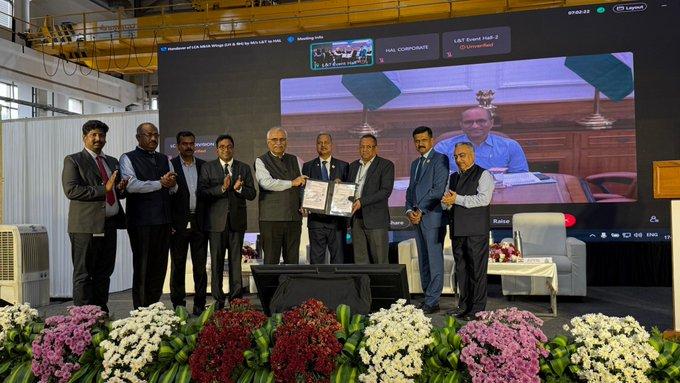
In a major step forward for India's indigenous defence manufacturing and decentralised aerospace production, the Office of the Additional Director General (OADG), Nashik, under the Directorate General of Aeronautical Quality Assurance (DGAQA), has granted flight clearance to the Light Combat Aircraft (LCA) Tejas Mk1A produced at the Nashik division of Hindustan Aeronautics Limited (HAL). The formal Flight Clearance Document was presented to the Executive Director of HAL Nashik Division by the Additional Director General (AQA), marking a historic milestone in India's fighter aircraft programme.
Nashik's New Role in India's Aerospace Map
Traditionally known for manufacturing and maintaining frontline fighter fleets, Nashik has now emerged as a strategic hub for indigenous aircraft production. It hosts the third LCA Tejas production line outside HAL's main facility in Bengaluru. This decentralisation is aimed at increasing production capacity, improving logistical efficiency, and strengthening India's long-term defence preparedness and self-reliance in aerospace capabilities.
By establishing production beyond Bengaluru, the HAL Nashik Division not only alleviates load from the primary facility but also integrates regional expertise into the nation's fighter aircraft programme. This step aligns with the Government of India's Atmanirbhar Bharat vision, enabling more flexible and distributed manufacturing to meet the Indian Air Force's operational demands.
Role of OADG, Nashik in Transfer of Technology
The OADG Nashik office played a central role in successfully absorbing the Transfer of Technology (ToT) for manufacturing the LCA Tejas Mk1A. This involved:
-
Redesigning and modifying tools and fixtures to suit local production needs.
-
Upgrading legacy work centres with modern assembly lines and precision systems.
-
Driving a cultural and technical transformation in manufacturing philosophies to match contemporary aerospace standards.
These initiatives ensured that Nashik's aerospace ecosystem could adapt quickly to the exacting requirements of LCA production.
Stringent Quality Assurance and Production Achievements
In upholding DGAQA's uncompromising quality standards, the Nashik team delivered an extensive list of production achievements:
-
Manufacturing over 5,000 high-precision components in-house.
-
Establishing loom manufacturing capabilities and conducting Line Replacement Units (LRUs) testing.
-
Implementing rigorous pre-installation and assembly inspections.
-
Offering round-the-clock technical support for mission-critical tasks, including Right-First-Time ground runs and snag rectifications.
This meticulous quality control ensured the aircraft's readiness for safe and reliable flight operations.
Strategic Impact and Future Prospects
The successful flight clearance at HAL Nashik signals more than just an operational achievement—it demonstrates India's growing maturity in decentralised aircraft production. By spreading out manufacturing, the Indian aerospace industry gains resilience, reduces production bottlenecks, and accelerates delivery timelines for the LCA Tejas Mk1A fleet.
As Nashik ramps up its output, the combined capacity of all production lines is expected to meet the Indian Air Force's enhanced squadron requirements more efficiently, while also opening possibilities for future export orders.
The event underscores India's steady progress in developing a robust, self-reliant defence industrial base—one that blends technological innovation, regional industrial capacity, and uncompromising quality assurance to meet the challenges of modern aerial warfare.


 Google News