

“The Rule of Law Is Not Dead,” Says Shamila Batohi in Farewell as NDPP
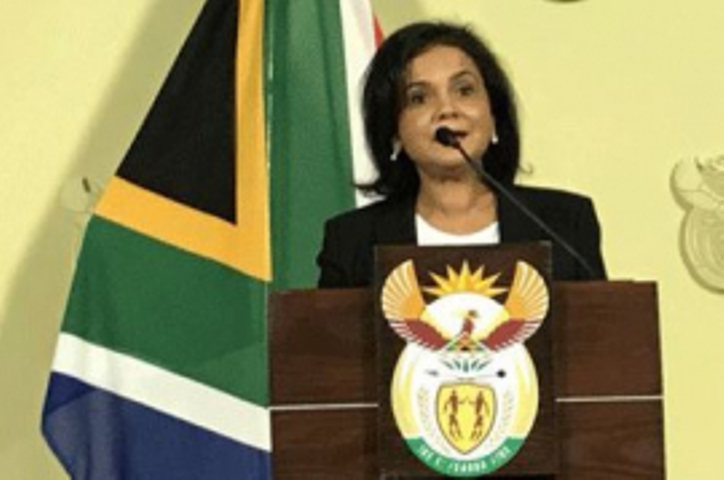
Addressing her final media briefing at the NPA headquarters, Batohi said she leaves office convinced that South Africa’s justice system, though strained, remains worth defending.
- Country:
- South Africa
With a message of defiant hope, Advocate Shamila Batohi on Friday bid farewell as National Director of Public Prosecutions (NDPP), closing a seven-year chapter at the helm of South Africa's National Prosecuting Authority (NPA).
Addressing her final media briefing at the NPA headquarters, Batohi said she leaves office convinced that South Africa's justice system, though strained, remains worth defending.
"The rule of law in South Africa is not dead. It is worth fighting for and worth defending," she said, urging continued support for her successor, Advocate Andy Mothibi, to help turn the tide against corruption and organised crime.
Rebuilding a broken institution
Reflecting on her tenure, Batohi recalled taking office at a time of "profound institutional decay", eroded public trust and a deeply compromised criminal justice system.
"It has been an incredibly challenging journey," she said, noting that the NPA had to rebuild itself while simultaneously meeting public demands for accountability and justice.
She acknowledged that the work remains unfinished, but stressed that a solid foundation for a stronger and more resilient NPA has been laid. According to Batohi, the institution has moved from a phase of stabilisation to consolidation, with growing operational impact.
One indicator of this progress, she said, was performance improvement: the NPA moved from meeting 50% of its targets in 2020/21 to 94% in the current year.
Key achievements under her leadership
Batohi highlighted several milestones achieved during her term, including:
-
The formal establishment of the Investigating Directorate Against Corruption (IDAC)
-
Recovery of R6.3 billion in criminal proceeds by the Asset Forfeiture Unit (AFU) over five years
-
Conviction of at least 380 individuals for complex corruption-related crimes in the 2024/25 financial year alone
-
Development of a national organised crime strategy
-
Finalisation of national priorities guidelines for prosecutors
-
Establishment of the Office for Ethics and Accountability
She emphasised that accountability is not only about convictions but also about recovering stolen money.
"Crime must not pay," Batohi said, noting that through innovative mechanisms such as corporate alternative dispute resolution, the AFU recovered R1.96 billion, with R1.9 billion paid into the Criminal Assets Recovery Account.
Addressing public frustration
Batohi acknowledged widespread public frustration over the slow pace of justice, particularly in high-profile corruption cases.
"This frustration is real. I understand it, I feel it, and the NPA understands it," she said, adding that globally, complex corruption and organised crime prosecutions take years due to their intricate nature, cross-border evidence requirements and constant legal delays.
"Delays do not mean inaction," she stressed. "They mean the work is difficult and must be done properly to withstand appeals."
Passing the baton
While noting that some unfinished business remains, Batohi said she leaves behind an NPA that is on the right path of renewal, accountability and public service.
Among the key issues she flagged for the future were:
-
Strengthening the NPA's operational and financial independence
-
Appointing a dedicated accounting officer for the NPA
-
Ensuring a comparable salary dispensation
-
Closing critical skills gaps
She expressed full confidence in Advocate Andy Mothibi, describing him as a leader of integrity with a strong track record, and confirmed that a comprehensive handover report has been prepared to support continuity.
Concluding on a reflective note, Batohi warned against despair.
"Communities are scared, businesses are fatigued and citizens are tired of waiting for justice. But the most dangerous thing we could do right now is to lose hope," she said.


 Google News