

UN Backs Historic Push for Global Treaty on Crimes Against Humanity
UN High Commissioner for Human Rights Volker Türk described the discussions, underway in New York since 19 January, as a “milestone moment” for accountability and prevention.
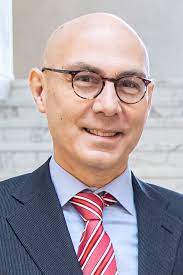
The United Nations Human Rights Chief has welcomed the launch of preparatory talks toward what could become the world's first standalone international treaty on crimes against humanity—calling it a rare and decisive opportunity to strengthen global protections against mass atrocities and close long-standing gaps in international law.
UN High Commissioner for Human Rights Volker Türk described the discussions, underway in New York since 19 January, as a "milestone moment" for accountability and prevention.
"The start of deliberations on a convention on crimes against humanity is a once-in-a-generation opportunity," Türk said. "States must be ambitious if international law is to meaningfully protect people from the gravest attacks on human dignity."
Toward a Long-Awaited Global Framework
Representatives from States, international organizations and civil society are laying the groundwork for formal negotiations on a Convention that would, for the first time, comprehensively codify crimes against humanity in a single international instrument. Current discussions cover core issues including the legal definition of such crimes, States' obligations to prevent and punish them, victims' rights, and national and international enforcement mechanisms.
While acknowledging that negotiations will be complex, Türk said early signs were encouraging, citing strong engagement from governments and civil society actors alike.
"This process will not be easy," he said. "But the level of participation so far shows there is real momentum to address impunity for some of the world's worst crimes."
Making the Law Fit for Today's Realities
Türk urged States to ensure the Convention reflects the evolution of international law and responds to contemporary forms of harm. He reiterated his support for proposals to codify gender apartheid as a crime against humanity and encouraged negotiators to seriously consider this and other additions.
"The Convention must be future-proof," he said. "It should confront deep historical injustices that persist today, while also responding to new and emerging forms of grave attacks on our common humanity."
Victims at the Center
A central theme of Türk's message was inclusion. He stressed that victims and survivors must play a meaningful role throughout the treaty process, warning that the Convention would fall short of its promise without their voices.
"Victims and survivors must be at the centre of both the process and the final Convention," he said, urging the Preparatory Committee to ensure their participation in the next phases of negotiations.
He also emphasized the need for broad civil society engagement, calling an open and inclusive process "an absolute must."
From Words to Action
Türk highlighted the importance of ensuring the Convention has real operational impact, including through the possible creation of a treaty body to support implementation and oversight.
"This Convention must not remain words on paper," he said. "It must equip and incentivize States to turn legal norms into lived reality for their populations."
Pledging the full support of his Office, Türk said the UN Human Rights system stands ready to provide expertise and assist States as negotiations move forward.
Crimes against humanity—such as murder, extermination, torture and sexual violence committed as part of widespread or systematic attacks against civilians—can occur both in war and in peacetime. Despite their gravity, they remain the only core international crimes not yet governed by a dedicated global treaty.
For diplomats, legal experts and human rights advocates, the coming negotiations represent a defining chance to reshape international accountability—and failure to act boldly now, Türk warned, could leave future generations without the protections they urgently need.
ALSO READ
-
Malaysia’s Return of 1,476 People to Myanmar Raises UNHCR Fears Over Their Safety
-
UN Experts Warn Racism Follows African Migrants Through Dangerous Global Journeys
-
Colombia’s Former Enemies Join Search for Disappeared as UN Praises Victim Justice
-
US Migrant Transfer Deals Put Thousands at Risk of Torture and Abuse, Experts Warn
-
Century After Slavery Convention, Millions Still Wait for Freedom and Justice


 Google News