

UPSC rolls out new tech reforms for CSE, IFoS 2026; PwBD centre access expanded
The Commission has notified a total of 933 vacancies under CSE 2026 and 80 vacancies under IFoS 2026.
- Country:
- India
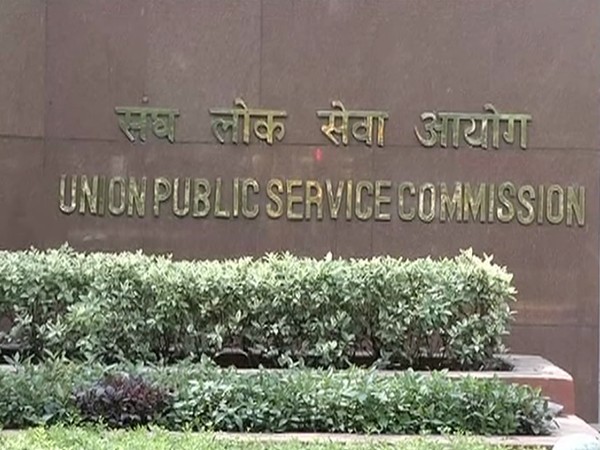
The Union Public Service Commission (UPSC) has launched a series of major technological and accessibility-focused reforms for the Civil Services Examination (CSE) 2026 and the Indian Forest Service Examination (IFoS) 2026, aimed at strengthening examination integrity while significantly improving candidate convenience.
The Commission has notified a total of 933 vacancies under CSE 2026 and 80 vacancies under IFoS 2026.
Revamped online application portal introduced
As part of its broader push to modernise examination processes, UPSC has introduced a redesigned Online Application Portal, intended to improve efficiency, transparency and ease of participation.
The revamped portal will simplify application submission while reinforcing integrity at multiple stages of the examination cycle.
UPSC said the redesign forms part of its commitment to strengthening trust in one of India's most competitive recruitment processes.
Landmark reform for PwBD candidates: no centre capacity cap
In a significant step towards inclusivity, UPSC has overhauled its examination centre allocation framework for Persons with Benchmark Disabilities (PwBD).
Under the revised mechanism:
-
There will be no capping on centre capacity for PwBD candidates
-
Centres will initially allocate seats to both PwBD and non-PwBD candidates
-
Once a centre reaches full capacity, it will be closed for non-PwBD selection
-
PwBD candidates will still be able to choose that centre
-
Additional capacity will be created wherever needed
This ensures that no PwBD candidate is denied their preferred centre due to early saturation.
High-demand centres prompted the change
Explaining the rationale, UPSC Chairman Dr. Ajay Kumar said analysis of the past five years showed that certain centres fill up extremely quickly.
"Centres such as Delhi, Cuttack, Patna and Lucknow reach capacity at a very early stage due to high application volumes, creating difficulties for PwBD candidates," he said.
"With the revised mechanism, every PwBD candidate will be assured of their preferred examination centre," Dr. Kumar added.
Expansion of exam centre network
To ease pressure on high-demand cities, UPSC has expanded its examination centre network.
For the Preliminary Examination, three new centres have been added:
-
Meerut (to decongest Delhi-NCR)
-
Kanpur (to reduce pressure around Lucknow)
-
Bhubaneswar (to supplement Cuttack region)
This increases prelims centres from 80 to 83.
For the Mains Examination, the number of centres has risen from 24 to 27, with the addition of:
-
Bhubaneswar
-
Srinagar
-
Imphal
Candidate preference survey for future centres
The new portal introduces an additional feature to strengthen centre planning.
Beyond selecting notified centres, candidates will also indicate preferred nearby cities through a dropdown list. UPSC said this will function as a survey of candidate demand and could guide the creation of new centres where feasible.
Face recognition and photo verification for enhanced security
UPSC has also incorporated technology-enabled photo verification and face recognition tools to strengthen identity authentication and improve examination security.
These measures are expected to enhance transparency and robustness throughout the recruitment process.
Technology-driven, inclusive examinations in UPSC centenary year
Dr. Ajay Kumar said UPSC is adopting modern technology to ensure examinations remain fair, merit-based and accessible.
"The Commission has adopted the latest technology to ensure a free, fair, inclusive and accessible examination process… while ensuring selections are made strictly on the basis of merit," he said.
These reforms are being launched as part of UPSC's Centenary Year celebrations, reflecting the Commission's continued evolution to meet contemporary expectations while upholding the highest standards of fairness, transparency and integrity.


 Google News