

Lebanon’s Humanitarian Crisis Deepens Despite Ceasefire as Thousands Remain Trapped in Cycles of Fear and Displacement
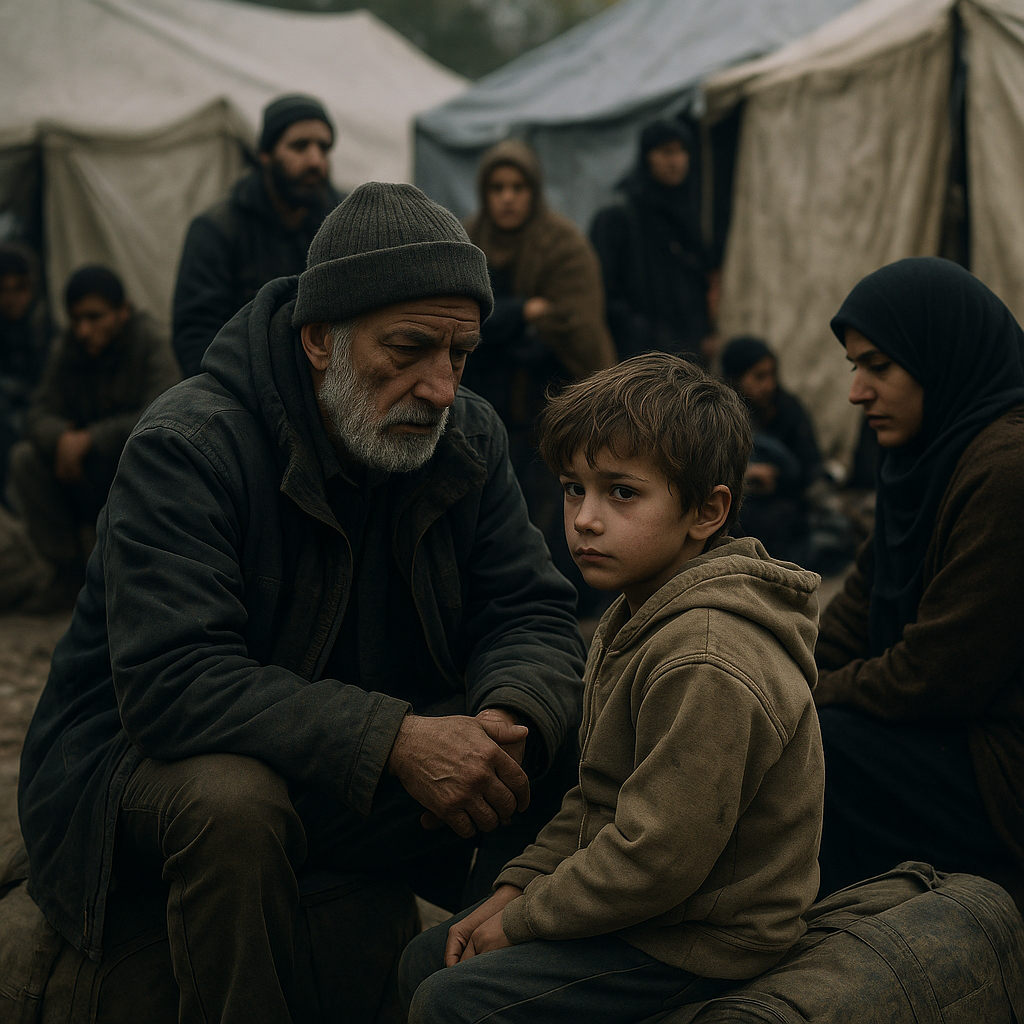
“Civilians remaining in the south of Lebanon and parts of the Bekaa are living with the same fear for their lives as before the ceasefire,” UNHCR said.
- Country:
- Lebanon
The humanitarian crisis in Lebanon is continuing to spiral despite the ceasefire announced on 17 April, with ongoing Israeli airstrikes, shelling, demolitions, and movement restrictions forcing civilians into repeated displacement and leaving entire communities trapped in fear, uncertainty, and devastation.
The United Nations Refugee Agency (UNHCR) has warned that the current ceasefire remains "deeply fragile," as violence and insecurity continue to affect southern Lebanon and parts of the Bekaa Valley, where families are struggling to survive amid widespread destruction and worsening humanitarian conditions.
Although international attention has shifted away from Lebanon in recent weeks and Beirut has avoided major strikes, UNHCR says civilians in conflict-affected regions continue to face the same dangers and instability that existed before the ceasefire.
"Civilians remaining in the south of Lebanon and parts of the Bekaa are living with the same fear for their lives as before the ceasefire," UNHCR said.
"And more are being forced to flee."
According to the agency, at least 380 people have been killed since the ceasefire was announced, underscoring the continuing volatility of the conflict and the fragile nature of current security arrangements.
Large areas of southern Lebanon remain devastated, with homes, roads, schools, healthcare facilities, electricity systems, and water infrastructure heavily damaged or destroyed.
Data from Lebanon's National Council of Scientific Research (CNRS) shows that in just the first three days after the ceasefire announcement, 428 housing units were completely destroyed and another 50 severely damaged.
Humanitarian officials warn that the destruction is preventing meaningful returns for many displaced families, even when fighting temporarily subsides.
Although thousands of displaced people have attempted to return to their homes since the ceasefire, many of these movements have been short-lived and repeatedly reversed.
Families often return briefly to assess conditions, only to discover destroyed homes, unsafe neighbourhoods, unexploded ordnance, collapsed infrastructure, and the complete absence of essential services.
As a result, many civilians are becoming trapped in exhausting cycles of displacement.
"Families flee, return briefly, then flee again — caught in repeated and exhausting cycles of uncertainty," UNHCR said.
The agency described increasingly desperate conditions for returnees, many of whom now face homelessness, insecurity, and a lack of basic necessities.
"Those who return face grim realities: widespread destruction of homes and infrastructure, no electricity or water, damaged or non-functional health-care facilities and schools, and ongoing risks from unexploded ordnance."
UNHCR officials described deeply emotional scenes during recent visits to conflict-affected communities in Nabatieh and Tyre, where families attempting to return home were forced to retreat once again after discovering entire neighbourhoods reduced to rubble.
"Just last week, I met families who had attempted to return to their homes in Nabatieh and Tyre, only to come back to collective shelters, even more devastated after seeing their homes completely destroyed," the agency said.
"One man showed me a photo of his demolished house on his phone. He is now back in Sidon, sleeping on the floor of a school shelter, with nothing to return to."
The crisis is also fueling continued cross-border displacement into neighbouring Syria.
Following renewed escalation on 2 March, more than 310,000 Syrians have crossed back into Syria from Lebanon, many reporting they had no viable alternative but to leave despite ongoing instability and humanitarian challenges inside Syria itself.
Aid organizations warn that the scale of displacement is placing enormous pressure on already overstretched humanitarian systems across the region.
At the same time, international funding for relief operations remains critically insufficient.
UNHCR says the Lebanon Flash Appeal has received only 38 percent of the funding required to sustain emergency humanitarian assistance, severely limiting the ability of aid agencies to provide shelter, healthcare, cash assistance, food, and protection services.
Humanitarian officials fear that without urgent additional international support, vulnerable families could face worsening hardship in the coming months, particularly as infrastructure damage and displacement continue to disrupt livelihoods and public services.
Despite severe operational challenges, UNHCR says it continues to work closely with Lebanese authorities and humanitarian partners to support emergency shelter operations, distribute relief supplies, provide protection services, and assist displaced populations.
However, aid agencies stress that humanitarian assistance alone cannot resolve the crisis unless the ceasefire is fully respected and long-term stability is restored.
UNHCR is now calling on all parties to uphold the ceasefire and ensure civilians are protected, while urging the international community not to abandon Lebanon as the humanitarian situation deteriorates.
"This fragile ceasefire must be upheld to enable safe returns for displaced families and be matched by sustained international support," the agency said.
The crisis in Lebanon comes amid growing regional instability and renewed concerns about wider escalation across the Middle East, with humanitarian organizations warning that civilian populations continue to bear the overwhelming burden of ongoing conflict.


 Google News