

SA’s Community Media Faces Digital Survival Battle, Kenny Morolong Warns
Morolong stressed that community media serves as a direct platform for freedom of expression and social inclusion.
- Country:
- South Africa
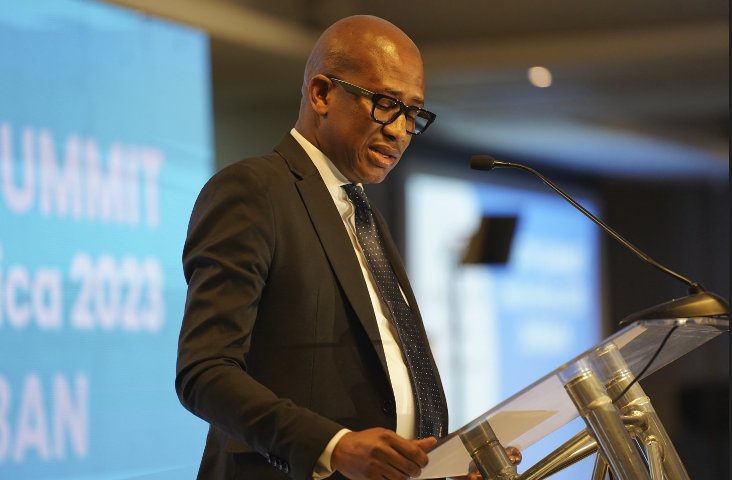
Deputy Minister Kenny Morolong warns of shrinking revenues, collapsing newspapers and shifting audience habits as government and funders rally behind community journalism sustainability initiatives.
South Africa's rapidly evolving digital landscape is fundamentally reshaping journalism, forcing media houses, community broadcasters and independent publishers into a fierce battle for survival as audiences migrate online and traditional revenue models collapse.
This warning emerged strongly at the Media Development and Diversity Agency (MDDA) Funders' Breakfast held in Hyde Park, Johannesburg, where Deputy Minister in the Presidency Kenny Morolong delivered a stark assessment of the pressures confronting the country's media sector — while also unveiling government's renewed push to modernise and financially stabilise community media through innovative partnerships and targeted funding interventions.
Addressing media stakeholders, broadcasters, publishers, funders and policymakers, Morolong said South Africa's journalism ecosystem is undergoing one of its most disruptive transitions since the dawn of democracy, driven by rapid technological change, mobile internet expansion and the explosive rise of global social media platforms.
"The good deal of what we know about our world, we know because of journalism," Morolong told delegates, underscoring the critical democratic role of independent and community media.
Digital Revolution Reshaping News Consumption
Morolong warned that audiences are no longer passive consumers of news, but increasingly active participants who curate, comment on, share and shape media narratives across digital platforms.
The rise of smartphones, cheaper data access and social media algorithms is dramatically altering how South Africans consume information, placing enormous strain on traditional journalism business models.
"Audiences are also increasingly involved in both curating media for sharing and in commenting, or in other ways augmenting the media they share," Morolong said.
Industry analysts say South Africa mirrors a global media transformation where digital-first consumption patterns are eroding print circulation, fragmenting audiences and redirecting advertising revenues away from local publishers toward multinational technology companies.
The consequences have been severe for community media operators already working with limited financial resources.
Across the country, numerous community newspapers and independent publications have either shut down, scaled back operations or reduced staffing as printing costs rise and advertising revenues shrink.
Community radio stations — many of which serve rural and historically disadvantaged communities — are also under increasing financial pressure as operational costs continue climbing.
Morolong acknowledged that while some South African media organisations are experimenting with new digital revenue streams and alternative business models, progress remains uneven and insufficient to halt the decline in media diversity.
"While South African news organisations are developing some new business models and income streams that might sustain independent news journalism into the future, this is not happening fast enough or across enough platforms to forestall a likely decline in media diversity," he warned.
Government Expands Support Through New Funding Commitments
In response to mounting challenges, government has intensified efforts to strengthen the sustainability of community media through the MDDA and expanded partnership networks.
Morolong revealed that a 30% funding allocation for community media has now become formal government policy — a move expected to provide greater financial certainty to struggling broadcasters and publishers.
The funding intervention is being positioned as part of a broader innovation strategy aimed at protecting media plurality, expanding access to local content and preserving indigenous language broadcasting.
"These community radio stations, television broadcasters and print publications exist because of the ecosystem we have collectively built," Morolong said.
The MDDA, established in 2003 through Act No. 14 of 2002, remains one of South Africa's most important statutory institutions supporting grassroots media development.
The agency provides grant funding, research support, training and development programmes to community broadcasters and small commercial media enterprises, particularly in historically marginalised communities.
Officials say the organisation is increasingly focused on helping community media adapt to digital transformation by supporting innovation, sustainability planning and new audience engagement models.
Preserving Indigenous Languages and Democratic Participation
One of the most significant achievements highlighted during the event was the growth of indigenous language broadcasting across community radio platforms.
Since the licensing of South Africa's first community radio station in February 1995, the sector has expanded into a nationwide network reaching an estimated four million listeners across all nine provinces.
Stations now broadcast in several indigenous languages, including Nama and Khilobedu, helping preserve cultural identity while ensuring communities access news and information in languages they understand.
Media experts argue that community broadcasting remains essential in strengthening democracy, improving public participation and providing localised information often overlooked by mainstream media.
Morolong stressed that community media serves as a direct platform for freedom of expression and social inclusion.
"They provide a platform for diverse perspectives, echoing the voices of the citizens they serve and facilitating the fundamental right to freedom of expression," he said.
Innovation and Partnerships Key to Survival
A central theme emerging from the Funders' Breakfast was the growing importance of collaboration and innovation in ensuring the future sustainability of South Africa's community media sector.
Morolong acknowledged that the MDDA's limited public funding means many small media projects continue operating on extremely narrow margins.
Some struggle to meet regulatory compliance requirements such as audited financial statements, while others battle rising transmission, printing and staffing costs.
He credited partnerships with funders, industry bodies and private sector stakeholders for helping keep many community media outlets operational.
"Behind every one of those measures lies a simple truth — none of it would be possible without partnerships," Morolong said.
Industry organisations such as the National Community Radio Forum, the National Association of Broadcasters and the South African Community Radio Organisation were praised for supporting sector resilience and capacity-building initiatives.
MDDA representative Qondile Khedama reinforced the importance of collaboration, telling delegates that stakeholder engagement remains central to the agency's progress and long-term sustainability strategy.
"Without interaction with you, the MDDA would not be where it is today," Khedama said.
A Critical Moment for South African Journalism
The MDDA Funders' Breakfast highlighted growing recognition that South Africa's journalism sector is entering a defining moment.
While digital technology has opened new opportunities for citizen engagement and audience participation, it has simultaneously intensified financial pressures on independent journalism and community media.
Experts warn that without sustained intervention, innovation and investment, the country risks losing critical local news platforms that serve vulnerable and underrepresented communities.
Government officials say future strategies will increasingly focus on digital innovation, partnership funding, content diversification and expanding access to local journalism in underserved areas.
As South Africa navigates the future of media in the digital age, stakeholders agree that protecting community journalism will remain essential for democratic participation, accountability and inclusive national development.


 Google News