

Türk Warns Tunisia Over Escalating Crackdown on Civil Society, Journalists and Political Critics
Türk warned against dismantling the democratic and human rights gains achieved over the past decade.
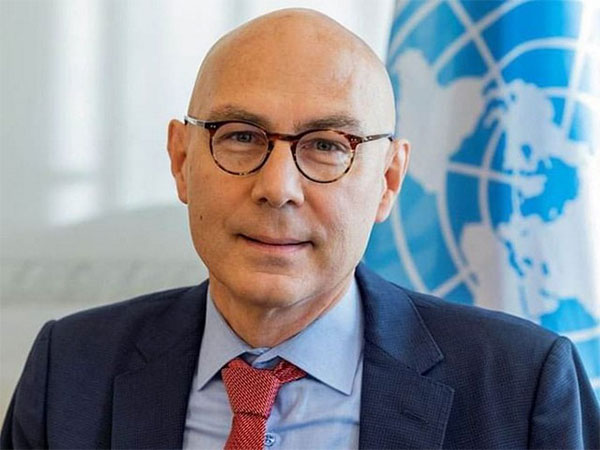
United Nations High Commissioner for Human Rights Volker Türk has issued a sharp warning to Tunisia over what he described as a widening campaign of repression targeting civil society organisations, journalists, human rights defenders, political opposition figures, activists, and members of the judiciary.
In a strongly worded statement released Thursday, Türk called on Tunisian authorities to halt the increasing use of criminal prosecutions, administrative restrictions, and judicial sanctions that he said are shrinking civic space and undermining fundamental freedoms protected under both Tunisia's Constitution and international human rights law.
"The continued repression and restrictions on civic space by the Tunisian authorities undermine the rights of people protected under the country's Constitution and its international human rights obligations," Türk said.
The UN rights chief's remarks come amid mounting international concern over Tunisia's political trajectory and the gradual erosion of democratic institutions and civil liberties since the country's post-2011 democratic transition.
Among the latest developments highlighted by the UN are the temporary suspensions of prominent human rights organisations operating in Tunisia.
On Tuesday, a Tunisian court ordered the suspension of international legal and human rights organisation Avocats Sans Frontières (Lawyers Without Borders) for 30 days, reportedly citing regulatory oversight issues.
The move came only days after a similar suspension was imposed on the Tunisian League for Human Rights, one of the country's oldest and most respected civil society organisations.
Human rights observers say such suspensions can effectively paralyse organisations by halting their activities, disrupting legal aid programmes, advocacy work, monitoring efforts, and public engagement initiatives.
According to the UN Human Rights Office, Tunisian authorities have increasingly relied on allegations related to funding irregularities or administrative compliance issues to justify restrictive actions against civil society groups.
"We are observing a growing trend in which Tunisian authorities are resorting to the use of judicially imposed sanctions to curb the exercise of the right to freedom of association," Türk said.
He added that such measures often appear to disregard internationally recognised principles requiring restrictions on fundamental freedoms to meet standards of legality, necessity, and proportionality.
At the same time, the UN says pressure on independent media and journalists continues to intensify.
One of the most recent cases involves journalist Zied El Heni, who was arrested on 24 April under a controversial law criminalising the use of telecommunications networks to "harm others" — wording critics say is dangerously vague and open to abuse.
El Heni remains in pre-trial detention.
The UN Human Rights Office also noted that at least 28 journalists, including prominent journalist Mourad Zghidi, were arrested last year and later sentenced to prison terms for activities connected to their professional reporting or public commentary.
Many of these prosecutions were reportedly based on broadly worded provisions contained in a 2022 decree-law concerning "crimes related to information and communication systems."
Human rights groups and legal experts have repeatedly criticised the decree-law, arguing it has become a powerful tool for criminalising dissent, restricting press freedom, and silencing criticism of public officials.
Türk urged Tunisian authorities to immediately release individuals detained solely for exercising their rights to freedom of expression and opinion.
"I urge the Tunisian authorities to release immediately and unconditionally all those detained or imprisoned for having expressed their views, protected under international human rights law, and to lift all arbitrary restrictions on the freedoms of expression and association," he said.
The High Commissioner also highlighted broader institutional concerns, particularly the continued absence of a functioning constitutional court in Tunisia.
According to Türk, the lack of an independent constitutional oversight body significantly weakens protections against abuses of power and undermines effective safeguards for fundamental rights.
"Restrictions on fundamental freedoms must remain exceptional, grounded in clear law, be necessary and proportionate to pursue a legitimate objective, non-discriminatory and accompanied by due process and effective judicial oversight," Türk said.
He stressed that strengthening the rule of law in Tunisia requires stronger institutional protections, preservation of civic space, and inclusive rights-based legislative reforms.
"Upholding the rule of law in Tunisia requires stronger institutional safeguards, the protection of civic space, and inclusive, rights-based legislative reform, in line with the country's international human rights commitments," he added.
The statement reflects growing concern among international organisations, rights groups, and foreign observers that Tunisia's democratic achievements following the 2011 revolution are increasingly under threat.
Tunisia was widely viewed after the Arab Spring as one of the region's few democratic success stories, having adopted a progressive constitution and established competitive political institutions following the overthrow of longtime ruler Zine El Abidine Ben Ali.
However, political tensions have escalated in recent years following major constitutional and governance changes introduced under President Kais Saied, including the consolidation of executive powers and increased pressure on political opponents and independent institutions.
Türk warned against dismantling the democratic and human rights gains achieved over the past decade.
"Tunisia's democratic and human rights gains after 2011 must be maintained, not progressively dismantled," he said.
The UN Human Rights Office also expressed support for ongoing efforts by Tunisian lawmakers seeking to amend the controversial 2022 decree-law currently used to prosecute journalists, activists, and critics.
Analysts say Tunisia now faces growing international scrutiny as concerns deepen over judicial independence, freedom of expression, political pluralism, and the future of democratic governance in the country.


 Google News