

SA Launches Tree-Planting Drive to Combat Climate Change and Wastewater Pollution
“These odours can lead to neighbouring community discomfort, complaints, and reputational risks, particularly in densely populated areas within the City of Ekurhuleni,” the Deputy Minister said.
- Country:
- South Africa
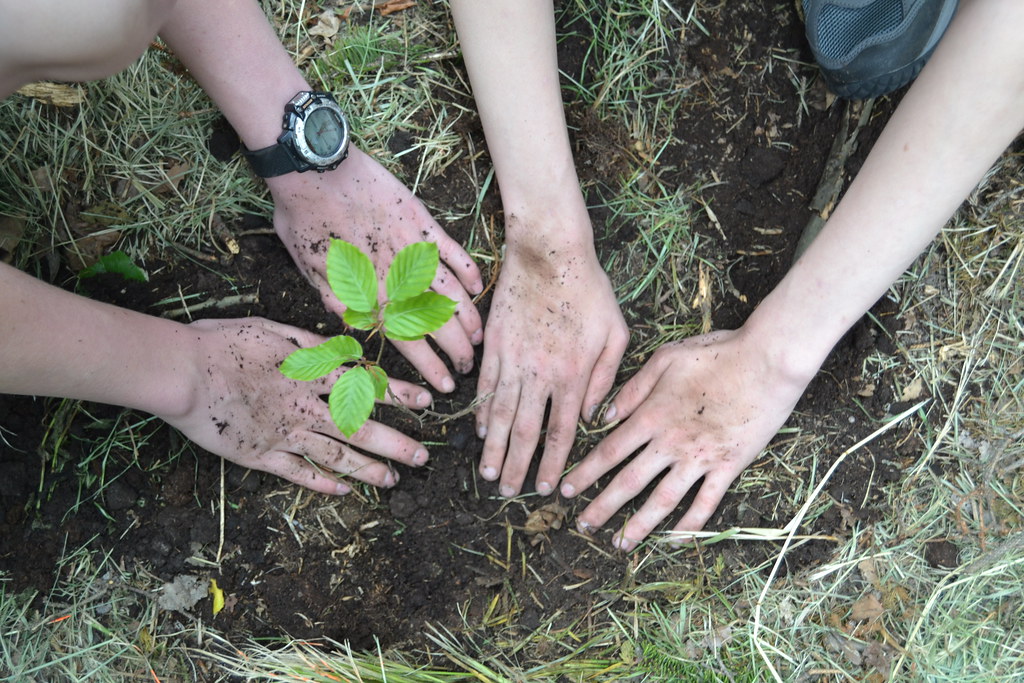
South Africa is intensifying its climate resilience and environmental restoration efforts through a nationwide tree-planting campaign that aims to transform urban landscapes, combat pollution and improve community wellbeing, while simultaneously addressing environmental challenges linked to wastewater treatment infrastructure.
The Department of Forestry, Fisheries and the Environment (DFFE) has announced a new pilot initiative to plant trees around wastewater treatment facilities across the country to help reduce odour pollution, strengthen environmental protection and improve living conditions for nearby communities.
The announcement was made by Deputy Minister of Forestry, Fisheries and the Environment Bernice Swarts during the launch of South Africa's ambitious Presidential One Billion Trees Programme in Pretoria.
Government Targets Wastewater Odours Through Green Infrastructure
According to the Department, wastewater treatment plants remain essential for protecting public health and water resources but continue to generate persistent odours that negatively affect surrounding communities.
Swarts said odours produced through:
-
Sludge handling
-
Anaerobic decomposition
-
Chemical treatment processes
have become major environmental and social concerns, particularly in densely populated urban areas.
The pilot initiative will begin at the Ekurhuleni Water Care Company (ERWAT), which operates 19 wastewater treatment facilities across Gauteng.
"These odours can lead to neighbouring community discomfort, complaints, and reputational risks, particularly in densely populated areas within the City of Ekurhuleni," the Deputy Minister said.
Officials believe strategic tree planting around treatment plants can act as natural environmental buffers that help reduce odour spread while simultaneously improving air quality, biodiversity and urban aesthetics.
Tree Planting Positioned as Climate and Public Health Strategy
Swarts emphasized that greening initiatives are not merely environmental projects but also critical social and economic interventions.
"It is therefore important to develop green spaces through tree planting in and around the wastewater treatment plant, which offer buffers between the communities and add to the general wellness of the environment," she said.
Environmental experts say urban forestry projects can provide multiple benefits including:
-
Improved air quality
-
Heat reduction in urban areas
-
Flood mitigation
-
Carbon sequestration
-
Biodiversity restoration
-
Mental and public health benefits
The government increasingly sees green infrastructure as a practical and cost-effective tool for strengthening climate resilience in rapidly urbanising communities.
Presidential One Billion Trees Programme Gains Momentum
The wastewater greening initiative forms part of the broader Presidential One Billion Trees Programme, a large-scale national campaign aimed at mobilising citizens, institutions and businesses to participate in environmental restoration and climate action.
The programme seeks participation from:
-
Government departments
-
Private sector organisations
-
Businesses
-
Religious groups
-
Traditional leaders
-
NGOs
-
Youth formations
-
Communities
Officials say the campaign is intended to build a nationwide environmental movement capable of addressing climate change, biodiversity loss and ecological degradation.
Success of 2025 Campaign Spurs Larger 2026 Target
The new programme builds on the success of South Africa's 2025 One Million Trees Campaign, during which more than 1.3 million trees were planted nationwide on Heritage Day in September 2025.
Encouraged by the strong public response, the government has now dramatically expanded its ambitions.
Swarts announced that South Africa plans to plant 10 million trees on Heritage Day 2026, representing one of the country's largest coordinated environmental mobilisation efforts to date.
"These trees will be planted across the country in our safe spaces such as schools, community parks, health facilities and in our residential spaces," she said.
The government is calling on all South Africans to actively participate in the national tree-planting campaign.
Climate Change and Biodiversity Loss Hitting Vulnerable Communities Hardest
The Deputy Minister warned that South Africa continues to face growing environmental challenges linked to:
-
Climate change
-
Environmental degradation
-
Biodiversity loss
-
Food insecurity
She stressed that these crises disproportionately affect poor and vulnerable communities, particularly in rural areas where people rely heavily on natural ecosystems for:
-
Food
-
Water
-
Traditional medicine
-
Livelihoods
"As ecosystems degrade, these communities face reduced food security, decreased income, and increased vulnerability to natural disasters and climate change, exacerbating inequality," Swarts said.
Environmental analysts say climate change is increasingly intensifying droughts, flooding, heatwaves and ecosystem degradation across southern Africa, placing additional pressure on already vulnerable populations.
Greening Seen as Tool for Spatial Justice and Urban Transformation
The government is also positioning greening initiatives as part of broader efforts to address spatial inequality rooted in South Africa's apartheid-era urban planning legacy.
Swarts noted that lower-income communities often face disproportionate exposure to pollution, industrial waste and environmental neglect.
"Greening is thus inseparable from the pursuit of spatial justice in the context of a South Africa where the under-development of lower-income communities is the product of historical processes rooted in segregation," the Deputy Minister said.
Officials believe expanded urban greening can help improve quality of life in historically disadvantaged communities while restoring neglected public spaces.
Municipalities Encouraged to Repurpose Dumping Sites into Green Spaces
The Department also highlighted the important role municipalities can play in identifying environmental restoration projects.
Swarts encouraged local governments to explore projects such as:
-
Repurposing illegal dumping sites
-
Developing community parks
-
Expanding green corridors
-
Creating urban forests
-
Improving recreational open spaces
The Deputy Minister said greener urban environments can also generate economic benefits by increasing property values and strengthening municipal revenue collection through higher property rates.
Economic and Environmental Benefits of Urban Forestry
Research globally has shown that urban tree planting can deliver significant economic returns through:
-
Increased property values
-
Reduced cooling costs
-
Improved public health outcomes
-
Reduced flood damage
-
Enhanced tourism and urban attractiveness
South African officials believe scaling up greening initiatives could contribute to long-term climate adaptation and urban resilience strategies.
Government Calls for National Mobilisation
The DFFE has urged all sectors of society — including government institutions, organised labour, business groups, civil society and ordinary citizens — to participate in the Heritage Day 2026 campaign.
"Let us once again come together in the spirit of shared responsibility and common purpose. Let us plant not only trees, but the seeds of hope, dignity and lasting change in every community across our nation," Swarts said.
As South Africa faces mounting environmental pressures and increasing climate risks, the government hopes the Presidential One Billion Trees Programme will become a cornerstone of the country's long-term environmental restoration and climate resilience strategy.


 Google News