

Empowering Senegal’s Poor: The Impact of Adaptive Social Protection Programs
Senegal's adaptive social protection programs, led by PNBSF and Yokk Koom Koom, have significantly reduced poverty, improved household resilience, and boosted economic inclusion, particularly for women. By integrating financial aid with entrepreneurship and climate resilience measures, these initiatives have strengthened long-term economic stability and social equity.
 CoE-EDP, VisionRI
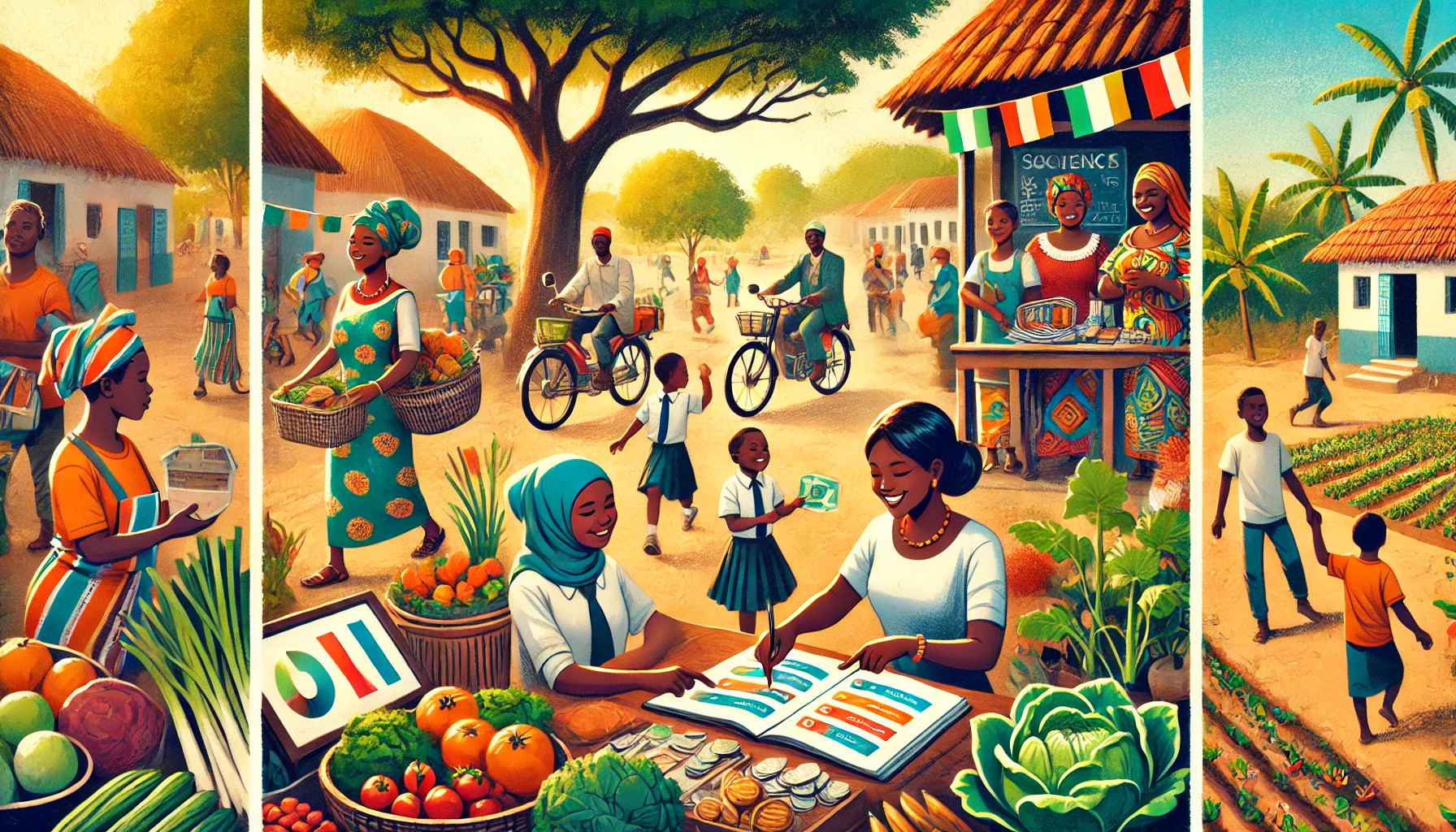
For more than ten years, Senegal has been implementing a large-scale social protection strategy designed to combat extreme poverty and social exclusion. At the heart of this effort is the Programme National de Bourse de Sécurité Familiale (PNBSF), a flagship initiative that covers 18% of Senegalese households. Complementing PNBSF are various other social programs that aim to improve economic resilience, prevent asset loss due to climate shocks, and promote financial inclusion. The World Bank, in collaboration with the Délégation Générale à la Protection Sociale et à la Solidarité Nationale (DGPSN) and researchers from the Direction du Registre National Unique, has conducted a rigorous evaluation of these programs, providing critical insights into their impact. The findings of these studies have informed key policy decisions, helping shape the future of Senegal's social safety net programs.
Transforming Lives: The Impact of PNBSF on Households
Between 2016 and 2019, an extensive evaluation of PNBSF was conducted, revealing significant improvements in beneficiaries' living standards. Household consumption per capita increased by 8%, with 89% of cash transfers directly contributing to an increase in overall spending, particularly on food. Food expenditure accounted for two-thirds of this impact, highlighting the program's role in enhancing food security. Beyond boosting consumption, PNBSF has played a critical role in reducing extreme poverty, particularly in rural areas, where poverty levels fell by 5%. While most beneficiaries remained below the poverty line, the program successfully reduced the gap between poor households and the poverty threshold by 10%, demonstrating its effectiveness in narrowing economic disparities.
The program has also enhanced household resilience and well-being. The share of protein-rich food in diets increased by 8%, ownership of durable goods rose by 11%, and the proportion of households negatively affected by economic and environmental shocks fell by 8%. Households where women received the financial transfers experienced even stronger improvements in resilience. These findings underscore the importance of targeted social safety nets in improving both immediate consumption and long-term household stability.
Education, Work, and Economic Inclusion: A Changing Landscape
The PNBSF program has made strides in improving school enrollment, though its impact has been uneven across different age groups. Enrollment rates increased for girls aged 6 to 12, while absenteeism among boys aged 13 to 16 declined. However, the program did not significantly improve vaccination rates for children aged one to five or increase birth registrations. Interestingly, the gender of the grant recipient influenced these outcomes. When women were the primary recipients, teenage girls' enrollment improved, while in households where men received the transfers, boys' education outcomes were largely unchanged or, in some cases, declined.
One of the most significant successes of PNBSF has been its impact on economic activities and financial inclusion. Contrary to the belief that cash transfers discourage work, the program has led to an increase in income-generating activities (IGAs). The proportion of households engaged in IGAs rose by 20%, while the total number of business ventures grew by 30%. Additionally, PNBSF has expanded financial inclusion, particularly for women. Female beneficiaries have reported greater access to microcredit institutions and an increased ability to secure loans, enabling them to start and grow their businesses.
Empowering Entrepreneurs: The Yokk Koom Koom Program
Building upon the foundation of PNBSF, the Yokk Koom Koom (YKK) program was launched in 2019 to further support economic empowerment. This initiative provides entrepreneurship training, financial grants, and access to savings programs for 60,000 households across 14 regions. Evaluations conducted 18 months and 36 months after implementation have highlighted its success in fostering sustainable economic growth.
The number of IGAs increased by 24% in the short term and remained 10% higher after three years. Business revenues grew by 15% in the first 18 months and by 25% over three years, demonstrating the program's long-term benefits. Initially, profits did not show a significant rise, as most businesses were still in their investment phase. However, by the three-year mark, annual profits had risen by 23%, with beneficiaries earning an additional FCFA 112,000 per year.
The impact of YKK on employment has been particularly striking. While job creation was limited in the short term, wage income increased by 23% three years after the program's launch. This suggests that beneficiaries not only developed their own economic ventures but also accessed new employment opportunities within their communities. Furthermore, household savings rose significantly, increasing by 124% after 18 months and remaining 92% higher after three years. Increased participation in savings groups has also enabled beneficiaries to borrow and lend more efficiently, improving financial security.
A Comprehensive Social Safety Net for Senegal's Future
In addition to PNBSF and YKK, Senegal has implemented several targeted programs to address different aspects of economic vulnerability. The Programme de Résilience Agricole (PRA) has provided financial grants and agricultural coaching to 35,000 farming households, helping them strengthen productivity and economic stability. The Food Insecurity Response Program has assisted 28,000 food-insecure households since 2020, offering emergency cash transfers to prevent malnutrition and economic distress. To address the impact of natural disasters, the Flooding Emergency Response Program has provided financial aid ranging from FCFA 100,000 to 200,000 to 55,000 flood-affected households, prioritizing those in extreme poverty.
Senegal's approach to social protection is a model for other nations seeking to implement adaptive safety net programs. By integrating direct financial assistance with entrepreneurship training, financial inclusion initiatives, and climate resilience measures, the country has built a comprehensive and effective support system for its most vulnerable citizens. The findings from these evaluations reinforce the importance of targeted, data-driven policies that address both short-term economic hardships and long-term stability. Senegal's success in reducing poverty, increasing resilience, and fostering sustainable economic growth has positioned it as a leader in social protection within the Sahel region.
The impact of these initiatives extends beyond the immediate beneficiaries, contributing to broader economic growth and social cohesion. As the country continues to refine and expand its programs, the lessons learned from Senegal's experience can serve as a blueprint for other nations seeking to build adaptive, inclusive, and resilient social protection systems. Through continued investment in social safety nets and economic empowerment initiatives, Senegal is paving the way for a more equitable and prosperous future for all its citizens.
- FIRST PUBLISHED IN:
- Devdiscourse
ALSO READ
-
World Bank Backs Tonga’s Push for Better Jobs and Business Growth With $15M Grant
-
Clean Energy’s $2 Trillion Funding Challenge Puts People and Nature in the Spotlight
-
World Bank Approves $110 Million to Rebuild Sri Lanka’s Cyclone-Hit Roads and Lives
-
Vienna’s Vegetable Garden Shows Why Local Voices Matter in Climate Adaptation Plans
-
World Bank’s $1.5 Billion Sustainable Development Bond Draws Strong Global Demand


 Google News