

ILO empowers Myanmar women with skills for jobs, income and post-quake recovery
Yutong Liu, the ILO Liaison Officer for Myanmar, emphasised the broader importance of the Employment Intensive Initiative on Skill Development, Livelihoods and the Decent Work Agenda.
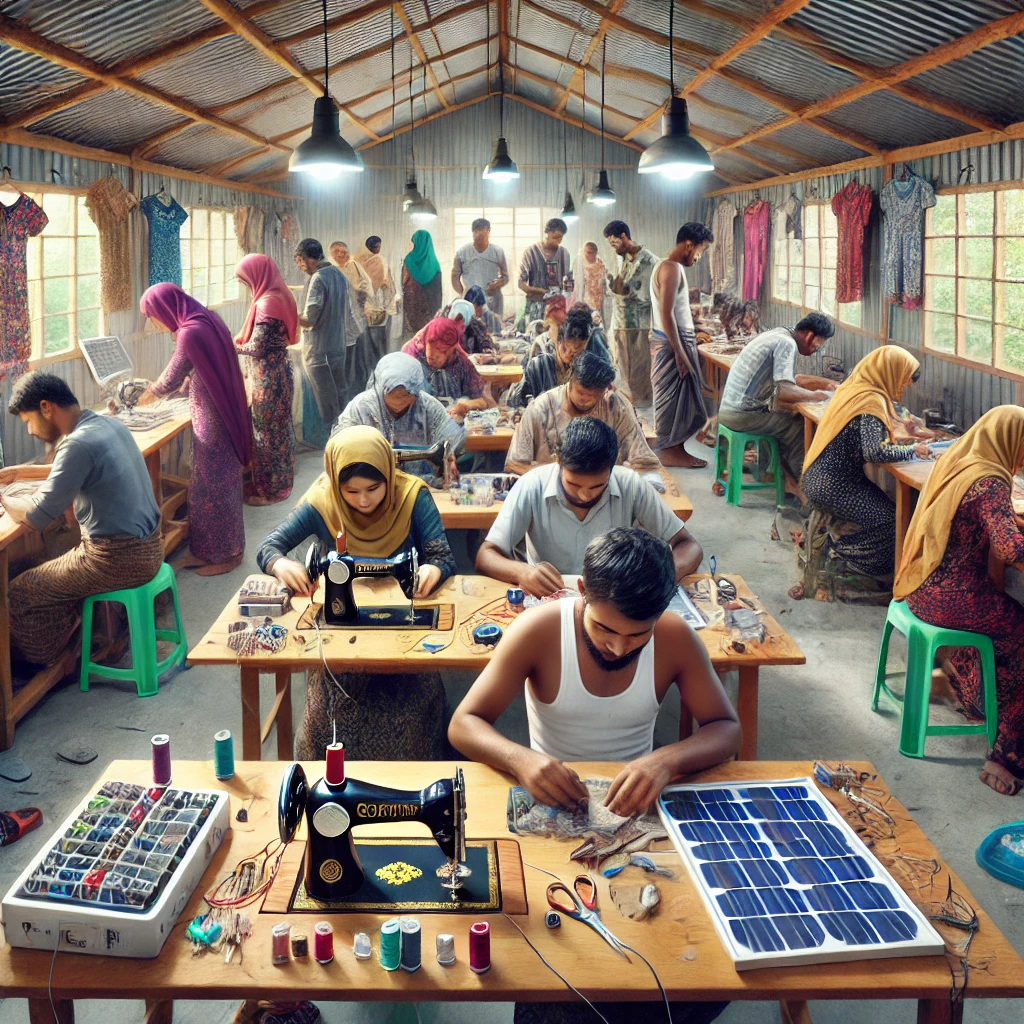
The International Labour Organization (ILO) is significantly scaling up its support for women affected by the devastating March 2025 earthquake in Myanmar, equipping them with employable skills that enhance both immediate recovery and long-term livelihood opportunities.
In late November 2025, the ILO launched two dedicated training programmes in Southern Shan State: a two-week computer literacy course and an intensive two-month advanced sewing techniques course. A total of 85 participants — the majority of them women from communities hit hardest by the disaster — enrolled with the aim of rebuilding their income sources and strengthening their economic resilience.
These initiatives are designed to complement the ongoing work under the ILO's Employment Intensive Investment Programme (EIIP), which has been driving post-earthquake reconstruction activities. Since early November, employment-intensive projects focusing on infrastructure restoration have been rolled out across affected townships. While such construction-related work tends to attract predominantly male participation, the ILO recognized the urgent need to ensure women have equally meaningful opportunities during recovery.
Following a rapid assessment of local economic priorities, women in impacted areas highlighted their reliance on hand-weaving, along with a strong interest in improving sewing and textile production skills that would connect them to wider markets. Many also expressed a desire for basic digital literacy to better access future employment, engage in online commerce and navigate modern workplace requirements.
The sewing training allows women to practise on industrial-grade machines, with instructors offering hands-on guidance. The classes aim not only to upgrade practical skills but also to prepare women for small-enterprise development, access to textile cooperatives and improved market linkages. Meanwhile, the computer literacy course introduces essential digital skills such as word processing, internet use and basic business applications — competencies increasingly in demand across Myanmar's evolving labour market.
Yutong Liu, the ILO Liaison Officer for Myanmar, emphasised the broader importance of the Employment Intensive Initiative on Skill Development, Livelihoods and the Decent Work Agenda.
"The ILO quickly launched an early recovery project in August 2025 in response to the earthquake. By promoting labour-intensive work, infrastructure rehabilitation, vocational training, social dialogue and social protection at community and grassroots level, we have strengthened capacities that save lives, protect livelihoods, promote decent work and enable recovery in the aftermath of earthquakes," he said.
The ILO's early recovery project also supports community-based mechanisms for identifying the most vulnerable households, ensuring that women, persons with disabilities and low-income groups have equitable access to new skills, job opportunities and protection measures. Over the coming months, the organization plans to expand similar training programmes to additional earthquake-affected regions, reinforcing inclusive recovery and long-term economic resilience.


 Google News