

New UN-Backed Report Warns of Structural Breakdown in Food Systems Worldwide
10th Global Report on Food Crises reveals unprecedented famine levels, surging child malnutrition, and declining global response capacity.
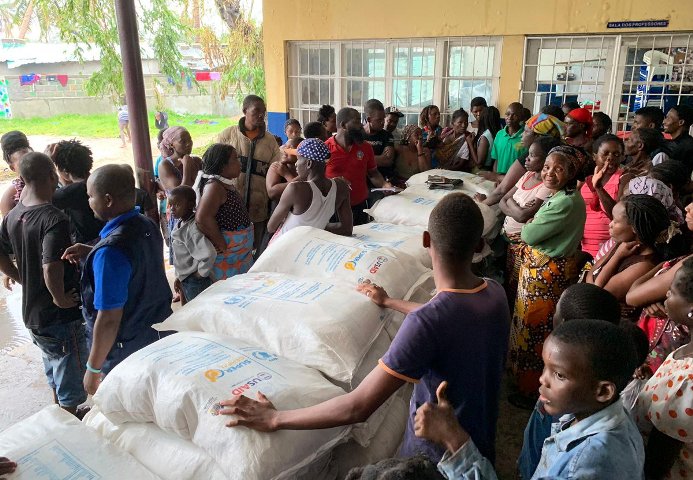
The world is facing an intensifying and deeply entrenched hunger crisis, with new data showing that acute food insecurity has nearly doubled over the past decade and is becoming increasingly concentrated in a small group of conflict-affected nations. According to the Global Report on Food Crises (GRFC) 2026, released by an international alliance of humanitarian and development partners, the scale, severity, and persistence of hunger are reaching alarming new heights.
Now in its tenth edition, the GRFC has evolved into the world's most comprehensive and authoritative assessment of acute food insecurity. This year's report underscores a stark shift: global hunger is no longer a series of temporary emergencies but a structural, recurring crisis driven by overlapping shocks—conflict, climate extremes, economic instability, and systemic inequality.
Hunger at Record Levels: 266 Million People Affected
In 2025, an estimated 266 million people across 47 countries and territories faced high levels of acute food insecurity—nearly 23% of the analysed population, marking one of the highest proportions recorded in two decades.
While the figure appears marginally higher than 2024, the long-term trend is far more concerning: the number of people facing severe hunger has nearly doubled since 2016. Even more alarming, the number of individuals experiencing catastrophic hunger (IPC Phase 5) is now nine times higher than it was a decade ago.
The crisis is also becoming increasingly concentrated. Just ten countries—Afghanistan, Bangladesh, Democratic Republic of the Congo, Myanmar, Nigeria, Pakistan, South Sudan, Sudan, Syria, and Yemen—account for two-thirds of the global burden. These nations, many plagued by prolonged conflict and instability, are now epicenters of chronic hunger.
Unprecedented: Two Famines Declared in a Single Year
For the first time in the history of the report, famine conditions were confirmed in two separate locations in the same year—Gaza and parts of Sudan in 2025.
This unprecedented development signals a dramatic escalation in the severity of global hunger. Experts attribute these conditions primarily to conflict, restricted humanitarian access, and widespread displacement, compounded by economic collapse and disrupted food systems.
UN Secretary-General António Guterres described the findings as a "call to action," urging global leaders to mobilize political will and resources to prevent further deterioration.
Child Malnutrition Surges to Critical Levels
The report highlights a parallel and equally alarming nutrition crisis. In 2025 alone:
-
35.5 million children were acutely malnourished
-
Nearly 10 million children suffered from severe acute malnutrition, the most life-threatening form
In nearly half of all food-crisis contexts, malnutrition has reached emergency levels, driven by poor diets, disease outbreaks, and collapsing health systems. In regions such as Gaza, Myanmar, South Sudan, and Sudan, children face heightened risks of mortality due to compounded crises.
UNICEF Executive Director Catherine Russell emphasized that the crisis is not about food scarcity but a failure of access, systems, and political commitment.
Conflict and Displacement: Core Drivers of Hunger
Conflict remains the single largest driver of food insecurity globally. More than 85 million people were forcibly displaced across food-crisis contexts in 2025, including refugees, asylum seekers, and internally displaced populations.
Displaced populations consistently experience higher levels of hunger than host communities, creating a vicious cycle where instability fuels food insecurity—and vice versa.
UNHCR highlighted that 86% of displaced people now live in countries already facing food crises, underscoring the deep interconnection between displacement and hunger.
2026 Outlook: A Bleak and Uncertain Future
Looking ahead, the GRFC warns that conditions are unlikely to improve in 2026. Ongoing conflicts, climate variability, and economic instability are expected to sustain or worsen food insecurity in many regions.
Particularly concerning is the escalation of conflict in the Middle East, which threatens to disrupt global food and energy markets. Rising fuel costs, supply chain disruptions, and fertilizer shortages could have cascading effects far beyond the region, impacting food prices and availability worldwide.
Funding Collapse Threatens Global Response
One of the most critical findings of the report is the sharp decline in humanitarian and development funding. Financial support for food security interventions has dropped to levels not seen in nearly a decade, severely limiting response capacity.
This funding gap is already having tangible consequences:
-
Reduced food assistance coverage
-
Weakened early warning systems
-
Limited ability to respond to emerging crises
Experts warn that without urgent investment, millions more could slip into extreme hunger.
Data Gaps Mask the True Scale of the Crisis
The report also raises concerns about declining data availability, which may obscure the true extent of global hunger. In 2025, 18 countries lacked reliable food security data, including major crisis zones like Ethiopia and Burkina Faso.
This means the reported figures likely underestimate the real scale of the crisis, making it harder for policymakers to design effective interventions.
A Call for Systemic Change
After a decade of tracking global hunger, the GRFC delivers a clear message: food crises are no longer temporary shocks but persistent, predictable realities.
Addressing them requires a fundamental shift from reactive humanitarian aid to proactive, long-term solutions. Key priorities include:
-
Investing in climate-resilient agriculture
-
Strengthening local food systems
-
Expanding rural livelihoods and economic opportunities
-
Improving early warning and anticipatory action systems
-
Ensuring safe humanitarian access in conflict zones
FAO Director-General QU Dongyu emphasized the need to "act early rather than react late," while IFAD President Alvaro Lario stressed that investing in small-scale farmers is critical to long-term food security.
Global Consensus: Urgent, Coordinated Action Needed
Leaders across international institutions—including the European Union, World Bank, WFP, and G7+—have echoed the urgency of the crisis. Despite differing mandates, there is a growing consensus that:
-
Hunger is becoming structurally embedded in fragile contexts
-
Current response models are insufficient
-
Coordinated global action is essential
WFP Executive Director Cindy McCain summed up the situation bluntly: the world has the tools and knowledge to end hunger—but lacks the collective will and sustained investment to do so.
The Global Report on Food Crises 2026 paints a sobering picture of a world where hunger is no longer episodic but systemic. With famine re-emerging, child malnutrition surging, and funding declining, the global community faces a pivotal moment.
Without decisive action, the risk is not just worsening hunger—but the normalization of it.


 Google News