

UN Experts Warn of Escalating Settler Violence and Displacement of Palestinians in the West Bank
“Relentless attacks by the settler-colonial movement, carried out with the support and acquiescence of the Israeli State, have become a daily terror in Palestinian lives,” the experts said.
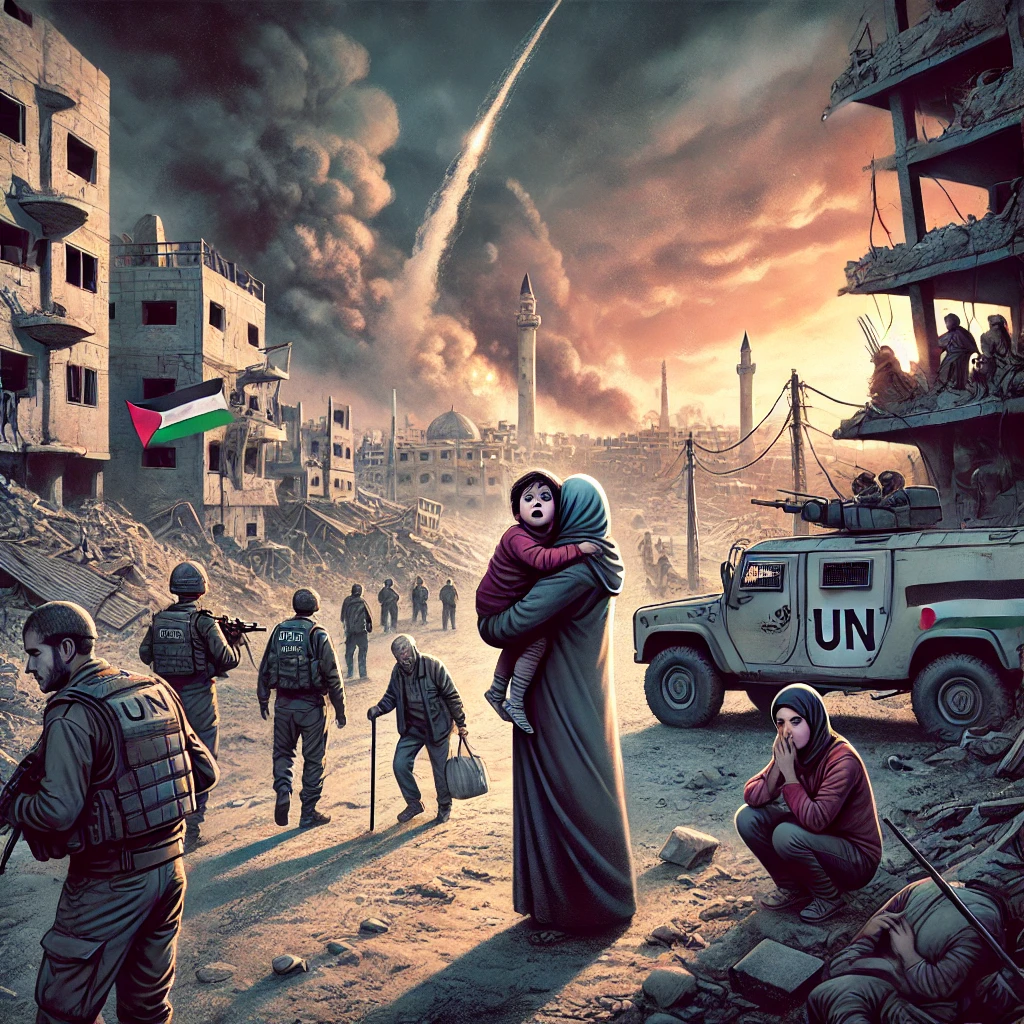
A group of United Nations human rights experts has issued a stark warning over what it describes as a dramatic escalation in Israeli settler violence across the Occupied Palestinian Territory, including East Jerusalem, saying the attacks pose an existential threat to Palestinian communities and their continued presence on their land.
In a strongly worded statement, the experts accused Israeli settlers of carrying out increasingly violent attacks against Palestinians with the support or acquiescence of the Israeli state. They argued that the violence has become a daily reality for many Palestinians living in the occupied West Bank and is contributing to a pattern of forced displacement that could have lasting consequences for the region.
According to the experts, the growing violence is creating widespread fear, insecurity, and instability within Palestinian communities, particularly in rural areas where settlements and settlement outposts continue to expand.
"Relentless attacks by the settler-colonial movement, carried out with the support and acquiescence of the Israeli State, have become a daily terror in Palestinian lives," the experts said.
They warned that the violence is not isolated but forms part of a broader system that pressures Palestinians to leave their homes and lands.
Sharp Rise in Settler Attacks During 2026
The UN experts highlighted what they described as an alarming increase in settler-related violence during the first five months of 2026.
According to figures cited in the statement, at least 13 Palestinians have been killed and nearly 500 injured in attacks attributed to Israeli settlers this year.
The experts said both fatalities and injuries are occurring at a pace exceeding previous years.
"Settler brutality has reached unprecedented levels this year," they said.
Human rights monitors have documented a range of incidents including physical assaults, shootings, property destruction, attacks on homes, vandalism, intimidation, and restrictions on movement.
The experts expressed concern that perpetrators frequently act with impunity, creating an environment in which violence continues without meaningful accountability.
They argued that the absence of effective law enforcement measures has contributed to a climate in which attacks can occur repeatedly without consequences.
Displacement Threatens Large Areas of Palestinian Land
The experts warned that continued displacement of Palestinian communities could expose approximately 663 square kilometres of land to further settlement expansion.
While violence has affected communities across the West Bank, they noted that Palestinians living in Area C are particularly vulnerable.
Area C, which comprises roughly 60 percent of the West Bank, remains under full Israeli military and civil control under arrangements established by the Oslo Accords.
Many Palestinian communities in Area C face restrictions on development, difficulties accessing services, and growing pressure from nearby settlements and outposts.
According to the experts, the Jordan Valley and South Hebron Hills have become particularly affected by violence and displacement.
These regions contain numerous small Palestinian communities that rely on agriculture, livestock grazing, and access to land for their livelihoods.
The experts said ongoing attacks and settlement expansion threaten both the physical security and long-term viability of these communities.
Masafer Yatta Among Communities Under Pressure
One of the areas highlighted in the statement is Masafer Yatta, a collection of Palestinian villages in the South Hebron Hills that has become the focus of international attention in recent years.
The experts said residents face near-daily raids by Israeli settlers and security forces.
These incidents have reportedly created a pervasive atmosphere of fear and uncertainty for families living in the area.
Human rights organisations have repeatedly raised concerns about the future of communities in Masafer Yatta, particularly following legal and administrative decisions that have increased the risk of displacement.
The UN experts warned that continued pressure on these communities could result in further population transfers and loss of access to traditional lands.
They argued that violence is increasingly being used as a mechanism to sever Palestinian connections to their land and livelihoods.
Umm al-Kheir Highlighted as a Stark Example
The statement identified the village of Umm al-Kheir in the South Hebron Hills as a particularly concerning example of the challenges facing Palestinian communities.
According to the experts, the village has become increasingly surrounded by settlement activity, including the expansion of the nearby Carmel settlement and the construction of a new settlement outpost that began in July 2025.
Residents have reportedly experienced repeated interruptions to water and electricity services, demolitions of structures, and ongoing settler attacks.
The experts also referenced the killing of a human rights defender from the village during protests against settlement construction.
According to the statement, the individual was allegedly shot and killed by an armed settler who had previously been subject to sanctions.
The incident drew international attention and further intensified concerns about the safety of Palestinian residents and activists in the area.
Reports of Detentions, Demolitions and Attacks on Children
Following the killing, the experts reported a series of additional actions affecting the community.
These allegedly included arbitrary detentions of residents, torture, destruction of infrastructure, damage to agricultural land, attacks on water sources, and destruction of grazing areas.
The experts also raised concerns about what they described as systematic attacks affecting children.
At the same time, demolition orders reportedly threaten the future existence of the village itself.
The UN experts argued that these measures collectively contribute to a broader pattern aimed at making continued residence increasingly difficult for Palestinians.
They warned that such actions risk accelerating displacement and undermining community resilience.
Multiple Communities Facing Similar Risks
The experts stressed that Umm al-Kheir is not an isolated case.
Since 2023, they said, new settlement outposts established across Areas B and C have frequently been followed by increased pressure on nearby Palestinian communities.
Several communities were identified as facing potential forcible transfer, demolition, or displacement.
Among them are Khan al-Ahmar, Abu Falah, Al Hathroura, Bariyyat Z'tara, Abo El-Henna, and Khallet a-Thabe'.
Human rights organisations have long argued that settlement expansion and associated restrictions contribute to a gradual reduction of Palestinian access to land and resources.
The experts warned that these developments could significantly alter the demographic and geographic realities of the occupied territory.
International Attention Diverted by Regional Tensions
The UN experts expressed concern that broader regional developments have diverted international focus away from events unfolding in the occupied Palestinian territory.
Recent conflicts and geopolitical tensions across the Middle East have dominated diplomatic discussions and media coverage, potentially reducing scrutiny of developments in the West Bank.
"As diplomatic efforts are concentrated elsewhere in the region, accountability for the increasing violence of settlers and resulting displacement of people has slipped further from sight," the experts said.
They warned that reduced international attention may contribute to a lack of accountability and allow ongoing violations to continue without sufficient response.
According to the experts, the cumulative effect of settlement expansion, violence, and displacement threatens the Palestinian people's right to self-determination as recognised under international law.
Calls for Immediate Action and Accountability
The experts urged Israeli authorities to take immediate measures to halt settler violence and prevent further displacement of Palestinian communities.
They called for an end to all forms of support for settlements and settlement outposts, including financial, military, legislative, and political backing.
The statement also called for effective investigations into settler attacks and accountability for those responsible.
In addition, the experts urged authorities to guarantee protection for Palestinian communities and ensure displaced residents can return safely and with dignity.
Access to homes, agricultural land, grazing areas, and essential infrastructure must also be restored, they said.
Obligations Under International Law
The experts concluded by emphasising Israel's obligations under international humanitarian law.
They noted that despite ongoing legal and political disputes regarding the occupation, Israel remains bound by the Geneva Conventions as an occupying power.
Under those obligations, Palestinians living in occupied territory are regarded as protected persons and are entitled to specific legal protections.
The experts argued that ensuring the safety, rights, and wellbeing of the Palestinian population is a core responsibility under international law.
As violence and displacement continue to rise, the UN experts warned that urgent action is needed to prevent further deterioration of the situation and to safeguard the rights and future of Palestinian communities throughout the occupied West Bank.
The statement adds to growing international concern over escalating tensions in the region and highlights the increasing pressure facing Palestinian communities living in areas affected by settlement expansion and recurring violence.


 Google News