

Sunak's Early Exit at D-Day Commemoration Sparks Outrage
British PM Rishi Sunak faced backlash for leaving D-Day commemorations prematurely to conduct an interview attacking the opposition. His Conservative Party, struggling in polls, is criticized for this misjudgement, which mirrors previous political gaffes. Labour leader Keir Starmer capitalized on the incident, emphasizing Sunak's priorities.
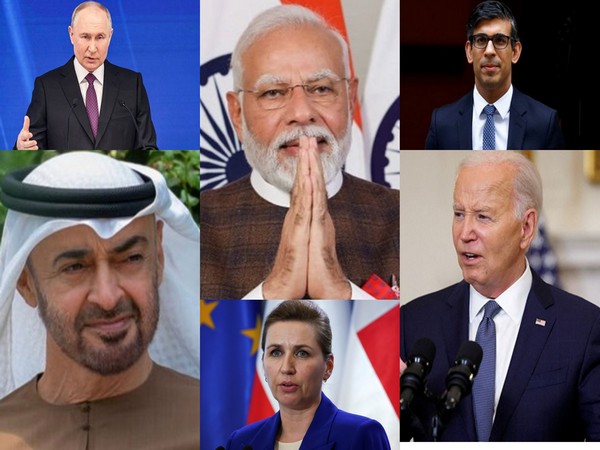
British Prime Minister Rishi Sunak suffered a fresh setback in his struggling election campaign on Friday when he apologised for leaving D-Day commemorations early in order to give an interview attacking the main opposition party. Sunak's decision to leave early was met with dismay within his Conservative Party which is trailing far behind the Labour Party in opinion polls and facing the prospect of a huge defeat on July 4.
Labour leader Keir Starmer also attended the D-Day 80th anniversary events in northern France on Thursday and was seen talking to world leaders including Ukrainian President Volodymyr Zelenskiy. "After the conclusion of the British event in Normandy, I returned back to the UK," Sunak said in a post on X. "On reflection, it was a mistake not to stay in France longer – and I apologise."
World leaders including U.S. President Joe Biden and Britain's King Charles gathered in Normandy, northern France, to mark the anniversary of the allied landings, a turning point in World War Two. Sunak spoke at a British-led event but delegated other duties to ministers including Foreign Secretary David Cameron, who was pictured with Biden, French President Emmanuel Macron and German Chancellor Olaf Scholz at a memorial ceremony.
Asked for his response to Sunak's mistake, one normally loyal Conservative politician told Reuters: "I can't explain it and I won't." The lawmaker, who asked not to be identified, said Sunak's decision could end up becoming the "Gillian Duffy moment" of the campaign - a reference to 2010 when then-prime minister Gordon Brown had to apologise for calling a voter "a bigoted woman", seen as a turning point in campaign Brown ultimately lost.
Sunak's Conservative Party is lagging about 20 points behind the opposition Labour Party in opinion polls. His campaign got off to a bad start last month when he announced the election date under a downpour of rain, competing to be heard against Labour supporters blaring a pop song associated with the party's crushing 1997 election victory.
This week he suffered another setback when Brexit campaigner Nigel Farage took over leadership of the right-wing Reform UK party and said he would stand in the election. "POLITICAL PAIN"
Sunak has tried to portray himself as the person best placed to look after Britain's security and he recently pledged to introduce mandatory national service if he wins the election. Chris Hopkins, political research director at the polling company Savanta, said Sunak was already seen by voters as out of touch.
The latest "political misjudgement seems almost laser-guided in causing Rishi Sunak and the Conservative Party as much political pain as humanly possible," he said. Senior Labour spokesman Jonathan Ashworth accused Sunak of "choosing to prioritise his own vanity TV appearances over our veterans," and "it is yet more desperation, yet more chaos, and yet more dreadful judgement".
Liberal Democrat Leader Ed Davey accused the prime minister of a "total dereliction of duty". In the interview with ITV on Thursday, Sunak doubled down on claims this week that if Labour win power they would raise taxes by 2,000 pounds ($2,500) per household.
Labour denies it has any such plan, and accused Sunak of lying for claiming the estimate came from the civil service, which has said it did not endorse it. The head of Britain’s statistical watchdog said on Thursday the Conservatives should be clearer about the source of Sunak's claims. ($1 = 0.7817 pounds)


 Google News