

Algeria, Gambia, Sudan confronted severe tense in political climate in 2019
- Country:
- Gambia
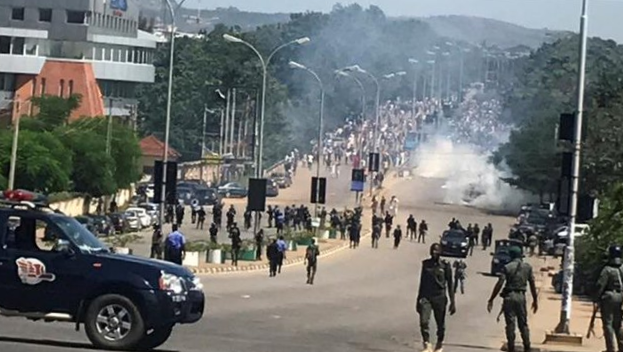
In 2019, the political climate remained deleterious and damaging in several African countries shaken by anti-government demonstrations. From Algeria to Sudan, popular movements have dictated their laws.
Since February 22 this year, Algeria has broken all the records of demonstrations against the regime. APA News noted that the marches are still taking place in several places despite former Prime Minister Abdelmadjid Tebboune sworn in as the new President of Algeria. The peaceful demonstration last Friday, the first after the swearing in on the eve of Tebboune, seems to reveal a determination to continue the triptych of the 'Hirak' fight for 'the rule of law, free justice and an independent press'.
On December 24, the day after the death of the Chief of the Defense Staff, General Ahmed Gaïd Salah, one of the stubborn figures of the post-Bouteflika era, the students held their 44th weekly march. It all started when former President Abdelaziz Bouteflika wanted to run for a fifth term. After he was forced to resign on April 2, 2019 with the support of the army, the protesters demand the establishment of a second Republic, and the departure of all the symbols of the fallen regime.
In Sudan, the political climate, already confused at the end of 2018, was still shaken this year by protests against the regime of Omar al-Bashir. Everything started from a movement of humor against the tripling of the price of bread and ... a shortage of gas. The protest quickly turned into a political front which led to the fall of the old regime of Omar el-Bashir after 30 years in power. After his dismissal by the army on April 11, al-Bashir, whose regime is regularly accused of human rights violations, was sentenced on December 14 by a court in Khartoum to two years in "house arrest" for corruption.
One year after the first anniversary of the outbreak of this protest movement celebrated on December 19, the transitional government set up in September set out to raise a bloodless economy and sitting on a debt of tens of billions of dollars. While taking into account the ratio between public spending and the household basket.
In The Gambia, the 'Three Years Jotna' Movement (the three years are over), stands against the regime of Adama Barrow whose electoral promise in 2016 was to leave power after three years.
While the Gambian president has finally expressed his wish to remain at the head of the country until 2021, protests are starting to get organized somewhat regularly. According to the founding charter of the 'Coalition 2016', the new president was to lead a provisional government for three years, before organizing a new election in which he could not participate.
ALSO READ
-
Africa’s Informal Workers Power Trade but Have Little Say in Rules Shaping Lives
-
From Cancer Care to Nuclear Careers, IAEA Conference Puts Global Progress in Focus
-
African Venture Capital Gets a Boost as Oxford Programme Builds Investor Connections
-
Free AI Training Opens Doors for African Public Officials to Build Smarter Services
-
Over 9 Million People Gain Better Access to Social Protection Through ILO Support


 Google News