

Javadekar flags off 50 inspection teams, says only 4% pollution in Delhi-NCR due to stubble burning
Later in the evening, Javadekar, using the same phrase, said "let us not be in denial" that there are several local factors that are primarily responsible for high air pollution during winters while clarifying that he meant four per cent share of stubble burning in Delhi pertained to this week. Javadekar flagged off 50 inspection teams of the Central Pollution Control Board (CPCB) for field visits in Delhi-NCR to keep a watch on pollution hot spots during the winter season even as a layer of smoky haze lingered over the region with the air quality hitting 'very poor' levels on Thursday.
- Country:
- India
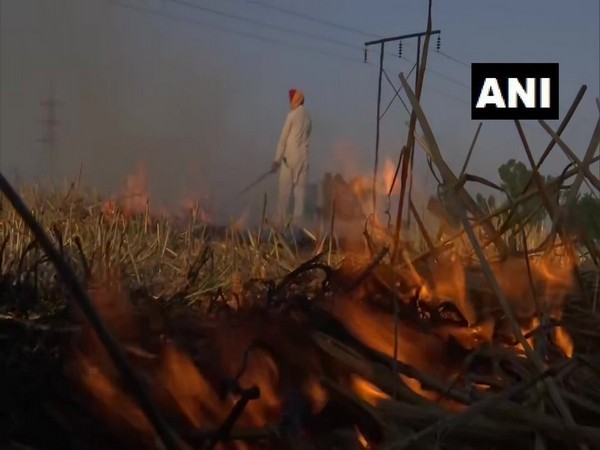
Union Environment Minister Prakash Javadekar on Thursday appealed to Punjab government to curb stubble burning but asserted that only 4 per cent of pollution in Delhi-NCR is due to crop residue burning as the rest is due to local factors. Reacting to Javadekar's assertion, Delhi Chief Minister Arvind Kejriwal blamed him for "being in denial". Later in the evening, Javadekar, using the same phrase, said "let us not be in denial" that there are several local factors that are primarily responsible for high air pollution during winters while clarifying that he meant four per cent share of stubble burning in Delhi pertained to this week.
Javadekar flagged off 50 inspection teams of the Central Pollution Control Board (CPCB) for field visits in Delhi-NCR to keep a watch on pollution hot spots during the winter season even as a layer of smoky haze lingered over the region with the air quality hitting 'very poor' levels on Thursday. "Only 4 per cent pollution is due to stubble burning. Ninety-six per cent of it is due to local factors like biomass burning, garbage dumping, unpaved roads, dust, construction and demolition activities, etc.," he told reporters at his residence in Delhi.
Taking to Twitter, the chief minister sought to know why pollution has suddenly increased in Delhi-NCR in the last fortnight if stubble burning causes only 4 per cent pollution. "Staying in denial will not help. If stubble burning causes only 4% pollution, then why has pollution suddenly increased last fortnite? Air was clean before that. Same story every yr. There's no massive jump in any local source of pollution in last few days to cause this spike?," Kejriwal said in the tweet.
However, later, in a series of tweets the Union Minister clarified,"My statement today on Air Pollution in Delhi has been misinterpreted by a section of the media. Let me clarify, the figures of 4 % share of stubble burning in AQI in Delhi, pertained to this week. It varies from 4 % to 40% during peak stubble burning," Javadekar tweeted. Replying to Kejriwal's tweet, he said, "At the same time let us not be in denial that there are several local factors – vehicular pollution, non-agricultural biomass burning, dust, geographical and metrological – that are primarily responsible for high air pollution during winters in Delhi." Earlier, Aam Aadmi Party MLA Raghav Chadha also tweeted that the CPCB's own estimate of 2019 suggest stubble burning contributed up to 44 per cent to the national capital's air pollution.
"Central Pollution Control Board's own estimate of 2019 suggest stubble burning contributed up to 44% to Delhi's air pollution. Ministry of Earth Sciences' SAFAR said at peak of stubble burning in Punjab & Haryana account for 44% of Delhi's pollution. What is Mr.Javadekar smoking?," Chadha said in a tweet. On Thursday, as the air quality in the region hit 'very poor' levels, stricter anti-air pollution measures, including a ban on electricity generators, came into force under the Graded Response Action Plan (GRAP).
NASA's satellite imagery showed a large cluster of farm fires near Amritsar, Patiala, Tarn Taran, and Firozpur in Punjab, and Ambala and Rajpura in Haryana. However, the Ministry of Earth Sciences' Air Quality Early Warning System for Delhi said its impact on the capital's air quality was marginal.
During the flagging off of 50 CPCB teams in the morning, Javadekar said his throat choked with the smoke from burning of crop residue during his visit to Ludhiana last year. "I appeal to the Punjab government to swing into action and curb stubble burning. I went to attend a programme in Ludhiana last year. On my way back, my throat choked due to the smoke from stubble burning even when I was in an air-conditioned car. It is harmful for everyone, including people living there. The Punjab government should ensure there is not much stubble burning this time," the minister said.
Addressing the nodal officers of the CPCB teams, he said, "You will work for next two months and take note of all activities and complaints. You will inspect all factors. You have the right to file a report on your observations and strict action will be taken." The 50 CPCB teams will make extensive field visits from October 15 to February 28 next year and focus on hot spots where air pollution is aggravated, the environment ministry said. They will visit Delhi and NCR towns Noida, Ghaziabad, Meerut in Uttar Pradesh; Gurugram, Faridabad, Ballabgarh, Jhajjar, Panipat, Sonepat in Haryana; and Bhiwadi, Alwar, Bharatpur in Rajasthan.


 Google News