

Is there another universe after the end of the current one?
The frozen Antarctic continent is inaccessible and has become an astronomical observation site favored by physicists.
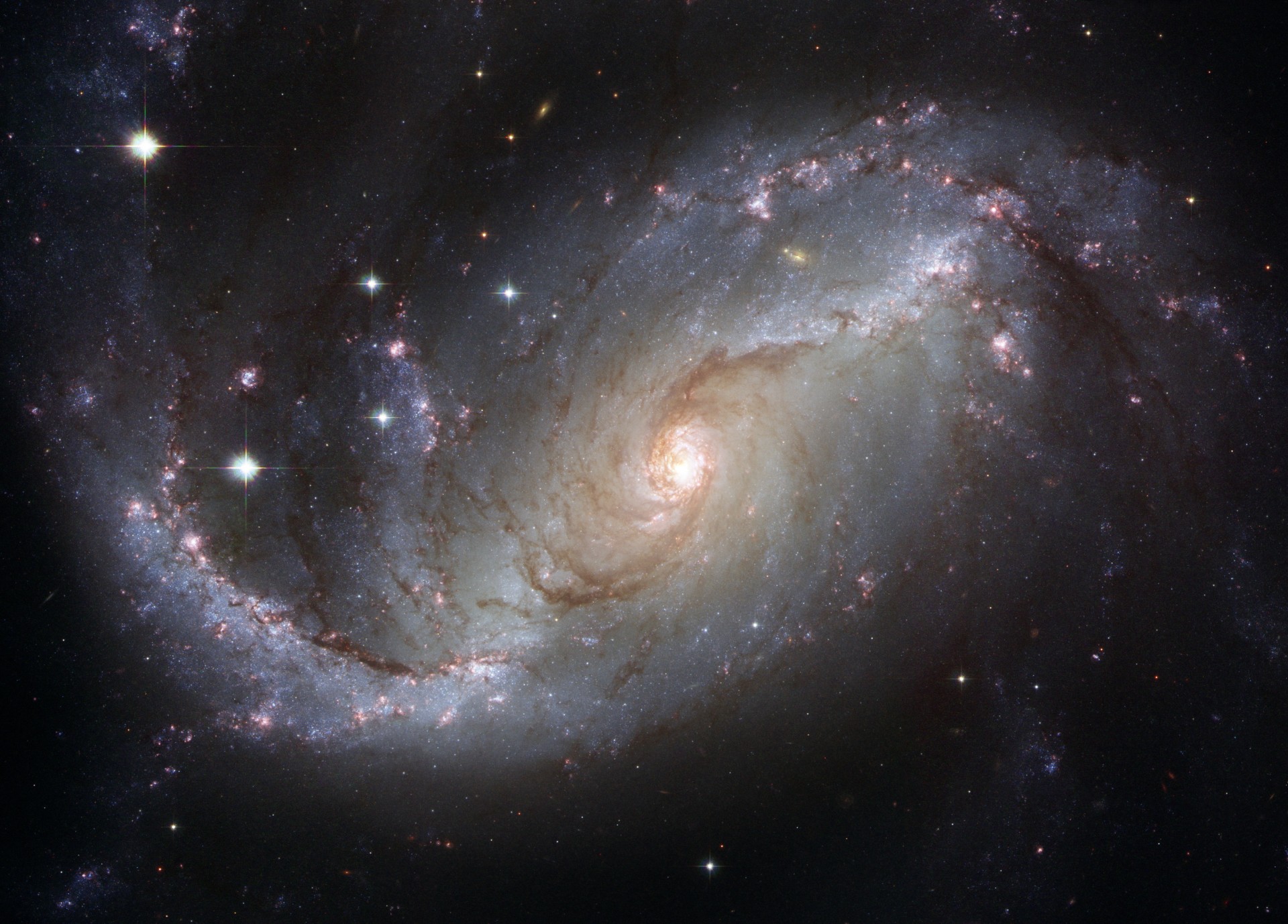
13.38 billion years ago, the big bang opened the prelude to the evolution of the universe. But is this the beginning of time? Is there another universe before the big bang and after the end of the current universe? In a recent paper published on the preprinted website arxiv, the famous theoretical physicist Roger Penrose proposed that a pattern in the cosmic microwave background radiation image is a relic of an older black hole than the big bang. If confirmed, this will be a strong evidence of the cyclical universe.
The latest research by Penrose begins with an oolong incident in 2014. The frozen Antarctic continent is inaccessible and has become an astronomical observation site favored by physicists.
The dry air of the Antarctic and the high air transparency make the Cosmic Microwave Background Radiation (CMB) signal received from here clearer than any other location on the Earth. The second generation of the BICEP Antarctic Telescope at the Harvard-Smithsonian Center for Astrophysics was built near the geographic South Pole.
In March 2014, the BICEP2 team announced a discovery that shocked the entire scientific community at the time, they found the imprint of the original gravitational wave in the CMB image.
In the CMB image, the research team observed a polarized signal as shown in the following figure, either clockwise or counterclockwise, and such a signal is called a "B-mode polarized signal."
To produce polarization, it must be that the photons in the universe are disturbed by some kind of fluctuation. Scientists have previously confirmed that on the cosmological scale, such signals can only come from a situation, the original gravitational waves when the universe is inflated.
That is, if the B-mode polarization signal is confirmed, then we will find direct evidence for the inflation hypothesis for the first time.
The original gravitational wave was of great significance, but it didn't last long. Just two months later, cosmologists questioned the conclusions of the BICEP2 team and thought that the methods in the study had gone wrong. They got the so-called "B-mode polarized signal", may be just a noise signal caused by the interference of the Milky Way dust.
As the Planck satellite data continued to be returned, the BICEP2 team acknowledged in the paper that the signal is likely to come from interstellar dust, six months after the initial conclusions were published. At this point, this once-popular "heavy discovery" gradually came to silence.


 Google News