

Why so cold? Webb's mid-infrared instrument drops to below -266 degrees Celsius
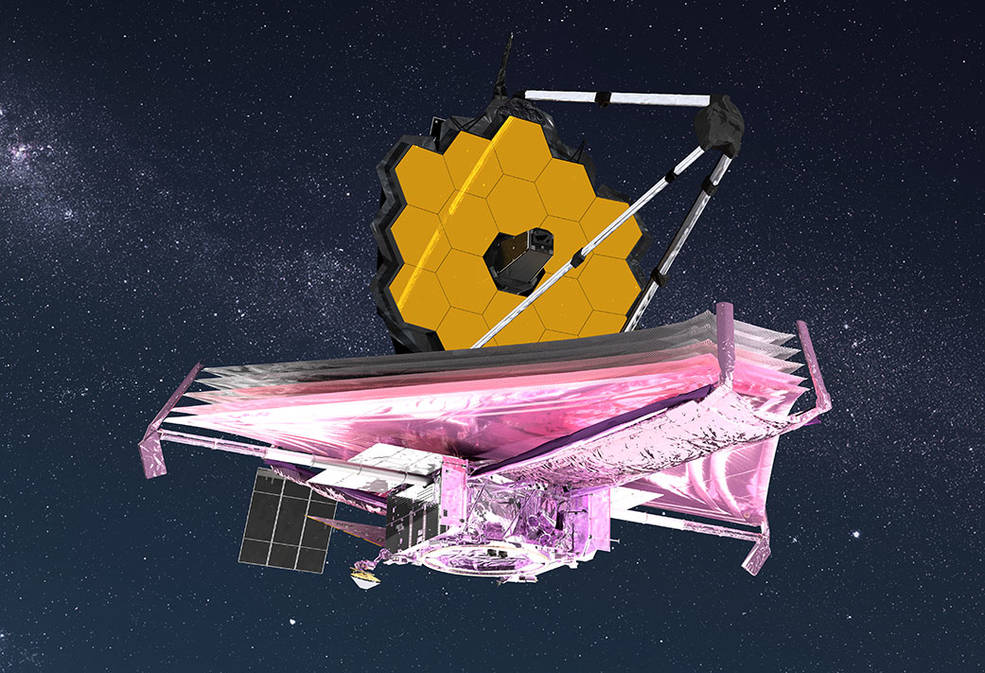
The James Webb Space Telescope's Mid-Infrared Instrument (MIRI) has reached its final operating temperature, dropping to less than 7 kelvins (minus 266 degrees Celsius), using its own dedicated refrigerator.
The temperature milestone was confirmed by the US space agency NASA as well as the European Space Agency (ESA) on Wednesday, April 13. The imager was developed as a 50/50 partnership between the two agencies.
"We spent years practising for that moment, running through the commands and the checks that we did on MIRI. It was kind of like a movie script: Everything we were supposed to do was written down and rehearsed. When the test data rolled in, I was ecstatic to see it looked exactly as expected and that we have a healthy instrument," said Mike Ressler, project scientist for MIRI at JPL
#Webb will see the first galaxies to form after the Big Bang, but to do that its instrument first need to get cold – really cold 🥶The Mid-Infrared Instrument, jointly developed by ESA and NASA, has now reached its operating temperature, -266 degrees C!https://t.co/wXye3TCdLY pic.twitter.com/2Htzc4C6bt
— ESA Science (@esascience) April 13, 2022
Why so cold?
MIRI's light-sensitive detectors, which convert infrared light signals into electrical signals for processing into images, are blind unless they are cooled below 7 kelvins. This temperature is not possible by passive means alone, so Webb carries an innovative "cryocooler" that is dedicated to cooling its detectors.
MIRI is the only mid-infrared instrument in Webb's instrument suite. Once operational, it will be capable of penetrating thick layers of dust obscuring regions of intense star birth. It will see the first generations of galaxies to form after the Big Bang, and it will study sites of new planet formation and the composition of the interstellar medium. The instrument will also observe the light emitted, reflected or transmitted by exoplanets.
However, there are still more challenges that the Webb team will have to face before MIRI can start its scientific mission. Now that the instrument has reached its final operating temperature, team members will take test images of stars and other known objects that can be used for calibration and to check the instrument's operations and functionality.


 Google News