

NASA releases new sonifications of two famous black holes: Listen to the sounds
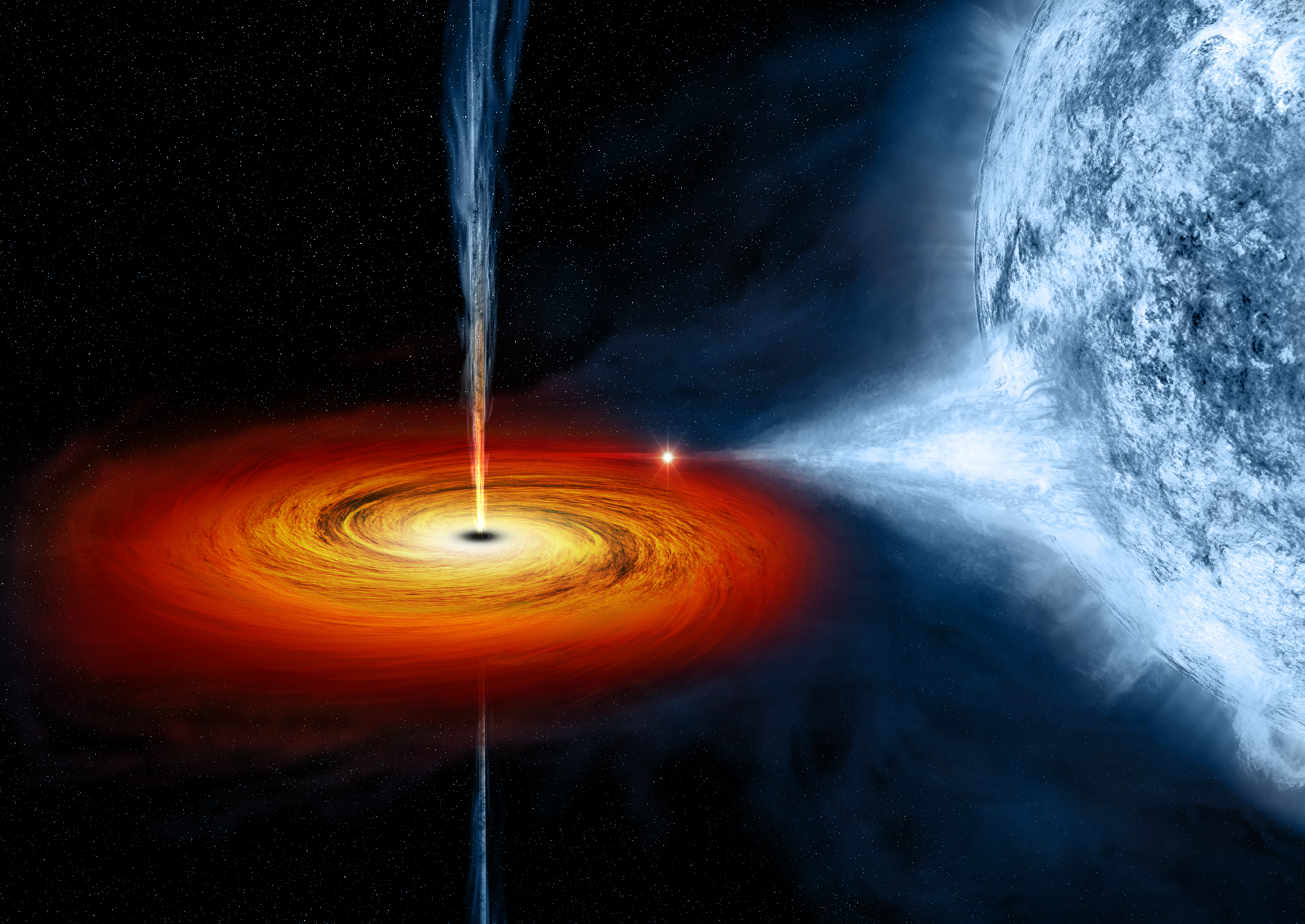
Celebrating Black Hole Week, NASA has released new sonifications - the translation of astronomical data into sound - of well-known black holes including the one at the center of the Perseus galaxy cluster and the other at the center of Galaxy M87, which is about 60 million light years from Earth.
For Perseus, NASA says the new sonfication revisits the actual sound waves discovered in data from NASA's Chandra X-ray Observatory. In this new sonification, the sound waves astronomers previously identified were extracted and made audible for the first time. The sound waves were extracted in radial directions - outwards from the center. The signals were then resynthesized into the range of human hearing by scaling them upward by 57 and 58 octaves above their true pitch - meaning they are being heard 144 quadrillion and 288 quadrillion times higher than their original frequency.
New sonifications of well-known black holes have been released for #BlackHoleWeek⚫!#1 The Perseus galaxy cluster — famous for sound waves detected around its black hole by Chandra, some 57 octaves below middle C. And... (1/2) pic.twitter.com/nX1hZe7SPI
— Chandra Observatory (@chandraxray) May 4, 2022
Messier 87, or M87 is home of the black hole that gained celebrity status through an image released in 2019 by the Event Horizon Telescope (EHT). The new sonification looks at data from other telescopes that observed M87 on much wider scales at roughly the same time as EHT.
According to NASA, for M87, the new sonification scans across the three-tiered image from left to right, with each wavelength mapped to a different range of audible tones. From top to bottom, the three-tiered image features X-rays from Chandra, optical light from Hubble and radio waves from the Atacama Large Millimeter Array (ALMA) in Chile.
Radio waves are mapped to the lowest tones, optical data to medium tones, and X-rays detected by Chandra to the highest tones. The brightest part of the image corresponds to the loudest portion of the sonification - where astronomers find the 6.5-billion solar mass black hole that EHT imaged.
(2/2) #2 M87 — home of the black hole that gained celebrity status through an image released in 2019 by @ehtelescope (the Event Horizon Telescope). More about the sonifications at: https://t.co/TCN3HGHdYl pic.twitter.com/mvHdmXE9h5
— Chandra Observatory (@chandraxray) May 4, 2022
The black hole sonification remix is available here.


 Google News