

NASA's Curiosity rover snaps this cool rock at Mars' Gale crater
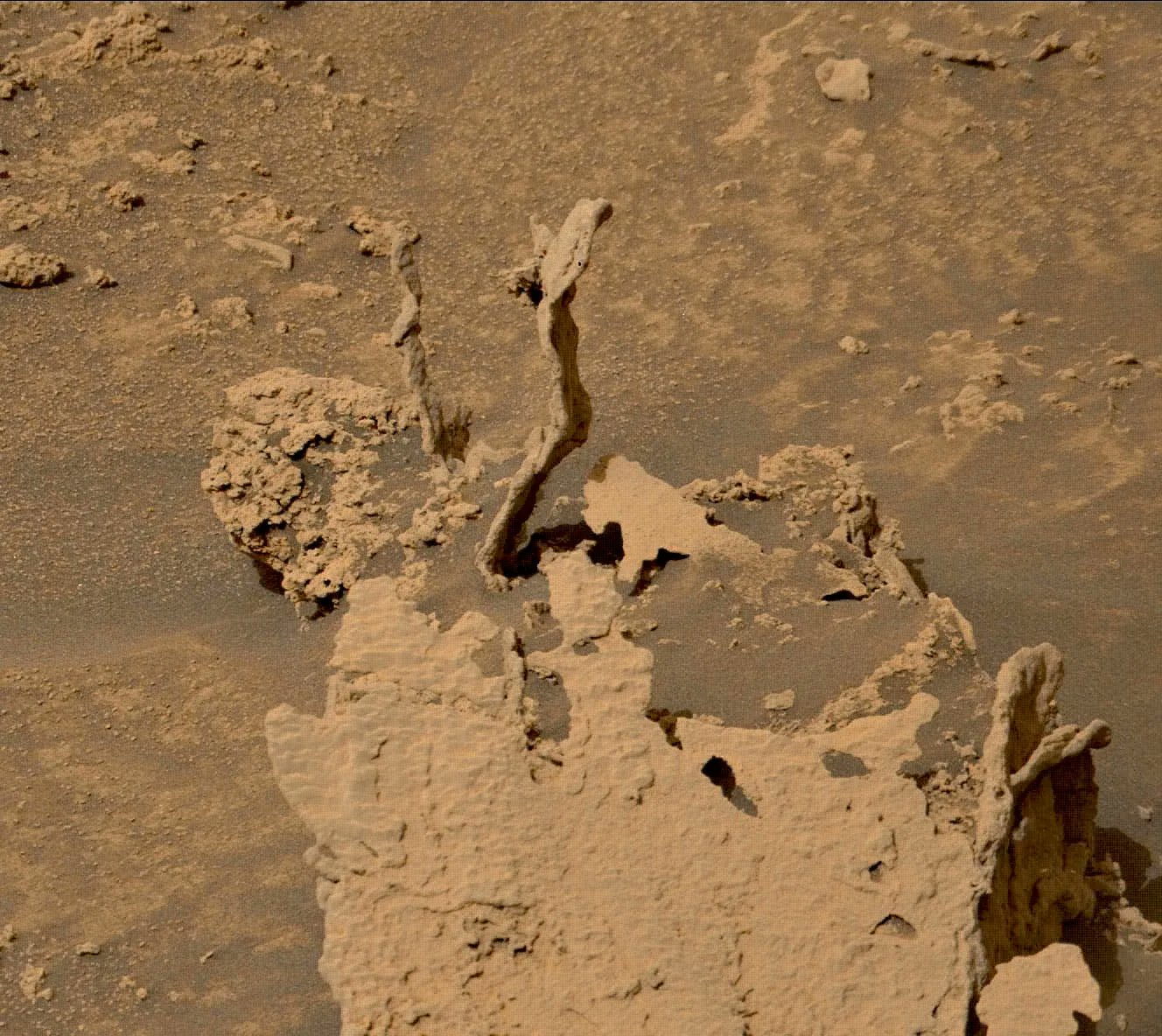
NASA's Curiosity rover has snapped a stunning picture of a "cool" rock at the Gale crater, its landing site on Mars. The rover landed at the foot of a layered mountain within the Gale Crater on August 5, 2012.
Gale Crater, a large impact basin with a massive, layered mountain in the middle, formed when a meteor hit the Red Planet around 3.5 to 3.8 billion years ago. This massive crater was chosen as the landing site for the rover because it has many signs that water was present over its history.
In a picture shared by the SETI (Search for extraterrestrial intelligence) Institute on Twitter, the Martian rock features spikes, which are most likely the cemented fillings of ancient fractures, it said. Sharing the picture, SETI said that the rest of the rock eroded away as it was made of softer material.
#PPOD: Here is another cool rock at Gale crater on Mars! The spikes are most likely the cemented fillings of ancient fractures in a sedimentary rock. The rest of the rock was made of softer material and was eroded away. 📷: @NASA @NASAJPL @Caltech #MSSS fredk, acquired on May 17. pic.twitter.com/RGfjmRBfI7
— The SETI Institute (@SETIInstitute) May 26, 2022
NASA's Curiosity is the largest and most capable rover ever sent to the Martian surface. The rover was designed to determine habitability - whether the planet ever had an environment able to support small life forms called microbes.
The car-size rover is equipped with 17 cameras, a laser to vaporize and study small pinpoint spots of rocks at a distance, and a drill to collect powdered rock samples.
It will always remain in the lower foothills of Mount Sharp, a mountain inside Gale Crater where there's evidence of ancient water and environments that would have been habitable in the past. Scientists believe the crater filled in with sediments and, over time, the relentless Martian winds carved Mount Sharp.


 Google News