

Check out these mesmerizing pictures captured by Webb - the world's most powerful telescope
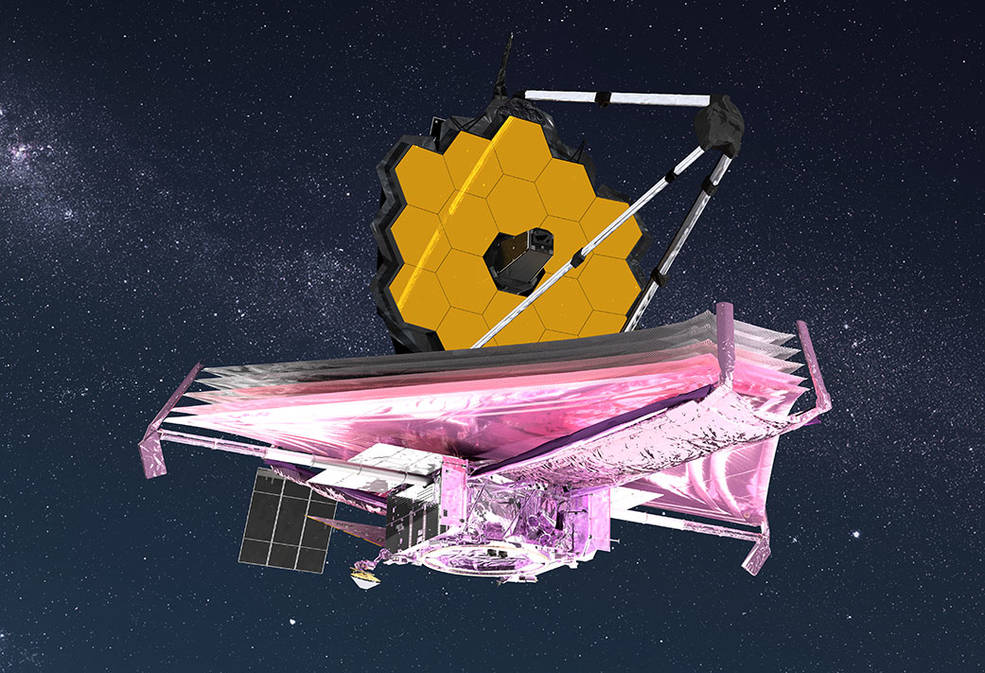
NASA has released the first full-color images and spectroscopic data from the James Webb Space Telescope, an international program led by the agency with its partners ESA (European Space Agency) and CSA (Canadian Space Agency). The mesmerizing images of the unseen universe provide a first look at the full capabilities of the premium space observatory
Check out these spectacular pictures:
Carina Nebula
This landscape of mountains and valleys speckled with glittering stars is actually the edge of a nearby, young, star-forming region called NGC 3324 in the Carina Nebula. Webb's look at the 'Cosmic Cliffs' in the Carina Nebula unveils the earliest, rapid phases of star formation that were previously hidden.
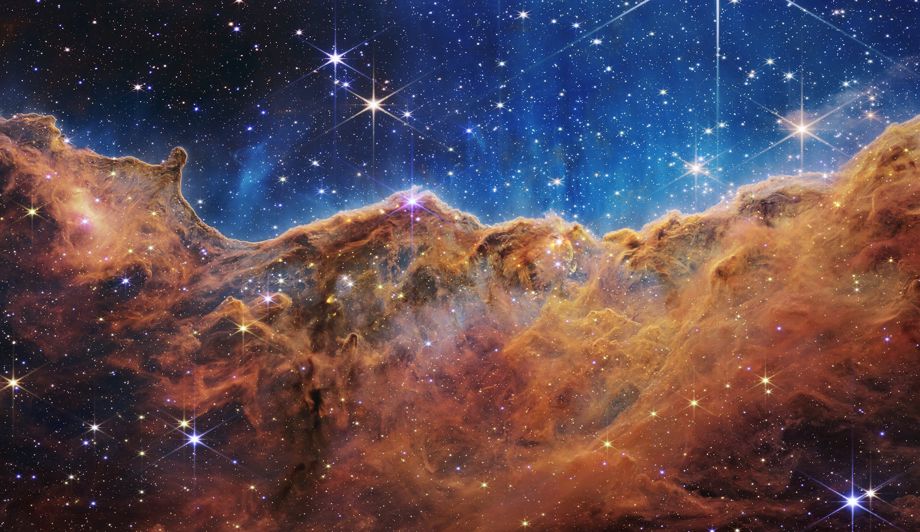 Image Credits: NASA, ESA, CSA, and STScI
Stephan's Quintet
Webb's view of Stephan's Quintet, a visual grouping of five galaxies, pierced through the shroud of dust surrounding the center of one galaxy, to reveal the velocity and composition of the gas near its supermassive black hole. In this picture, four of the five galaxies can be seen interacting.
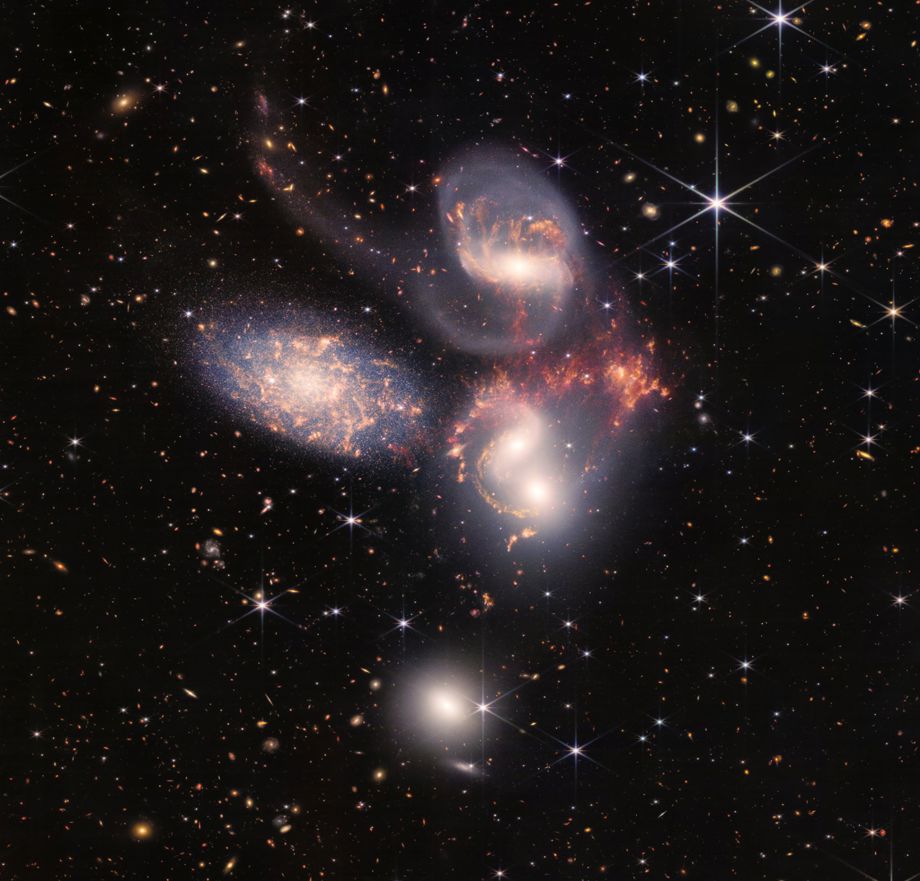 Image Credits: NASA, ESA, CSA, and STScI
Southern Ring Nebula
The Southern Ring Nebula is a planetary nebula that lies approximately 2,500 light-years away from Earth. Webb's powerful infrared eyes bring a second dying star into full view for the first time.
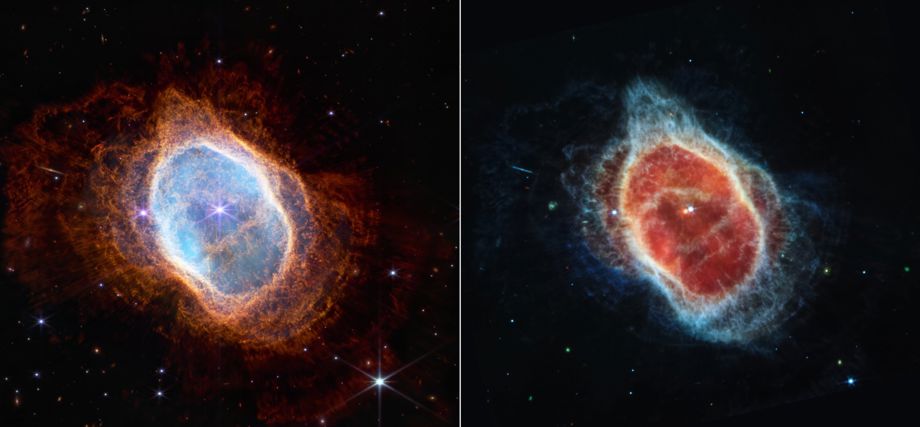 Image Credits: NASA, ESA, CSA, and STScI
WASP-96 b
Webb has captured the distinct signature of water, along with evidence for clouds and haze, in the atmosphere surrounding this hot, puffy gas giant planet orbiting a distant Sun-like star.
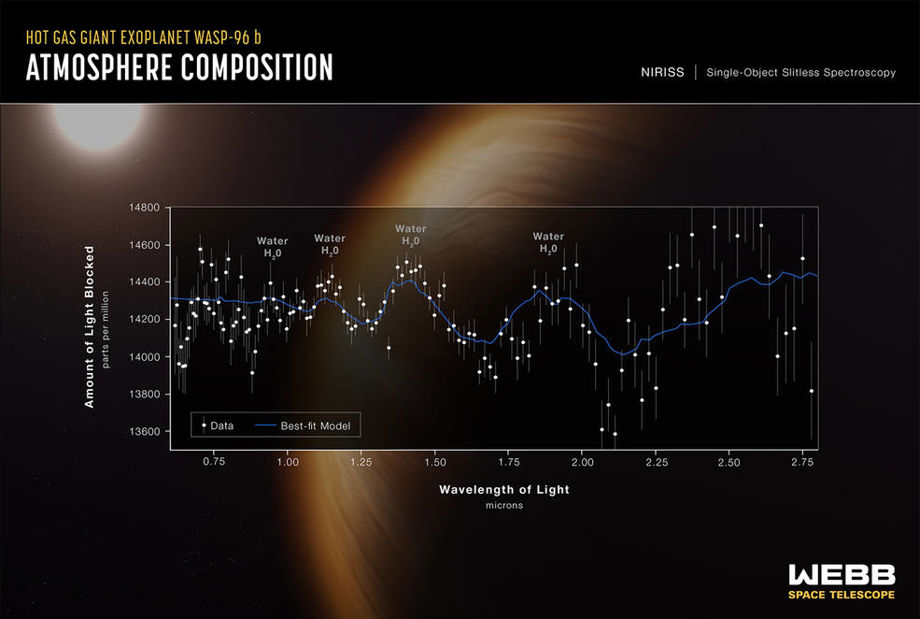 Image Credits: NASA, ESA, CSA, and STScI
SMACS 0723
Webb has delivered this deepest and sharpest infrared image of the distant universe so far – and in only 12.5 hours (while similar deep field images from the Hubble Space Telescope can take multiple weeks). This picture features galaxy cluster SMACS 0723.
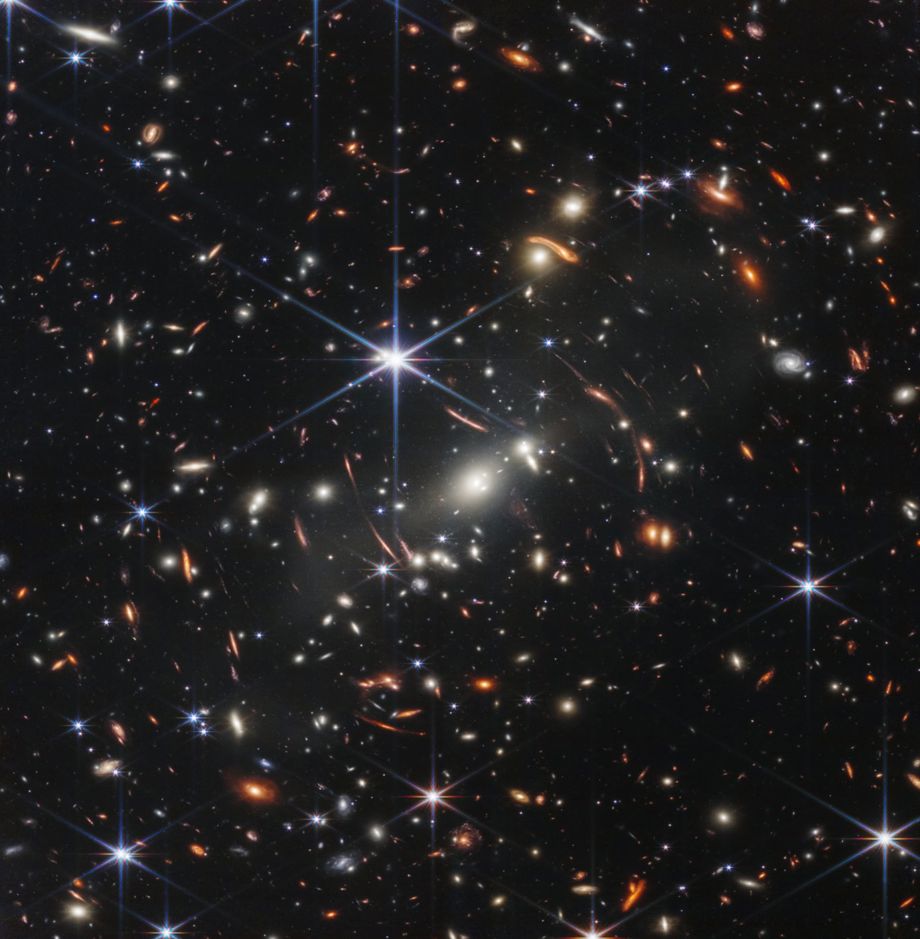 Image Credits: NASA, ESA, CSA, and STScI
More details can be found here.


 Google News