

This picture by NASA's Hubble shows 48,000-light-year-long stretch of our cosmic neighbor
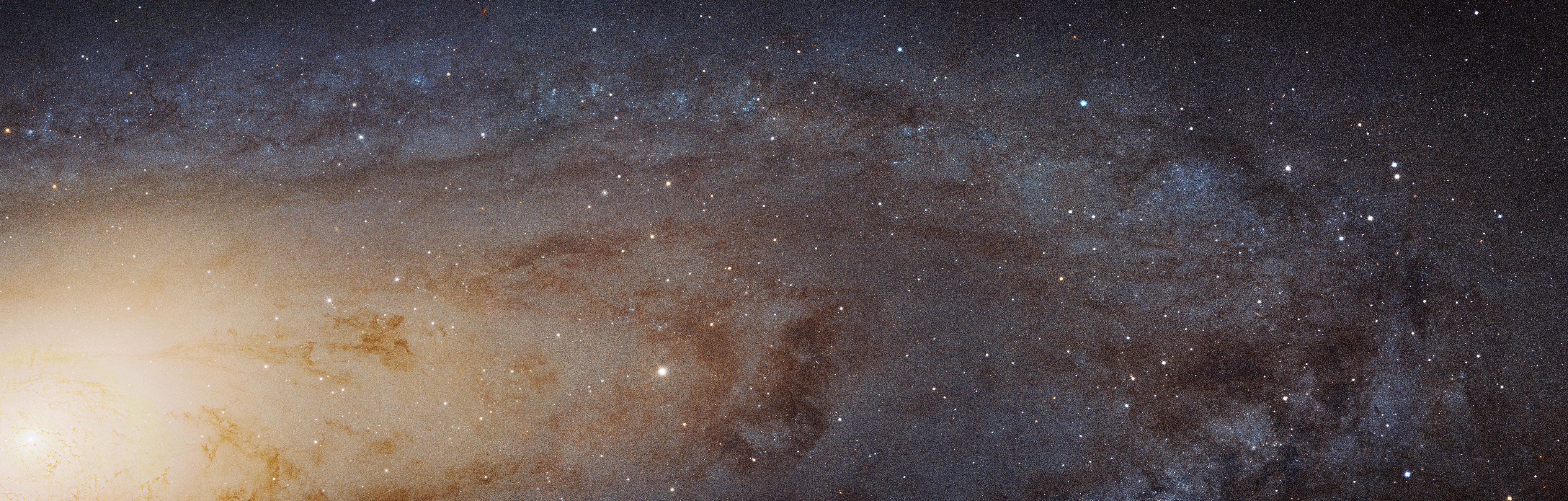
This sweeping bird's-eye view of a portion of our cosmic neighbour, the Andromeda galaxy (M31), is the sharpest large composite image ever taken of our galactic next-door neighbour.
Captured by the NASA/ESA Hubble Space Telescope, this breathtaking image is assembled from a total of 7,398 exposures taken over 411 individual pointings of the telescope. The images were obtained from viewing the galaxy in near-ultraviolet, visible, and near-infrared wavelengths, using Hubble's Advanced Camera for Surveys (ACS) and the Wide Field Camera 3 (WFC3).
Hubble's M31 mosaic image reveals over 100 million stars and thousands of star clusters embedded in a section of the pancake-shaped disk of the galaxy. Though the Andromeda galaxy is only 2.5 million light-years from Earth, it is a much bigger target in the sky than the myriad far-off galaxies Hubble routinely captures.
This image was originally released by NASA in 2015.
More like An-Drama-da 🌌Seven years ago, @NASAHubble captured its largest-ever image assembled of the Andromeda galaxy in brilliant clarity, showing a 48,000-light-year-long stretch of our cosmic neighbor with over 100 million stars in this view. https://t.co/PXld5djxa8 pic.twitter.com/Yx2FNAxM5S
— NASA (@NASA) July 31, 2022
The Hubble Space Telescope is a project of international cooperation between NASA and the European Space Agency (ESA). The premium space-based telescope has been beaming back stunning images of the cosmos since its launch in 1990.


 Google News